Fun read, not about dollar, but gold
bloomberg.com
Where Is Guinea’s Gold? A London Laundering Case May Hold Clues
A murky deal stretching across three continents raises questions about the city’s bullion market.
Eddie Spence
May 13, 2022, 7:43 PM GMT+8
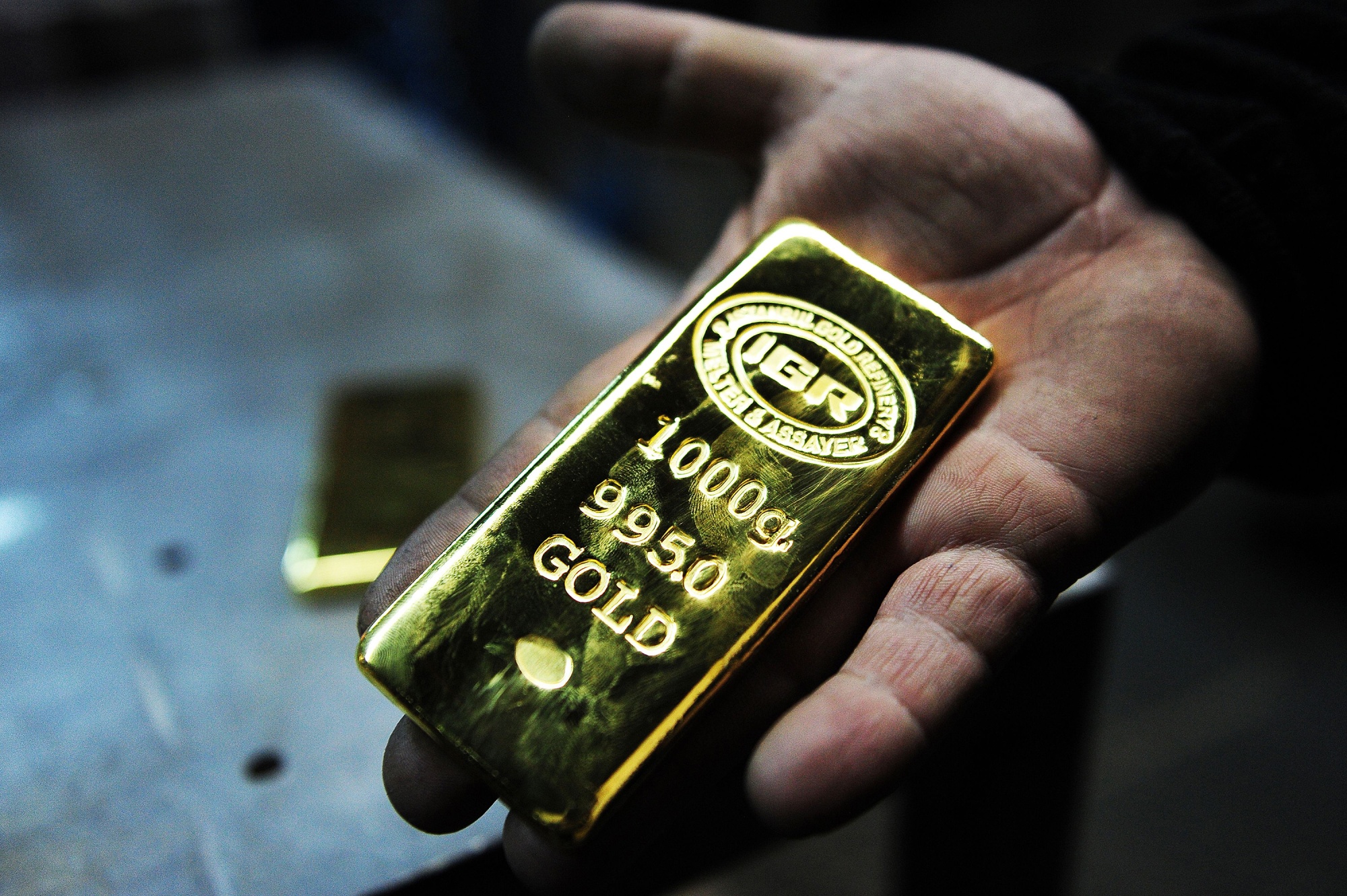
Gold bullion at Istanbul Gold Refinery in Istanbul.
Photographer: Ozan Kose/AFP/Getty Images
The government of Guinea wants to know what happened to three tons of its gold. The answer may lie in London.
In March, Guinean authorities arrested a former head of the central bank and charged him with embezzlement after the custodian of the gold, Belgian refiner Affinor BVBA, said it was unable to return it.
The arrest of Lounceny Nabe cast a new light on a previously unreported court ruling in London that showed the refiner, which held and sold the gold, had already faced scrutiny by UK police in a money-laundering case. Millions of euros the firm said it made from trading Guinea’s gold was transferred to bank accounts around the world, some of which could be linked back to the refiner. It prompted prosecutors to say there was “overwhelming evidence that the money was unlawfully obtained from international money laundering.” And it led to the seizure last year of 34 million euros ($35.2 million) in the country’s biggest forfeiture of crime proceeds.
Now, worry is building in Guinea about the safety of its gold. And a murky deal stretching across three continents is raising questions about money laundering in London’s bullion market, where trillions of dollars in precious metals trade each year.
Affinor sold the gold to the Dubai-based trading arm of Turkey’s Istanbul Gold Refinery, according to court documents, and then transferred 50 million euros to London accounts of a South African law firm, where it was held in escrow for a Cypriot investment company. The money appeared to be far more than Affinor could have expected to make from the trade, Judge John Zani wrote in his 2020 ruling, raising concerns about its origin.
Follow the MoneyUK prosecutors confiscated millions of euros they said came from the sale of Guinea’s gold
Sources: UK court judgment; KPMG audit
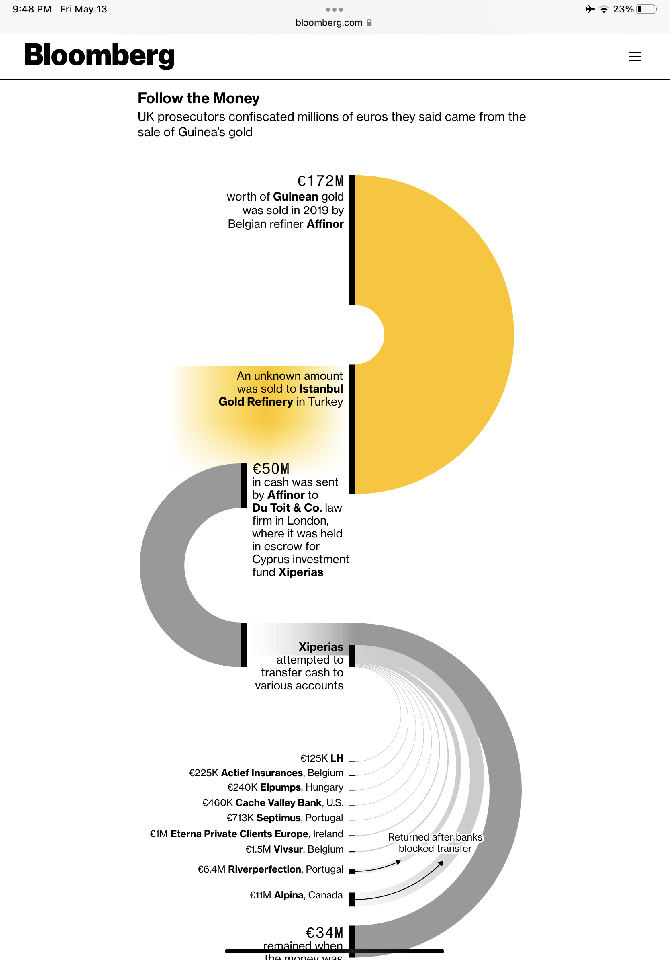
The law firm, Du Toit & Co. LLP, and the investment company, Xiperias, agreed to surrender the remaining 34 million euros without admitting wrongdoing. An Affinor spokesman said the refiner was neither a suspect nor a party in the London case and that it had provided the court with an audit trail of the gold and its purchase from Guinea’s central bank. Istanbul Gold Refinery, known as IGR, confirmed it bought the gold but said it didn’t have a direct link with the central bank and denied any wrongdoing.
Refiners such as IGR that are accredited by the London Bullion Market Association, or LBMA, are mostly small firms purifying ore and scrap gold that they then feed into the global financial system. They’re expected to keep out dirty money, and LBMA sets rules on what material they can accept to ensure bullion tainted by crime doesn’t creep in.
But the requirements often aren’t enforced, said Mark Pieth, founder of the Basel Institute on Governance, who reviewed the court’s findings. “Most of these refiners aren’t doing serious compliance at all,” he said.
IGR didn’t comment when asked about compliance with LBMA rules on sourcing, but the company said last year that it “operates diligence procedures throughout all its business dealings with its partners.” The LBMA said on Wednesday that it hadn’t received any formal notification about the matter, but “now that details have become available, a preliminary review will shortly be initiated.”
Affinor’s business with Guinea has roots in the political turmoil that engulfed the country in 2008 after the death of longtime leader Lansana Conte. Military rule followed until Guinea chose its first democratically elected leader in 2010.
The tumult led many Western lenders to abandon relationships with government institutions, including the central bank. Refiners that had previously dealt with Guinea no longer wanted to handle its mainly artisanal gold as a result of tightening rules around child labor and environmental harm.
That left Guinea without a means to sell its gold for hard currency, according to Baidy Aribot, a former central bank vice governor. “These were difficult times for Guinea,” Aribot said in an interview from Dubai in December, a day after he and central bank governor Nabe were removed from their posts by a military junta that came to power in September. “All doors were shut.”
With nowhere left to turn, the central bank was solicited by Affinor, a small refinery on the outskirts of Genk in Belgium, Aribot said. It agreed to store and purify Guinea’s gold, while also acting as its broker.
Even in the tight-knit refining industry, people had little to say about Affinor or its chief executive officer, Jos Beckers, who didn’t respond to a request for comment. The company’s accounts show just two employees, and it doesn’t have the “Good Delivery” accreditation needed to refine bars accepted by the London bullion market. That makes it difficult to sell large quantities of gold to the City’s financiers.
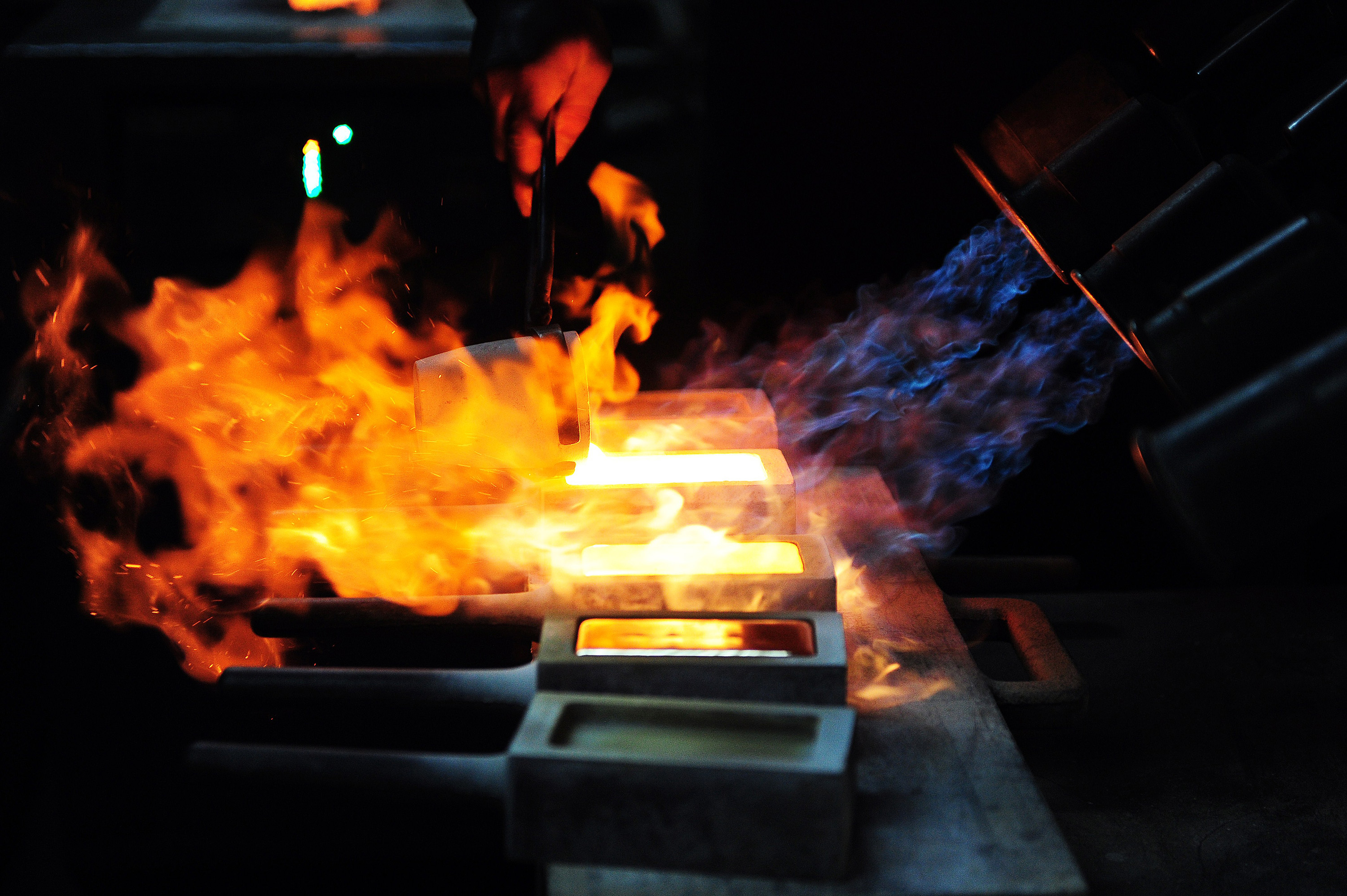
A worker pours molten gold into molds to make gold bullion at Istanbul Gold Refinery.
Photographer: Ozan Kose/AFP/Getty Images
To do so it needed an LBMA-approved intermediary, which it found in Istanbul Gold Refinery. That firm is one of just two in Turkey with LBMA accreditation. It acts as an essential connection between the jewelry merchants of Istanbul’s Grand Bazaar and the vast pool of liquidity available in the UK market. Bars stamped with its logo lie in London vaults of JPMorgan Chase & Co. and HSBC Holdings Plc, according to filings for exchange-traded funds that deal in gold.
Affinor’s relationship with Guinea is now being scrutinized by the military junta there. In late January, Nabe and Mamady Conde, Affinor’s former representative in Guinea, were summoned by authorities, according to Conde, who has since left the country. The new administration wanted to withdraw the more than three tons of gold it kept with Affinor, but the refiner said that wasn’t possible.
Aboubacar Camara, Affinor’s legal representative in Guinea, said that once the company refines Guinea’s gold it no longer keeps the physical metal in its warehouses. “The gold is deposited in a structure where the central bank’s metal account is credited to the amount deposited,” he said. “The bank can no longer claim the physical gold but its value in currencies.”
Nabe didn’t respond to phone calls and text messages. His lawyer, Amara Bangoura, confirmed that his client had been accused of embezzlement, illicit enrichment and fraud but had no further comment.
Affinor’s lawyers told investigators, according to the London court ruling, that it had bought gold from Guinea before selling it to the Turkish refiner’s Dubai-based trading arm, turning a profit of at least 50 million euros.
Prosecutors thought that was suspicious, Zani noted in his ruling. Guinea sold only about $200 million of the gold Affinor held in 2019, according to the central bank’s annual report. Bank officials said the refiner didn’t receive a percentage of the profits.
“When we see the price is good, we ask Affinor to find buyers for our gold,” said Georges Gbanamou, head of credit and foreign exchange at the central bank. “Affinor doesn’t get a stake in the sales.” Instead it would be paid fees for transport, refining and storage, according to Aribot, the former vice governor.
The way the money was moved also attracted suspicion. Underlying the transfer of the 50 million euros was an agreement, signed by Beckers and Xiperias director David Boterashvili, to cooperate in developing “new gold-refining methods,” according to documents cited in the judge’s ruling.
Xiperias, using Du Toit’s account, then attempted to spread the funds to 49 entities stretching from Canada to Hungary, the court ruling says. Police said they found connections between some intended recipients and directors or shareholders of Xiperias and Affinor. The circular nature of some of the transactions looked like money laundering to James Pidduck, the detective on the case, according to the ruling.
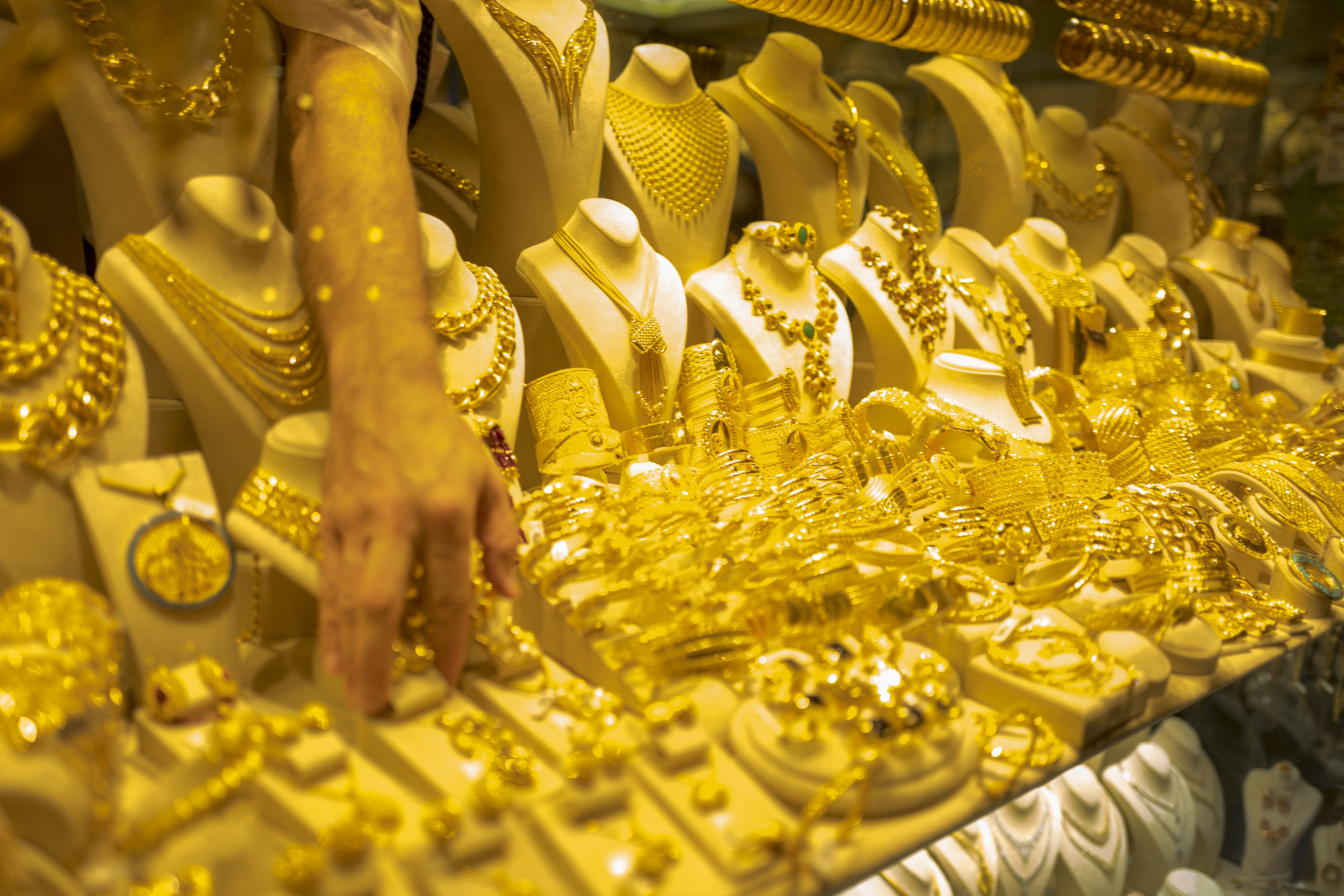
Gold jewelry on display at the Grand Bazaar in Istanbul.
Photographer: Ismail Ferdous/Bloomberg
One intended recipient, according to court documents, was Riverperfection, a Portuguese company owned by an Affinor representative that appeared to have no trading record. It would have received 6.4 million euros if its bank hadn’t blocked payment. Riverperfection also owns 15Supply, a company said to be operated by Affinor CEO Beckers, according to the court ruling.
On Friday a spokesperson for Affinor said that 15Supply exists as a concept, not a company.
Cash was also channeled to Belgian firm Vivsur NV, where Boterashvili is listed as director, as well as to its employees and other companies that shared offices with it. More than 100,000 euros was sent to one company for a marble dining table, a chandelier and other furniture.
Xiperias’s Boterashvili and Stephanus du Toit, the director of the law firm, were wanted for arrest in the UK as part of the money-laundering investigation, according to the court ruling. Boterashvili said in an email that the warrants were executed to get them to answer questions and are no longer in effect. A representative for his firm said “there was no single evidence of any wrongdoing.” Du Toit didn’t respond to emails and calls. A spokesperson for the UK prosecutors’ office declined to comment about the status of the investigation.
LBMA compliance rules prohibit dealing with suspected money launderers. Refiners breaking those rules can be struck off the Good Delivery list, a sanction that could result in the loss of business. Annual audits are supposed to ensure the standards are being met. IGR said it wasn’t aware of the money-laundering allegations until it learned about the court ruling last year.
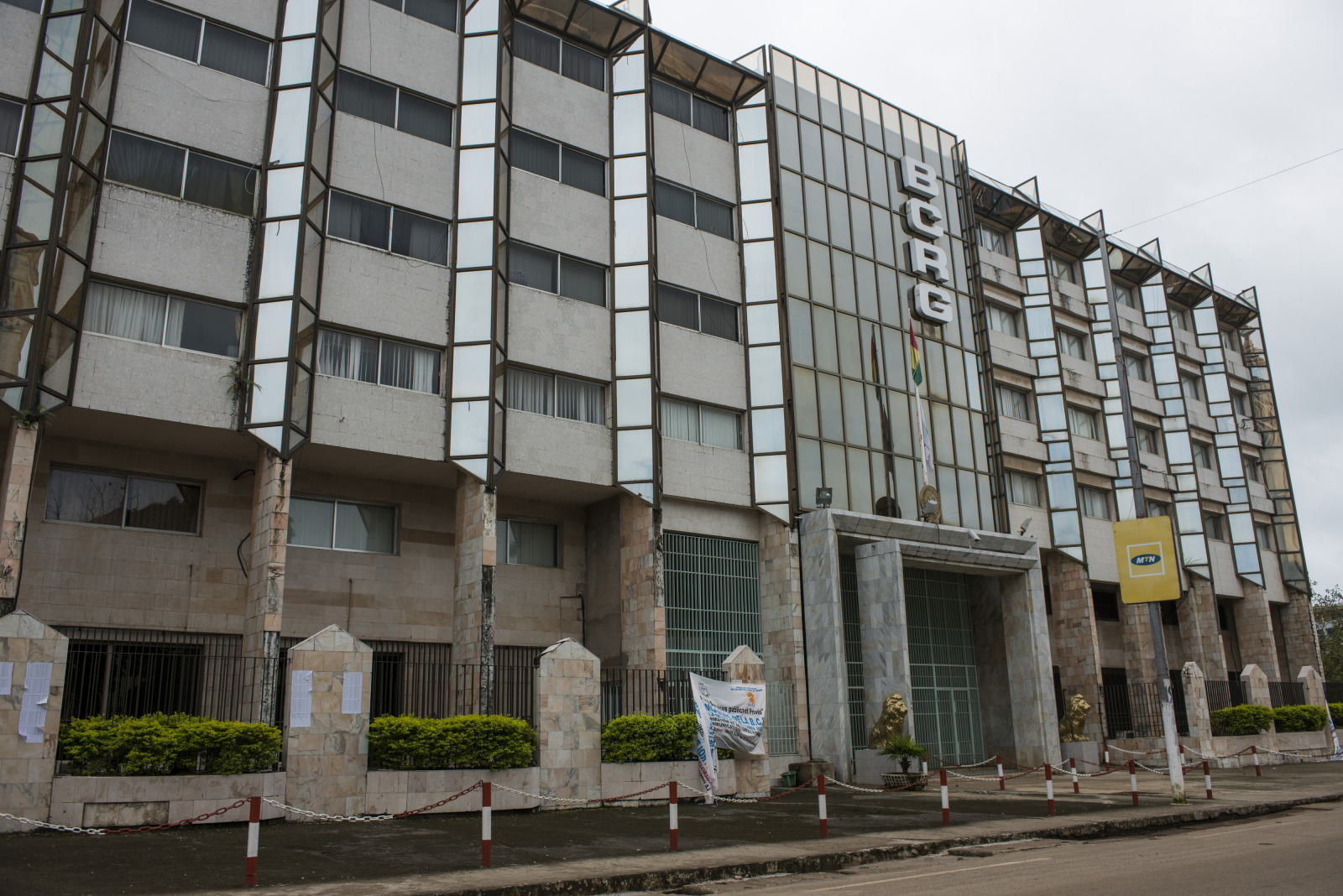
The headquarters of Guinea’s central bank in Conakry.
Photographer: Waldo Swiegers
In February, a delegation from Guinea’s central bank, led by newly appointed governor Karamo Kaba, traveled to Genk to inquire about the remaining gold, according to Camara, Affinor’s legal representative. Gold forms an important part of the country’s relatively small central bank reserves, which act as a buffer against economic shocks.
“I was surprised to hear my client being called a swindler and accused of squandering the Guinea central bank’s gold,” Camara said that month on one of the country’s most-watched talk shows. “The gold is there, but it’s no longer physical, it’s in digital form in the bank’s accounts with Affinor.”
Moussa Mansare, a spokesman for the central bank, declined to comment on the case against the former governor. Discussions with Affinor are ongoing, he said. “We’re still hoping that we can find a solution to the matter together with our partner.”
— With assistance by Ougna Camara and Jeremy Diamond
(Updates with a comment from Affinor in the 25th paragraph received post publication)
Sent from my iPad |



