1 million have died from COVID in the US. Experts wonder how this seems normal.
.
Americans often view COVID deaths as the fault of the victims, experts say.
By Mary Kekatos
May 12, 2022, 4:19 AM
• 13 min read
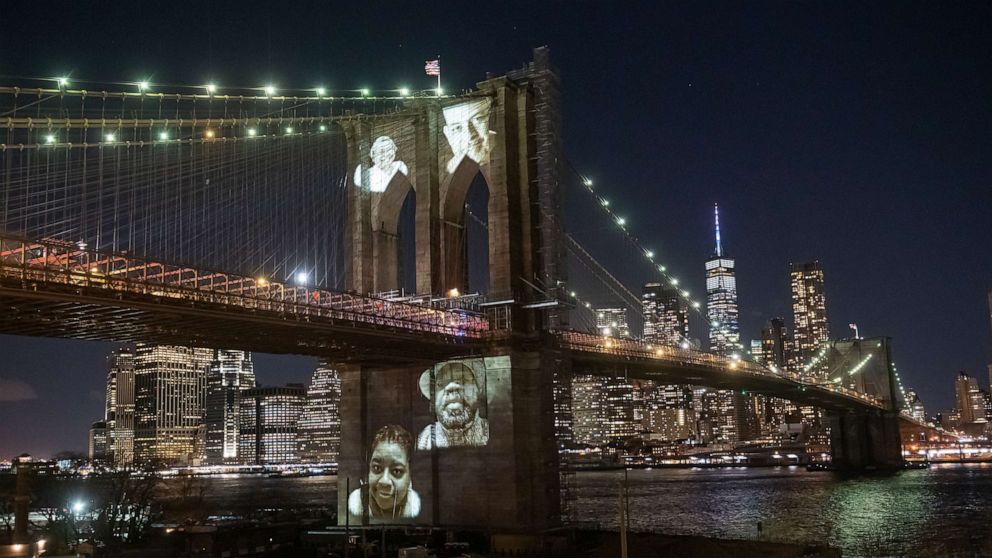
4:13
How did US reach 1 million COVID deaths?
More Americans died in two years of the COVID-19 pandemic than in 40 years of the HIV...
Noam Galai/Getty Images, FILE

When the COVID-19 pandemic first struck the United States, the idea of 1 million deaths from the virus seemed largely unimaginable -- with most projections estimating a few hundred thousand fatalities.
R'Like every other day:' 10 lives lost on a tripto the store
However, on Thursday, the White House marked this tragic milestone -- equivalent to the population of San Jose, California, being wiped off the map. That is also more than the number of American deaths from World War I, World War II, the Korean War and the Vietnam War combined.
Dr. Anthony Fauci referred to the count as a "very sad and tragic landmark." in a recent interview with Boston Public Radio.
MORE: For red and blue America, a glaring divide in COVID-19 death rates persists 2 years later
More people died in two years of the COVID-19 pandemic in the U.S. than in 40 years of the HIV/AIDS epidemic. The toll even dwarfs the estimated 675,000 deaths during the 1918-19 Spanish Flu outbreak, the most severe pandemic in recent times.
"It does take my breath away, that we seem to have a million people in two years who have died from this pandemic," Dr. Lori Peek, a professor in the department of sociology and director of the Natural Hazards Center at the University of Colorado Boulder, told ABC News. "Every time that someone died from this pandemic, they left behind family and friends, schoolmates or coworkers, and really let that sink in for a minute."
When the U.S. hit 100,000 recorded COVID deaths in May 2020, The New York Times' front page was filled with the names of people. When the country hit 500,000, President Joe Biden called it a "truly grim, heartbreaking milestone."
On Thursday, Biden released a statement marking the milestone of a million deaths and plans to order flags to half-staff in remembrance.
"Today, we mark a tragic milestone: one million American lives lost to COVID-19. One million empty chairs around the dinner table. Each an irreplaceable loss. Each leaving behind a family, a community, and a nation forever changed because of this pandemic. Jill and I pray for each of them," he said. "As a nation, we must not grow numb to such sorrow. To heal, we must remember."
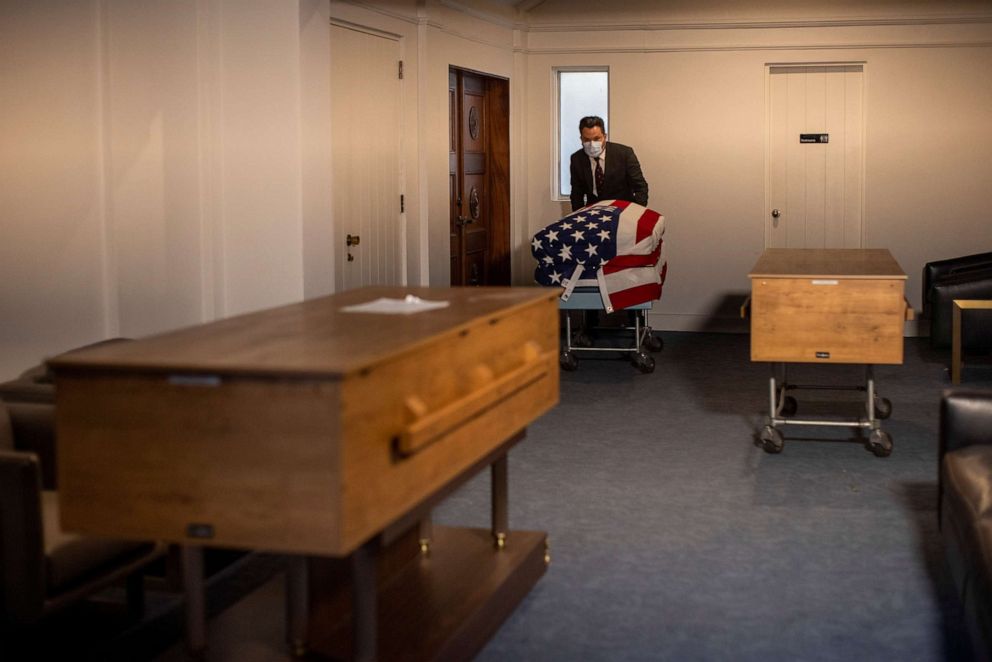
 Mike Blake/Reuters, FILE Mike Blake/Reuters, FILE
In this March 3, 2021, file photo, funeral coordinator Eddie Martinez moves a soldier's ca...
Before this, the most recent death milestones have passed relatively quietly during the era of mass vaccination, with the majority of the country lifting most restrictions and mitigation measures, including those that have helped protect the most vulnerable.
A recent Gallup poll has shown the public's concern about the virus has declined since the omicron wave. In March, 63% of people polled said the COVID-19 situation is improving, a jump from 20% in January, with worries highest about new variants and unvaccinated people.
So why have these deaths become normalized for many, and why have so many people seemingly moved on?
Viewing deaths as the victims' fault
Public health experts have suggested that as the pandemic has worn on, many Americans have come to view COVID-19 deaths as the fault of the victims.
"When we look back to two years ago, at the beginning of when lives really started to be lost on a mass scale in the U.S., there was so much focus and so much attention on who was dying," Peek said. "I think there was a lot of compassion around that. There was a lot of focus on collective mourning."
However, with vaccines becoming widely available by April 2021 and treatments shortly thereafter, she said many Americans, including public health officials and politicians, started blaming COVID patients, saying it was their fault they didn't get vaccinated or they didn't seek treatment sooner.
"As time passed and as the vaccine became available, and as the political divisions started to really open up, I think what we also saw was a lot of this kind of compassion fatigue and a lot of narrative around people dying and it maybe being their own fault," Peek said. "Death went from being a collective problem to be solved to really being an individualized issue where we were pointing fingers and saying, 'You were vaccinated or not vaccinated.'"
MORE: Who is dying of COVID amid omicron surge and widespread vaccine availability?
Public health messaging from the top agencies in the country may have inadvertently played a role, the experts said.
From the Centers for Disease Control and Prevention calling the grim situation a "pandemic of the unvaccinated" to stressing how much more likely someone is to die of COVID if they don't get a vaccine, the experts suggested the agency may have caused some Americans to view COVID illnesses and deaths, particularly among the unvaccinated, as largely unavoidable.
While it's true that unvaccinated people are about nine times more likely to die from the virus than fully vaccinated people, COVID-19 is also disproportionately more likely to kill those who -- through no fault of their own -- are of lower socioeconomic status and/or have more underlying medical conditions.
The CDC did not respond to ABC News' request for comment on whether its public health messaging over time impacted people's perceptions of those who died of COVID.
"Virtually everything the government's done to fight the disease, since the beginning, has placed the burden on individuals to both assess and mitigate their own risk," Dr. Richard Keller, a professor in the department of medical history and bioethics at the University of Wisconsin School of Medicine and Public Health, told ABC News. "The implications there, for the people who are dying from the disease, are that they're dying as a result of their own individual failings."
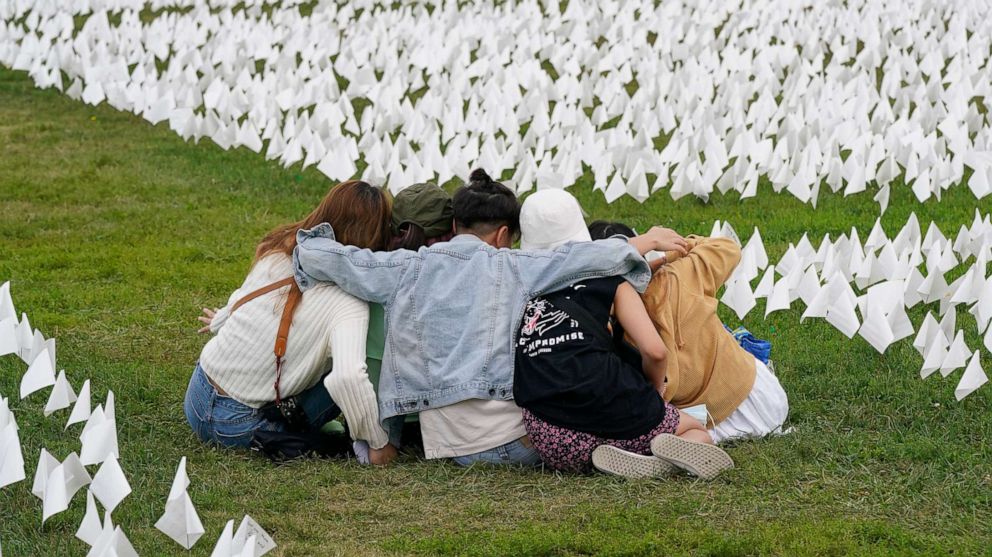
Patrick Semansky/AP, FILE
In this Sept. 21, 2021, file photo, visitors sit among white flags that are part of artist Suz...
"Now, as a result, I think we're seeing an enormous discounting of those deaths as somehow deaths that don't really matter in the grand scheme of things," he added.
This is at odds with other major disasters in America such as 9/11 or Hurricane Katrina, some experts said. In those events, the deaths were not viewed as the victims' fault.
"Deaths linked to weather, man-made or so-called natural disasters, are not [seen as] the victims' fault, that is they were struck by some unseen force, an uncontrollable force over which they have no power, whereas we identify COVID deaths as linked to individual responsibility," Keller said. "Then I think we do have at least an implicit blaming of the victim."
Peek, who studies disasters, said the victims of the early phases of the pandemic were treated similarly, but that this attitude changed when vaccines became available.
"As the pandemic has stretched on, I think there has been a shift from really focusing on victims as objects of compassion to blaming some of the victims, for not being deserving of compassion, because maybe they didn't take those steps to get vaccinated," she said.
Americans haven't been able to take time to grieve
Doctors interviewed by ABC News said over the relatively short course of the pandemic, they haven't been able to take the time to process the vast number of deaths because there's been a never-ending rush of sick patients.
Dr. Angela Chen, an attending physician in the emergency department at Mount Sinai Hospital, diagnosed the first COVID-19 patient in New York City in March 2020 and said every time she thought the pandemic was receding, there was another wave or another variant to deal with.
MORE: Half of all US states saw more deaths than births, likely driven by COVID
"I don't think we've really had the time to be able to recover from the significant trauma that the last two years took on us," she said. "Part of the reason is because … every time it felt like perhaps there was a rest and there was a break, another component of change happened."
She said she believes deaths may become less normalized among the public when Americans have the time to grieve the loss of their family, friends and loved ones and not worry about the next wave or if they need to follow mask mandates again.
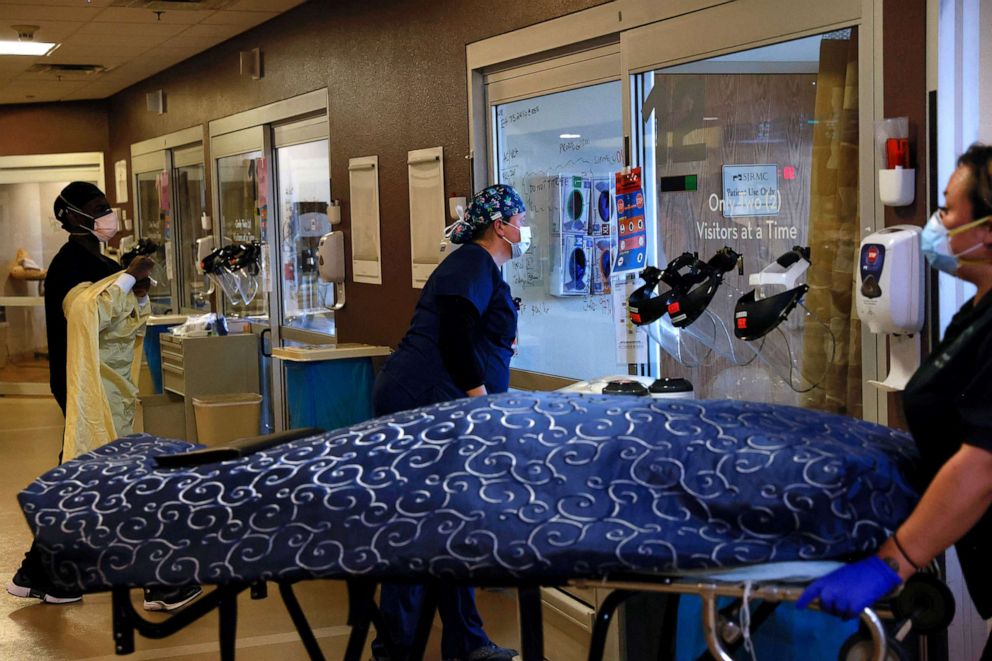
Shannon Stapleton/Reuters, FILE
In this Dec. 10, 2021, file photo, a nurse looks in the isolation room of a COVID-19 patie...
Trying to forget the pandemic
Another reason experts said COVID-19 deaths may have become normalized is because many Americans are trying to forget that they even occurred in the first place.
Dr. Martha Lincoln, an assistant professor of cultural and medical anthropology at San Francisco State University, said it's a lesson the country hasn't learned from the 1918 flu pandemic.
"It wasn't just the history of the flu pandemic that got rewritten -- in some cases, it was never really written at all, and it was remarkably forgotten live in real time," she told ABC News. "So many people were sick and so many people died and there was never a great novel of the flu pandemic written."
MORE: 2 years into pandemic, Americans still feeling deadly impact of COVID-19
Lincoln continued, "For example, there's just a handful of memorials that were ever created. I count four -- and it was literally left out of history books."
There are currently no national COVID memorials honoring the dead in the U.S. or plans for one aside from the temporary displays of flags and flowers that have gone up in the past. Marked By COVID, a nonprofit based in San Francisco, is one of the many groups pushing for local monuments to victims of the pandemic, with hopes of a national memorial one day.
Lincoln said the willingness to forget is evident when COVID-19 is left out of contemporary TV shows and movies that were made since 2020, like the pandemic never existed in those alternative universes.
"We should be, I think, maybe more shocked by how closely our situation currently resembles the experiences of 1918," she said.
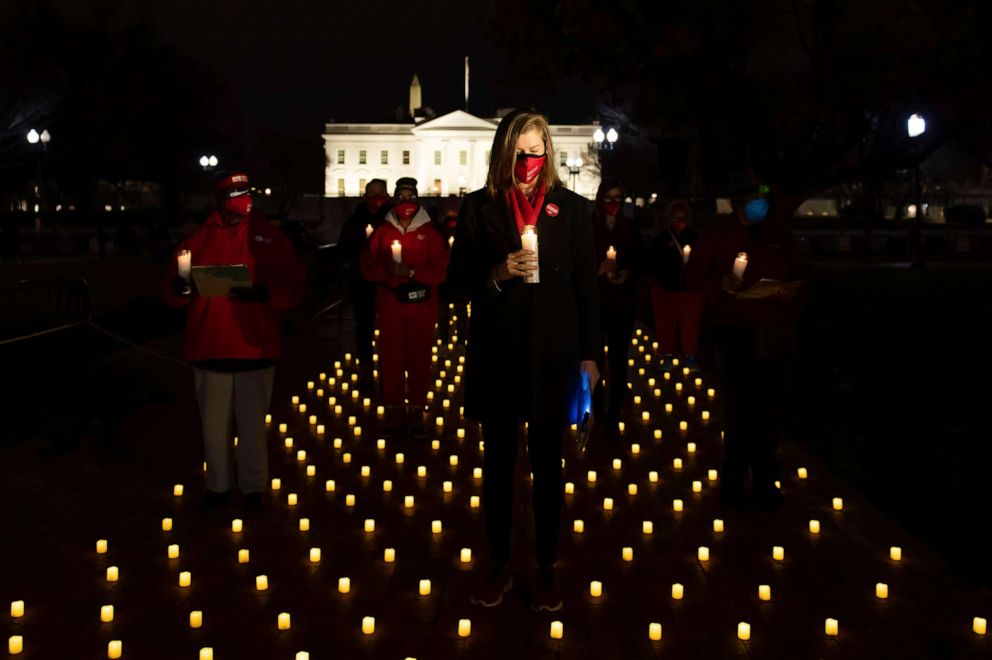
Joy Asico/AP, FILE
In this Jan. 13, 2022, file photo, National Nurses United hold a candlelight vigil to memo...
Meanwhile, in the U.S., advocates have been pushing lawmakers to make the first Monday of March a national COVID memorial day, but to no avail.
"If we're coming to accept these kinds of deaths as normal, then I think it's actually unsurprising that we're seeing very little memorialization of these deaths," Keller said. "We don't memorialize deaths to cancer, we don't memorialize deaths to flu, we don't memorialize deaths to heart disease."
He added, "I think part of it is also that Americans have grown sick and tired of the pandemic … and memorialization tends to remind us of its ongoing presence."
* |



