SI
SI
discoversearch

We've detected that you're using an ad content blocking browser plug-in or feature. Ads provide a critical source of revenue to the continued operation of Silicon Investor.  We ask that you disable ad blocking while on Silicon Investor in the best interests of our community.  If you are not using an ad blocker but are still receiving this message, make sure your browser's tracking protection is set to the 'standard' level.
Strategies & Market Trends : 2026 TeoTwawKi ... 2032 Darkest Interregnum -- Ignore unavailable to you. Want to Upgrade?


To: marcher who wrote (200634)8/5/2023 3:50:11 PM
From: TobagoJack1 Recommendation

Recommended By
Julius Wong

  Read Replies (1) | Respond to of 219512
 
here below at the time must have been 'soooo cool'

like I noted, 'at the time'

sooo so cool, I correct myself :0)

buddies hanging out together, doing business, making money, having a good time, making a lot of money, feats and feasts, all casual, dorm conditions, forever young, beach and pool, pizzas and beers, and toys toys toys, all simply from the computers, day after night after day, at the taps, keystrokes, and in case I forgot to mention, hanging out

revenge of the nerds, out cooling the cool kids, a laugh a minute, and lots of money an hour

interesting business model, albeit, and incidentally a-legal, just like GTA (grand theft auto), arguably illegal

now onward to the arguments, and possibly albeit, again, arguably, jail time, or lots and lots of jail time, but possibly just a slap and walkaway, ala extend middle-single, MF Global-esque

agnostic, let's watch & wait, note and see

comment: I am a bit surprised about the presence of umbrella near at hand behind SBF's airplane seating - given all of the billions at call, surely someone can be at beck n call w/ umbrella always at the ready? and wtf, surely the gods would stop the rain at the slightest hand gesture indicating 'stop'?

bloomberg.com

A Look Inside Sam Bankman-Fried’s Empire Before It Collapsed

Photos of the crypto exchange FTX in its final year capture SBF in his penthouse and a private jet.
4 August 2023 at 07:00 GMT+8


Sam Bankman-Fried spoke frequently about the beanbag he slept on in the office. He talked less about his naps on the private plane.

In the months since Bankman-Fried was charged with running a massive crypto fraud, US prosecutors and legions of reporters have begun parsing his every word (and deed) to expose gaps between his public persona and what really went on behind the scenes. He really did sleep in the beanbag chair, but he also had access to the jets his company chartered and a $30 million penthouse it owned at an exclusive resort in the Bahamas.

Bankman-Fried is scheduled to face a criminal trial on Oct. 2 over charges he misused billions of dollars in customer deposits. Federal prosecutors have accused him of indulging in luxuries purchased with stolen money. He has said he didn’t commit fraud and that the missing money was a mistake.

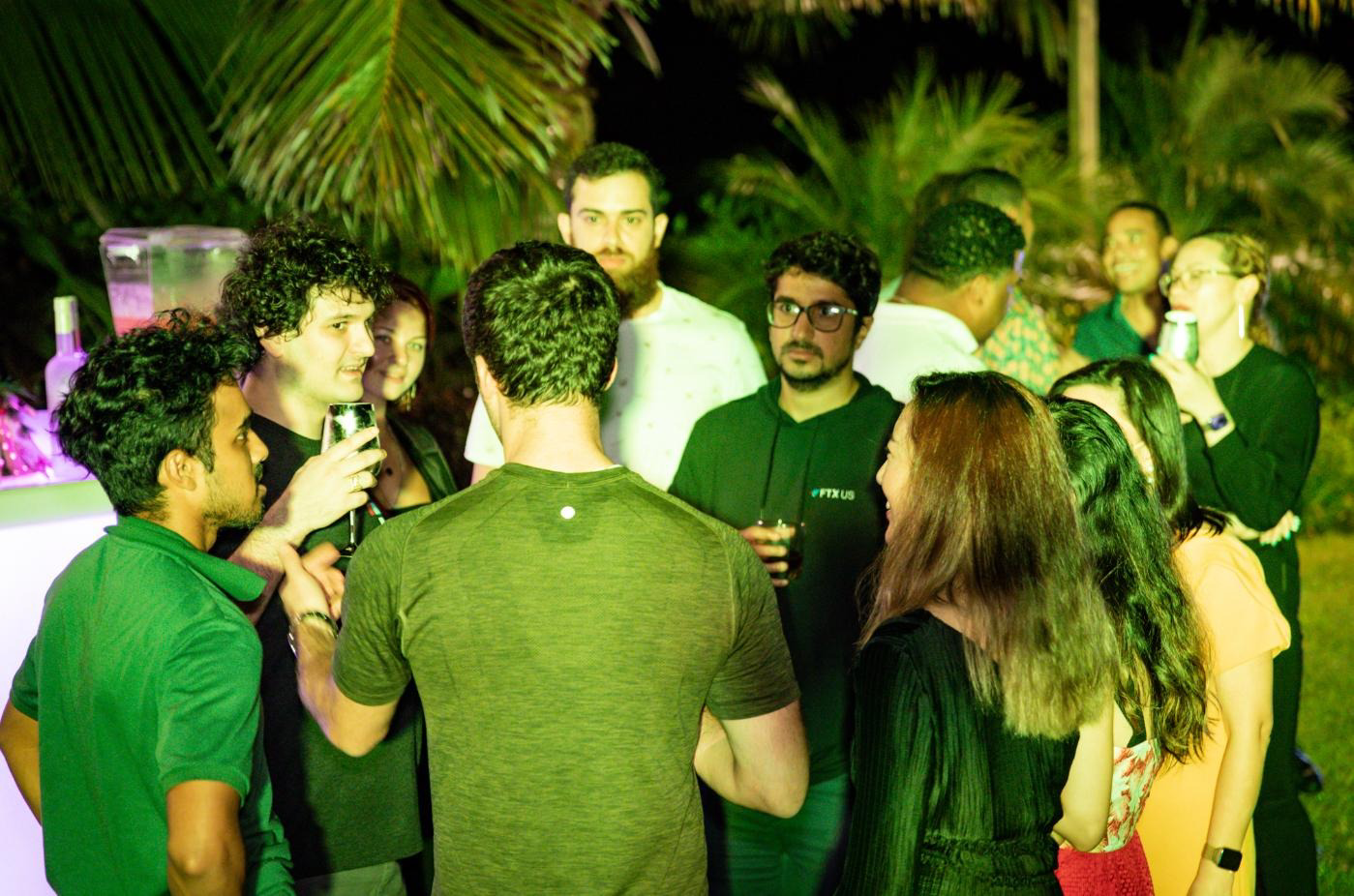
Bloomberg obtained a cache of photos and video taken in the final year before Bankman-Fried’s companies, FTX and Alameda Research, went into bankruptcy. They offer an intimate look at the lives of Bankman-Fried, who declined to comment on them, and his inner circle at their peak — hosting parties and schmoozing with political figures and billionaires. It also captures the peculiar indulgences of a math geek turned crypto kingpin.
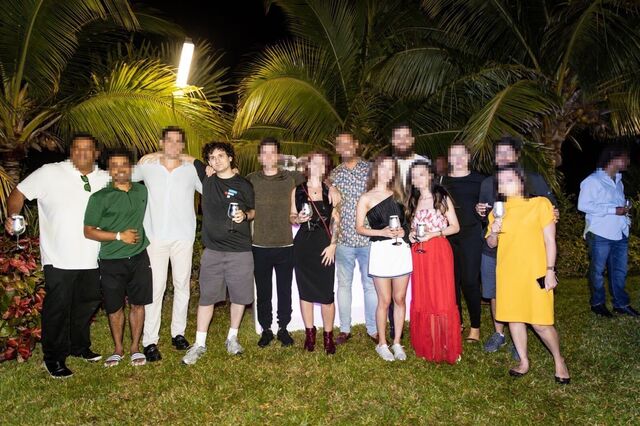

THE CHRISTMAS PARTY: The company held its 2021 holiday party at an event space near headquarters in Nassau, Bahamas. FTX had intended to make it an annual tradition and had already begun planning the 2022 celebration prior to the collapse in November.

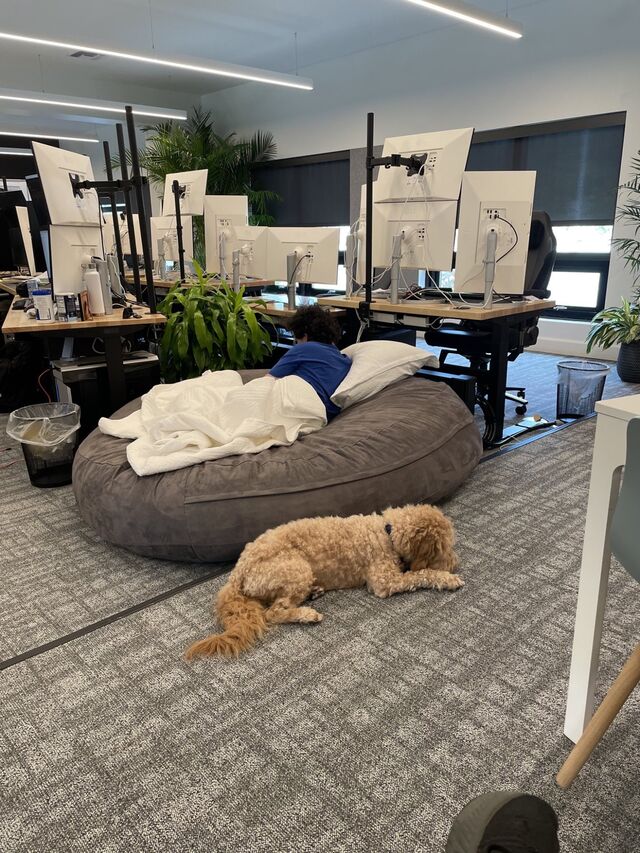


THE OFFICE: Bankman-Fried’s father, Joe Bankman, is a renowned expert in tax law and a professor at Stanford University. Bankman also worked part-time at FTX, offering tax advice to employees and helping with recruitment, according to court filings. After work, his son would regularly sleep on what looks like a giant dog bed, sometimes accompanied by the company pet, Gopher.
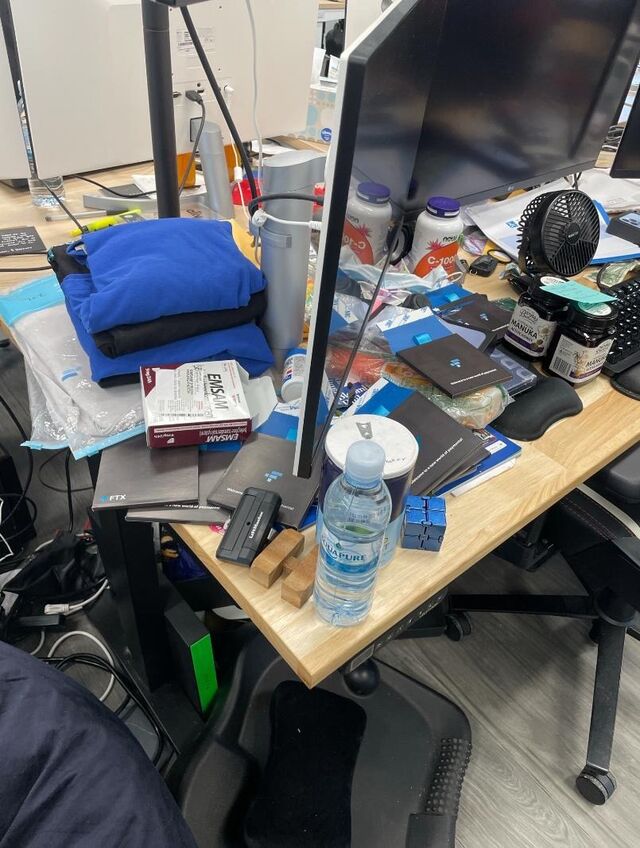


THE CEO’S DESK: Bankman-Fried spent a lot of time at the office, and his workspace was not the tidiest. Among the detritus on his desktop was a box of Emsam, a prescription patch used to treat depression and Parkinson’s. Bankman-Fried previously described his use of the depression medication in an interview with Bloomberg Businessweek. He also kept a personal saltshaker; he liked to oversalt his food.
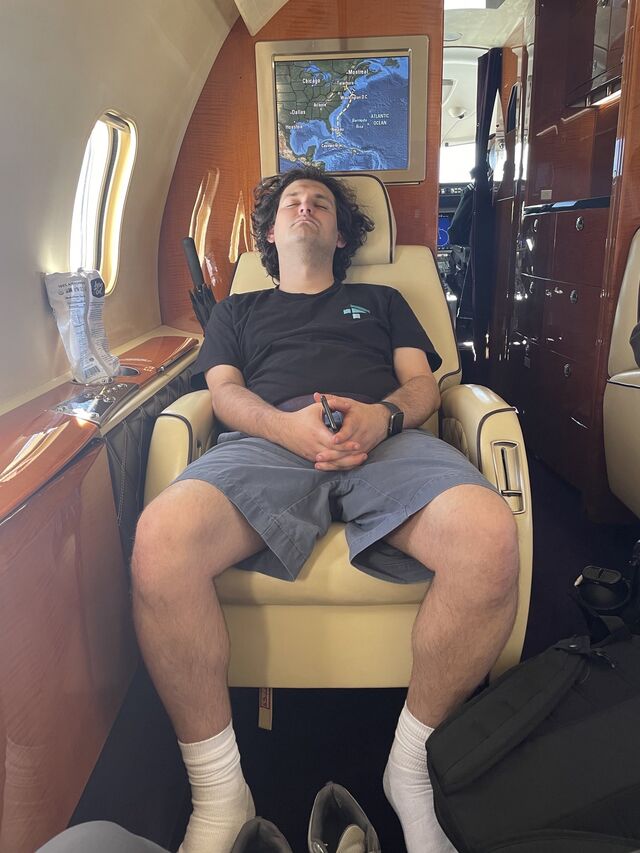


THE PRIVATE JET: In 2022, Bankman-Fried frequently traveled by private jet between the Bahamas, New York and Washington. Among his apparent snacks of choice is a bag of Lesser Evil brand popcorn. There were also custom hoodies with his silhouette on the back.
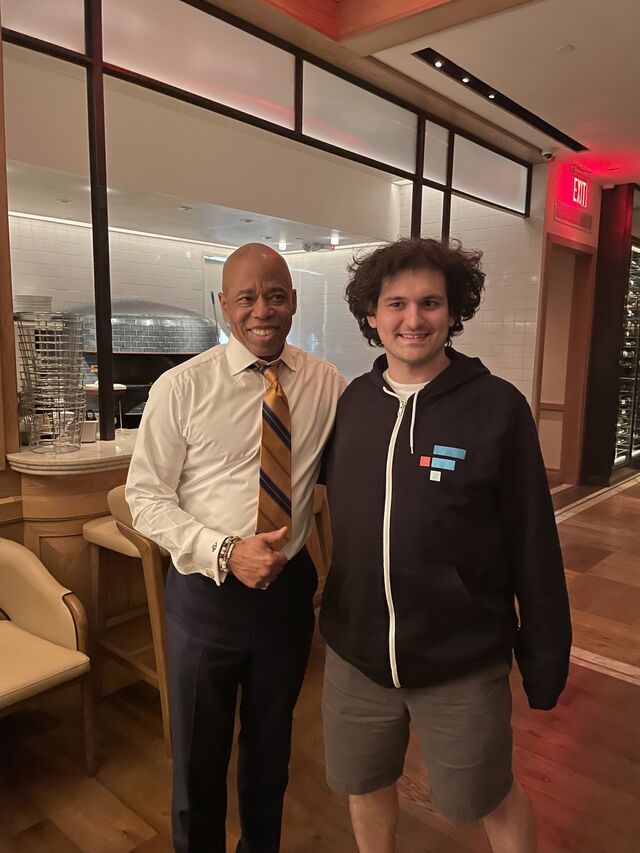
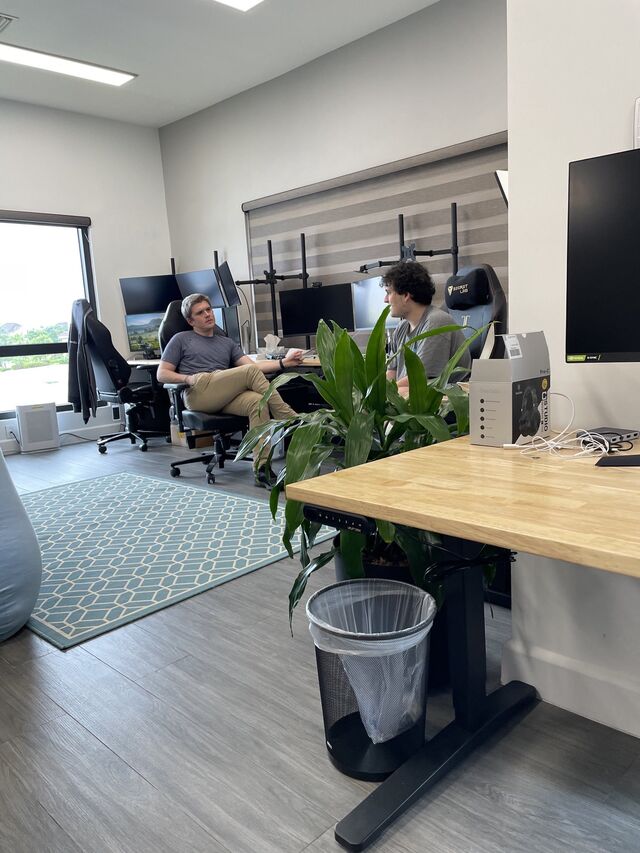


THE CELEBRITIES: A big part of how Bankman-Fried so quickly cultivated credibility was his access to prominent political and business figures. He dined with New York Mayor Eric Adams, a once vocal cryptocurrency supporter who took his first mayoral check in Bitcoin and Ethereum, and gabbed with Stripe Inc.’s John Collison, the president and co-founder of America’s second-most-valuable tech startup.
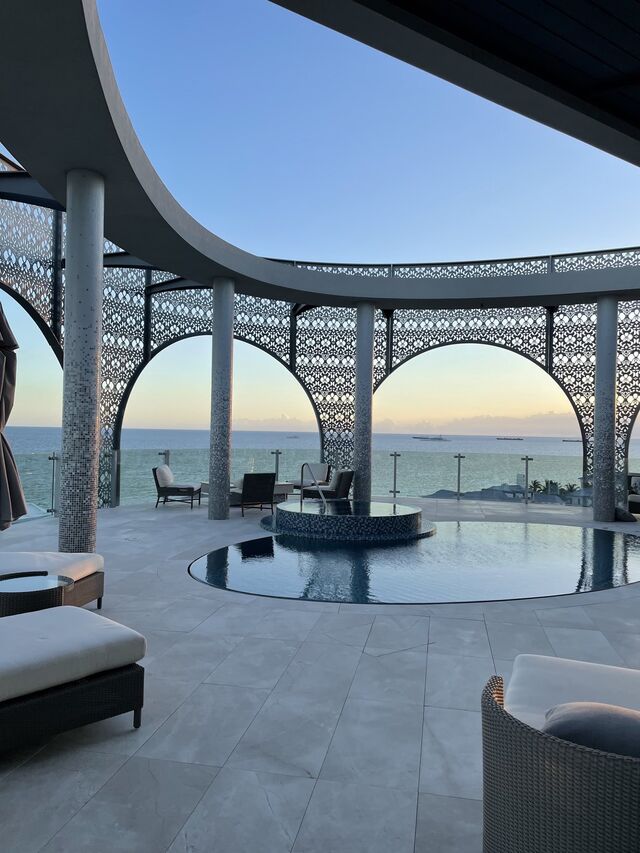
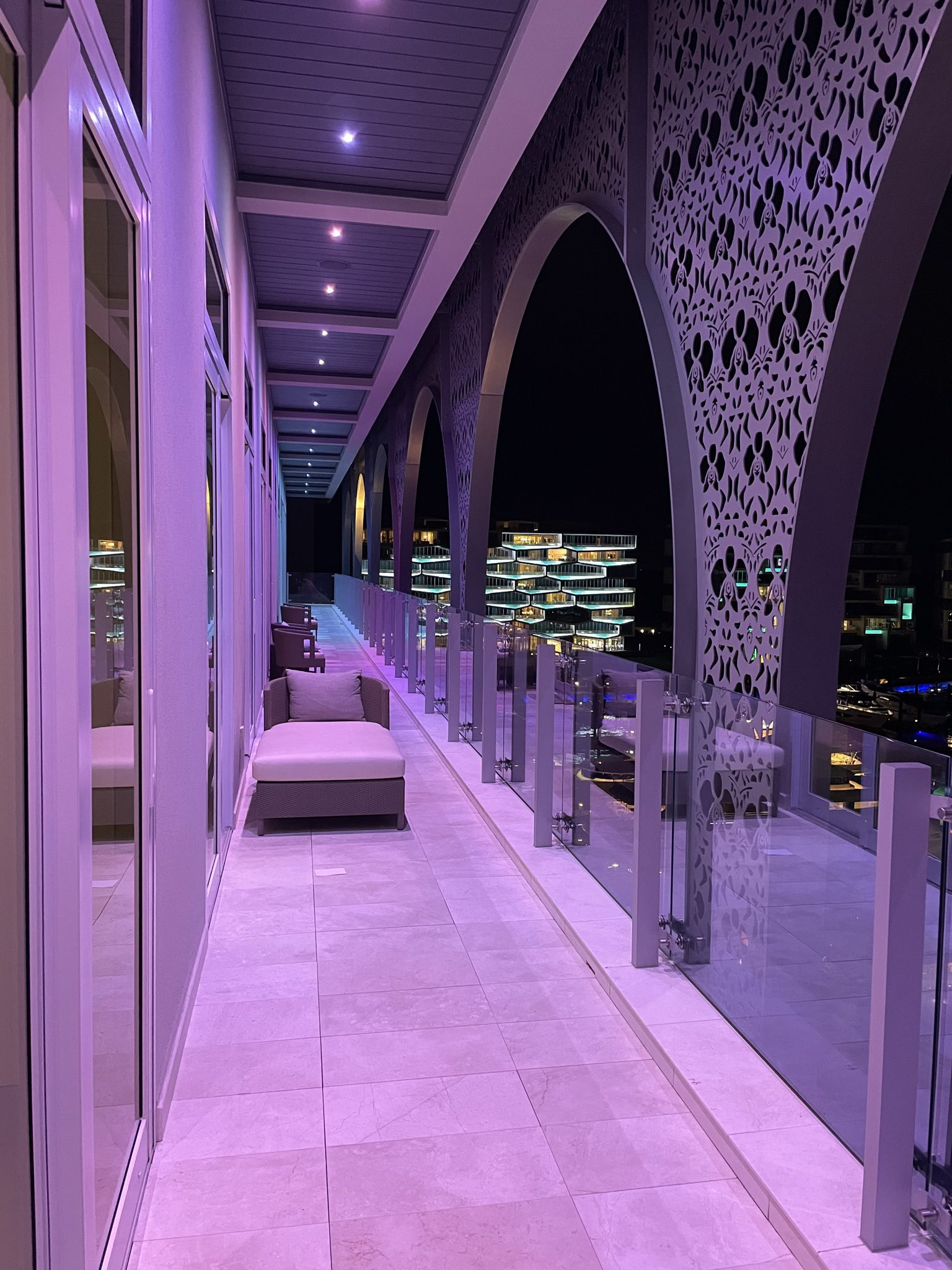


THE PENTHOUSE: The Orchid is a palatial building in the elite Albany community in Nassau. Bankman-Fried lived in the penthouse with his colleagues and close friends. Residents amused themselves with a variety of playthings.

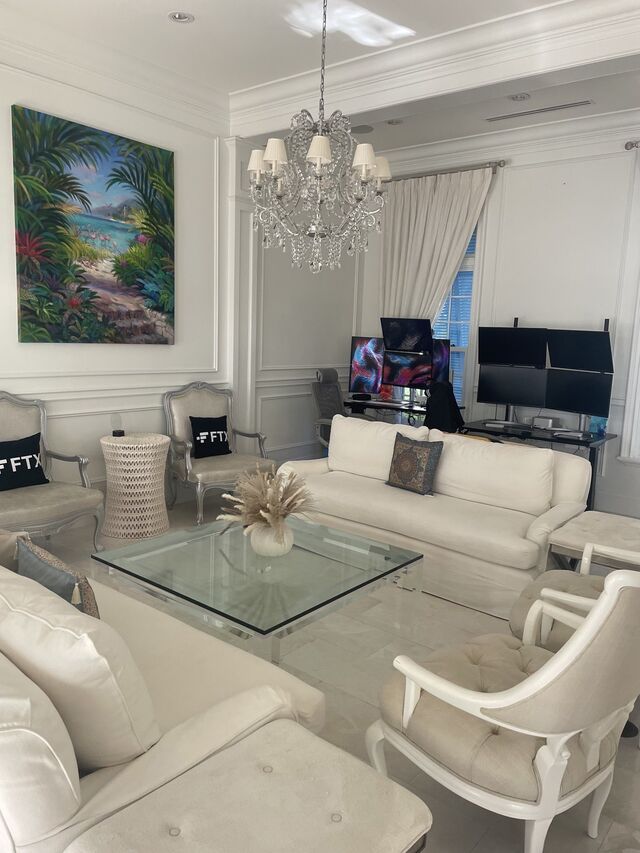


THE VILLA: Another location in the Albany served as a second party spot for the team and home to Constance Wang, the former operating chief at FTX. The company also owned this villa, spanning two stories and referred to as the Conch Shack, according to bankruptcy filings.
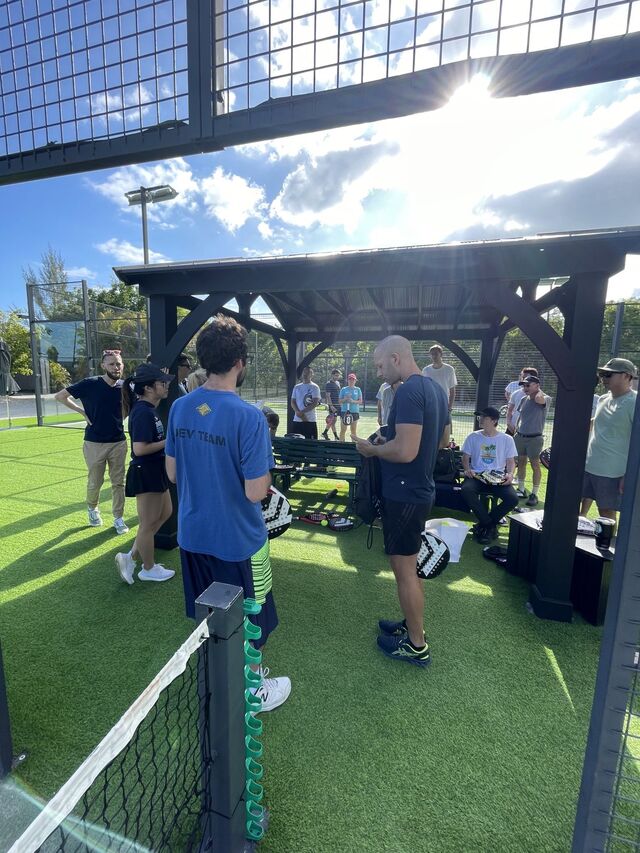
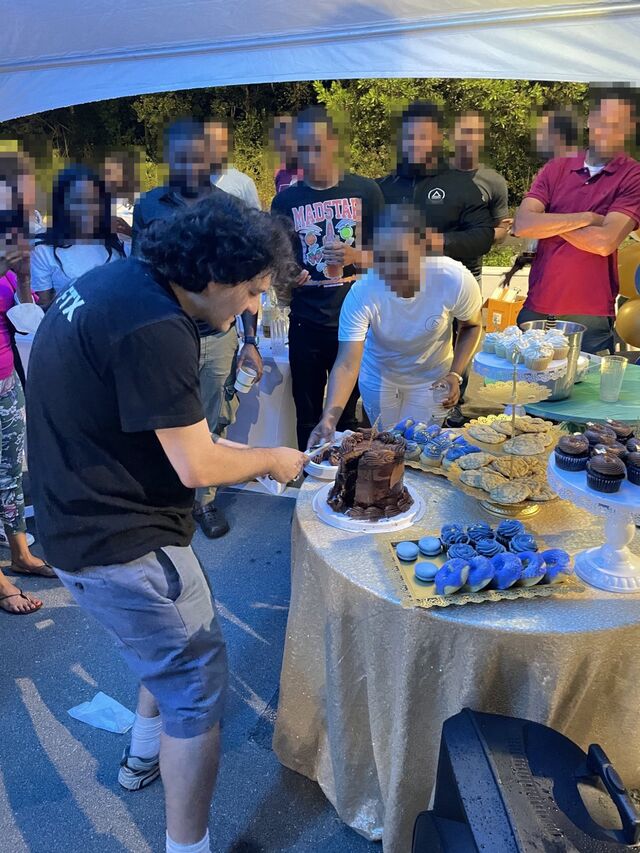


THE PARTIES: The revelry for FTX employees wasn’t the typical Bahamas vacation debauchery. Bankman-Fried played speed chess with his staff and a game called padel, a racket sport that’s a mix between tennis and squash. He celebrated his birthday in 2022 with Bahamian locals who handled office logistics like cleaning and catering.
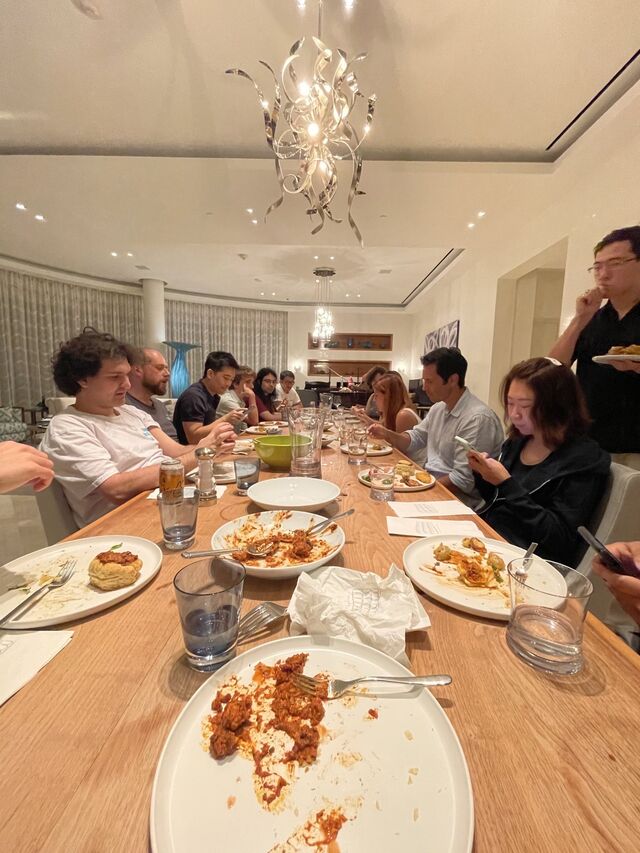


THE INNER CIRCLE: A group of core employees, composed of Bahamas transplants, spent a lot of time dining and playing together. Some of the people would turn against Bankman-Fried as cooperating witnesses who pleaded guilty to crimes.


To: marcher who wrote (200634)8/5/2023 3:58:58 PM
From: TobagoJack  Respond to of 219512
 
Hong Kong's turn at the table, and time to roll them per Message 34081758 11/15/2022
blockchain enabled by crypto definitely have use-cases, and
I had lunch with a fellow this past Sunday, and got some guidance


bloomberg.com

Hong Kong’s New Crypto Regime Awards First Exchange License to HashKey

Hong Kong is seeking to develop a digital-asset center

City’s pivot has received a guarded welcome from firms

By Sarah Zheng, Suvashree Ghosh, and Kiuyan Wong

3 August 2023 at 13:04 GMT+8
Updated on
3 August 2023 at 19:07 GMT+8

The first licenses under Hong Kong’s new crypto regime went to HashKey Exchange and OSL, legalizing the retail trading of tokens in the city as officials seek to foster a global hub for the digital-asset sector.

HashKey will be able to “expand its business scope from serving professional investors to retail users” after receiving an upgrade of its existing licenses, the company said in a Thursday statement. A spokesperson at the Securities and Futures Commission said the licensee “shall at all times be in compliance with the requirements” of the Guidelines for Virtual Asset Trading Platform Operators, which went live in June.

Hong Kong started a mandatory crypto framework this summer in an effort to restore its image as a cutting-edge financial center. The pivot stirred substantial interest and contrasts with a US digital-asset clampdown, but the city has yet to win big investments from an industry chastened by a market rout last year.

HashKey said it has partnered with Standard Chartered Plc to provide fiat currency deposit and withdrawal services. The company also announced the launch of its virtual asset over-the-counter trading service.


HashKey and OSL were the only two crypto exchanges with permits under Hong Kong’s earlier voluntary licensing program.

“This is a significant first-mover advantage,” OSL Chief Executive Officer Hugh Madden said in a statement announcing that retail investors can now trade on its platform, starting with Bitcoin and Ether.

HashKey Group operates in areas from venture funding to asset management and trading. The firm was in early-stage talks to raise $100 million to $200 million at a valuation above $1 billion, Bloomberg News reported in May.

Under Hong Kong’s new rules, crypto exchanges can offer trading to individuals and institutions if they secure and comply with licenses intended to curb the risky practices exposed by the 2022 crash and the collapse of the FTX platform.

Retail investors are restricted to larger coins like Bitcoin and Etherthat feature in at least two recognized, investable indexes. Requirements for risk assessments, insurance cover and asset custody could add to operating costs for the exchanges.

Cautious ReceptionCrypto businesses are proceeding cautiously with new investments after a $1.8 trillion slump in token prices from a 2021 peak and thousands of job losses.

In a Bloomberg News survey in May, 15 major digital-asset outfits — including key exchanges that accounted for the vast bulk of crypto trading volumes — refrained from elaborating on specific investment plans for Hong Kong.

At the same time, the SFC has received dozens of inquiries and crypto firms such as Huobi, OKX and Amber Group have said they plan to apply for licenses. Hong Kong offers not just a local market but also a conduit to Chinese wealth, particularly if Beijing ever loosens a ban on crypto trading on the mainland.

The digital-asset industry is increasingly turning to Asia for growth opportunities as the region clarifies regulations. Hong Kong, Japan, Singapore and South Korea are among the jurisdictions seeking to woo crypto businesses.

They face competition from the likes of Dubai and the European Union. The US, meanwhile, is mired in a crypto fog caused by contradictory court judgments, a turf war between regulatory agencies and disputes about proposed legislation


To: marcher who wrote (200634)8/5/2023 4:04:07 PM
From: TobagoJack  Respond to of 219512
 
Bloomberg is wrong and right w/r to
2. Why is Hong Kong embracing crypto?

I believe Message 34081758

bloomberg.com

Why Hong Kong Wants to Be a Hub for the Crypto Sector

Annabelle Droulers
6 July 2023 at 06:00 GMT+8


Hong Kong, China.

Photographer: Chan Long Hei/BloombergHong Kong wants to become an international crypto hub even as jurisdictions like the US cast a wary eye on the sector. In June, a new licensing system kicked off to regulate crypto exchanges offering trading in tokens like Bitcoin and Ether. The regime is part of Hong Kong’s effort to attract fresh capital and talent back to the city, after its reputation was tarnished by years of harsh Covid-19 curbs and a crackdown on political dissent. Initial reaction was largely positive from digital-asset firms, but there was a lack of major investment pledges. Hong Kong’s push appears to have quiet backing from Beijing even as mainland China sticks with a ban on crypto trading.

1. What are the regulations?

The new rules mean that retail investors can trade coins on exchanges licensed by the city’s Securities and Futures Commission. Hong Kong says its approach is high on consumer protection, with strict criteria on which virtual assets can be bought and sold. Some of the factors that platforms must consider when deciding on tokens to offer include how long a coin has been in circulation, its market capitalization and average daily trading volume. The tokens must also be incorporated in at least two cryptocurrency indexes from prominent institutions, one with a background in traditional finance. In addition, the SFC mandates that crypto firms must put other safeguards in place before accepting customers, like assessing if users have essential knowledge of digital assets before investing, and setting trading or position limits “with reference to the client’s financial situation.”

2. Why is Hong Kong embracing crypto?

Hong Kong’s policy pivot is part of a wider effort to restore the city’s credentials as a cutting-edge financial hub. It’s a reputation that was put at risk by years of strict Covid-19 restrictions and political unrest, which caused the economy to slow and talent to leave. Financial Secretary Paul Chan called cryptocurrencies and other virtual assets “unstoppable new financial innovations” at an event organized by the Hong Kong Association of Banks in November last year, and said there’s a “need to embrace them.” The government has allowed exchange-traded funds investing in CME Group Bitcoin and Ether futures, and sold its inaugural digital green bonds, which use digital ledgers to make the settlement and coupon payment process faster.

3. Is this Hong Kong’s first foray into crypto?

Hong Kong used to be a digital-asset center in earlier years before taking a more skeptical stance. Exchanges including FTX and Crypto.com (previously known as Monaco) were founded in the city. Prior to the new regulatory regime, the SFC had a voluntary licensing program. Only two exchanges — OSL and HashKey — opted into that legacy framework, which permitted them to provide services solely to professional investors with portfolios of at least HK$8 million ($1 million). The rules came after mainland China told platforms to stop trading in cryptocurrencies and banned initial coin offerings, or ICOs, in 2017. The mainland barred crypto transactions and pledged to root out mining of digital assets in September 2021.

4. How significant is mainland China’s prohibition on crypto trading?

One possible risk is that China’s ban could spill over to semi-autonomous Hong Kong. However, Hong Kong regulators have pushed back against this idea, citing the “one country, two systems” principle that permits the former British colony to have its own economic and political system. There are also signs that Hong Kong’s approach could have tacit approval from Beijing. Representatives from China’s Liaison Office and other officials have been spotted at crypto gatherings in the city, according to people familiar with the matter, who also described the encounters as friendly. The low-key support may signal China is keen to use Hong Kong as a testing ground for digital assets. However, Beijing has not indicated any softening of its tight rein on the sector locally amid concern about consumer protection, the potential use of crypto to evade capital controls, and the environmental impact of power-hungry Bitcoin mining.

5. What hurdles remain?

A key issue for crypto firms is regulatory ambiguity. There are a number of areas not specifically addressed by the SFC. These include so-called “NewFi” categories like decentralized finance, derivatives and staking in respect to digital assets. NFTs and utility tokens such as those used for play-to-earn gaming also fall outside the scope of plainly regulated activities. Virtual asset firms operating in these areas need to determine whether their business offerings constitute securities and, if so, require a license. The task is complex and the SFC has indicated decisions will be made on a case-by-case basis. Other obstacles include banking access, as crypto firms face stringent know-your-customer and anti-money laundering rules. The SFC and Hong Kong Monetary Authority have urged lenders to support the sector, and held meetings in April and June to encourage lenders to open accounts for regulated crypto companies. Talent recruitment is another challenge. Responsible officers — who bear the primary responsibility for compliance at a licensed corporation — have been in short supply. Institutional-level crypto traders and developers are also frequently cited as difficult to find.

6. What has been the reception to Hong Kong’s crypto pivot?

Hong Kong’s crypto pivot sparked interest from local and foreign firms given the potential for the city to act as conduit for Chinese wealth if ever the mainland loosens its digital-asset curbs. Companies such as Huobi, OKX and Amber Group said they intended to pursue licenses but no big investment pledges immediately followed the roll out of the new regime. It’s unclear if the regulations are attractive enough to entice firms to invest heavily. The focus on retail-investor protection could dent profitability if areas like margin trading, staking and derivatives remain off-limits. In addition, the crypto market globally is yet to fully recover from its $1.5 trillion rout last year.

