Below article is quite amazing, I find, for I think it might be wrong at too many places, and yet the author still manages to come up w/ a conclusion I suspect holds (some) water …
It is crucial to acknowledge and accept the current multipolar world, wherein nations like China— and eventually India and others—will assume a more significant, perhaps even leading, role in diplomacy and conflict resolution. The U.S. should adopt a more agile and flexible approach to adjust to this reality and appreciate the potential benefits it offers, rather than viewing it as only a negative and dangerous development. Particularly in the Middle East, the U.S. must refrain from pursuing the same traditional approach, which has consistently resulted in taking sides and being a part of the problem rather than the solution. Otherwise, we risk a future where countries turn to China for peacemaking and to the U.S. only for warcraft. zerohedge.com
The Rise Of China And The Permanence Of Change Authored by Siamak Tundra Naficy via RealClear Wire,
In the midst of concerns regarding the debacle in Russia, it is important to recognize what still looks to be predominantly an Asian century. While the Western media and audience focus on the horrific crisis in Ukraine and Russia's brutal invasion, this truth still hangs on the horizon. The United States will inevitably be pulled to prioritize Asia more firmly. The important question then is whether this fact can be managed awkwardly or gracefully.
[url=]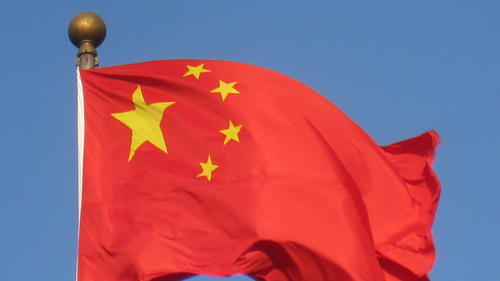 [/url] [/url]
China's exponential growth follows a hard arithmetic, ensuring that regardless of its future trajectory, in terms of scale, it will not revert to a time before the 1980s. The nation is actively pursuing hegemony (or as you prefer—primacy or “leadership”) in Asia, presenting significant implications for the United States and its global footprint. With its status as the largest near-peer rival and the richest challenger the U.S. has ever faced, China's growth demands a concentrated effort due to the scarcity of both resources and time. Considering the implications of changing power dynamics, it is essential to balance power with goals and assess whether commitments ultimately benefit or hinder the United States.
As an anthropologist, I am interested in what is particular and local but also in what is true across time and space. America's alliances worldwide—supported by military bases and shared resources—augment its hard power and reach, but to put it bluntly—they also serve to contain its allies and control regions. NATO, then, exists not solely to counter Russia or formerly, the Soviet Union, but also to ensure stabilization in ways that favor the United States.
We talk of the permanence of things, like alliances. But alliances can and do shift. The word ‘alliance’ itself has become overused, vague, and means too many things. It is used too often and means little. The lexicon of partnerships, Memorandums of Understanding (MoUs), and Treaty Allies ought to transparently reflect their prescription of commitments during crisis and not be merely descriptive. More often than not, these coalitions have veered and expanded beyond their intended scope.
Undeniably, the theater of maritime drills, and technological and intelligence sharing confer benefits, but these alone don’t mean unmeasured support. History demonstrates that even superpowers can abandon. For instance, in 1999, despite all its talk of a pan-Slavic identity Russia pragmatically deserted the Serbs in Kosovo. The optimism Ukraine held prior to the Russian invasion exemplify the complexities of relying on assumed alliances. Afterall, while Ukraine was not in NATO, NATO was in Ukraine. NATO’s presence in Ukraine in the past decade was not insignificant.
So, it’s unfortunate but not particularly surprising if many Ukrainians believe they were led down a primrose path. The recent NATO 2023 summitagain was replete with self-aggrandizement, with open-ended assurances to Ukraine. So, though not a big advocate of NATO expansion, it seems to me prudent to favor a more serious presence in say the Baltics—to not leave it to local interpretations of Article 5— such that to attack a NATO state is to attack NATO physically and materially.
Or consider the case of Saudi Arabia, who when in 2019, was integral to U.S. President Trump’s failed “maximal pressure” campaign against neighboring Iran, found themselves suddenly on the frontlines. An extremely daring and sophisticated attack against two major oil facilities in the Kingdom knocked out half of Saudi Arabia’s oil production for three weeks. Many believe this was a drone attack by Iran. The Saudis expected that as a result of this incident the U.S. would call on the Carter Doctrine and attack Iran. But that is not what Trump had in mind. He made it clear that he did not see this as an attack on the United States. “I’m somebody who would not like to have war,” Trump said at the time.
This retort sent shockwaves throughout the region and built up into what is called the Baghdad Dialogue in which the Iraqis facilitated diplomacy across the Persian Gulf (as well as diplomacy between the Turks and the Egyptians) that help mend fences. For many years the House of Saud refused diplomatic engagement with Iran. Various efforts by the Iranians to start negotiations with the Saudis had been declined. Part of the reason the Saudis felt that they could decline diplomacy was the belief that the U.S. would have its back—no matter what.
But, when some states could no longer hide behind American military power, diplomacy—as brokered through China—became the next best option. Surely, the more rapprochements are engineered (by anyone) the better for all stakeholders and populations (the military-industrial complex excepting). Moreover, the more China expands its reach and ventures into new territories, the more resentment it may provoke. The potential emergence of an " ugly Chinese" could be a worse alternative to the " ugly American," which might ultimately redound to the United States.
Power Dynamics and the Role of Smaller PowersThe tail can also start to wag the dog. A kind of reverse leverage can emerge— where “small powers” or “client states” goad their “patrons” to do things that are not in their interest. In their “We Now Know” (1998), International Relations (IR) theorists Richard L. Russel and John Lewis Gaddis write that during the Cold War, both regimes and rebels “learned to manipulate the Americans and Russians by laying on flattery, pledging solidarity, feigning indifference, threatening defection, or even raising the specter of their own collapse and the disastrous results that might flow from it.” We’ve seen this again under a number of different administrations, both republican and democrat—where for example former SecDef Bob Gates warned that the Saudis wanted to “fight Iran to the last American.”
It is crucial for politicians to avoid overstating the unyielding nature of their support, especially when it might have unintended consequences for other states. NATO states declare guarantees towards Ukraine as if it doesn’t affect other NATO states in a domino fashion. Some will argue that there is benefit to strategic ambiguity. But, even if this helps build some kind of deterrence against rivals, it does little for friends. At the very least, there should be an audit at home to determine what the U.S. is willing to bleed for and what it isn’t.
The U.S. continues to sell arms to authoritarian states like Saudi Arabiaeven when it doesn't produce the things (i.e., democracy, human rights—and/or stability, security) that the U.S. says it wants it to produce. One reason for this is that there is currently little else to discuss with the Saudis— not values or shared ideals of what a stable region might look like. Therefore, weapons become a proxy for an actual relationship.
Another reason is the profits arms sales bring—historically playing an oversized role in foreign policy. This failure to restrain the military-industrial complex undermines global stability. The U.S. sells weapons to over 100 countries—including countries it sanctions. There are conflicts where both sides are using U.S. arms.
This profit motive also undermines the idea that foreign policy is guided by a moral compass. Ironically, a principles-guided approach could yield better results. The U.S. should lean towards its strengths vis-à-vis Russia and China. A principled actor guides allies, unafraid that they will move in the direction of Russia or China. After all, arms sales alone don’t guarantee coordinated defense.
U.S. Secretary of State Anthony Blinken, rightfully took a measured and optimistic analysis of the Nordstream pipeline disaster and suggested it as a good opportunity for Europe to wean itself off of Russian gas. However, he was remiss in failing to recognize the U.S.'s need to cut its dependence on authoritarian states. In an increasingly multipolar world, the dynamics of power globally have shifted. We should expect and prepare for states to increasinglyact in their self-interest.
The main aim of U.S. foreign policy should be to avoid a Eurasian super-threat. Not as in a two-headed giant, but two different states—Russia and China—overcoming natural tensions by having a common adversary. If this threat is deigned inevitable, then we had better buckle in for a world of hurt to come. Realists tend to have a hawkish view of the defenses that a state requires, but a cautious view and a restrained finger on the trigger of hard power. Their perspective brings a necessary tonic to a faith-based and expansive view of security, and the unrestrained use of hard power abroad. History suggests that large powers try and maintain their regional spheres, reasonably or not.
China's “ Marching Westward” strategy aims to rebalance its geostrategy, and confront President Obama's 2012 “ Pivot to East Asia”—relying on land access in the west to solve the riddle of U.S. maritime supremacy in the east. Belt and Road Initiative is a means to that end, and China's attention to West Asia has only intensified due to Russia's invasion of Ukraine and American pressure in the Indo-Pacific and Taiwan.
As the U.S. confronts the challenges presented by Russia, China, and the shifting global landscape, it must acknowledge the prominence of the Asian century. While the crisis in Ukraine rightfully garners attention, the gravitational pull of Asia on the United States cannot be ignored. Balancing power dynamics, reevaluating the enduring nature of alliances, and considering the perspectives of smaller powers are crucial steps in addressing the complexities of our contemporary world.
It is crucial to acknowledge and accept the current multipolar world, wherein nations like China— and eventually India and others—will assume a more significant, perhaps even leading, role in diplomacy and conflict resolution. The U.S. should adopt a more agile and flexible approach to adjust to this reality and appreciate the potential benefits it offers, rather than viewing it as only a negative and dangerous development. Particularly in the Middle East, the U.S. must refrain from pursuing the same traditional approach, which has consistently resulted in taking sides and being a part of the problem rather than the solution. Otherwise, we risk a future where countries turn to China for peacemaking and to the U.S. only for warcraft.
Siamak Tundra Naficy is a senior lecturer at the Naval Postgraduate School’s Department of Defense Analysis. An anthropologist with an interdisciplinary approach to social, biological, psychological, and cultural issues, his interests range from the anthropological approach to conflict theory to sacred values, cognitive science, and animal behavior. The views expressed are the author’s and do not reflect those of the Department of Defense, the U.S. Navy, the U.S. Army, or the Naval Postgraduate School. |



