SI
SI
discoversearch

We've detected that you're using an ad content blocking browser plug-in or feature. Ads provide a critical source of revenue to the continued operation of Silicon Investor.  We ask that you disable ad blocking while on Silicon Investor in the best interests of our community.  If you are not using an ad blocker but are still receiving this message, make sure your browser's tracking protection is set to the 'standard' level.
Politics : Formerly About Advanced Micro Devices -- Ignore unavailable to you. Want to Upgrade?


To: Eric who wrote (1429261)12/18/2023 9:32:39 AM
From: Maple MAGA 2 Recommendations

Recommended By
longz
Mick Mørmøny

  Read Replies (2) | Respond to of 1577126
 
Whale oils were also used to make high quality lubricants which were thin, didn't corrode metals and remained liquid in freezing temperatures. These qualities made them ideal for use in rifles, watches, marine chronometers and many other military instruments and machines.

A Whale-Oiled Machine

In the 1800s, whaling was a vast and brutal industry–sometimes as deadly for the sailors involved as it was for the whales. And the global epicenter of whaling could be found in New Bedford, MA. All this slaughter wasn’t to feed hungry people with whale meat. It was about all the things people could make out of whale blubber, including soap and of course: lantern fuel. It burned bright and smoke-free.



Whale oil rendered in landed in New Bedford was sold to light street lamps, homes and businesses all over the world. The city even adopted the Latin motto Lucem diffundo which means “I spread light”. The phrase can still be seen stamped on the sidewalks outside of city hall. And then, too, there were all of the ways oil could be used as a lubricant, including but not limited to use on: bicycles, bolts, cameras, carriages, cash registers, tapped hands, chisels clippers, cutlery, doors, dentists’ tools, fans, firearms floors, fishing reels, flutes, furniture, golf clubs, harnesses, horses, hoofs, freezers, and locks.
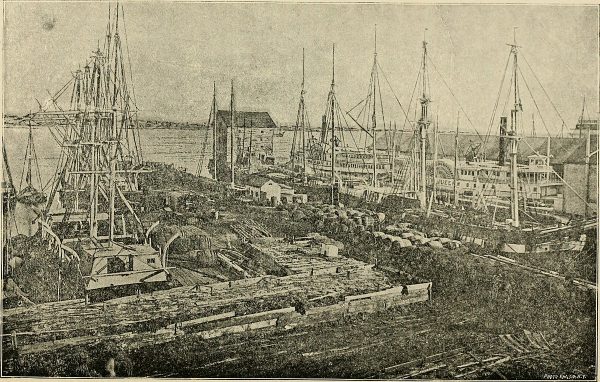


In the 1800’s, whaling transformed New Bedford from a sleepy fishing town into one of the wealthiest cities in the world. Fruitful whaling voyages built vast fortunes for the merchants and financiers that ran the industry. Society men and women strutted through town sporting the latest trends in European fashion. And colorful Victorian mansions sprang up by the dozens. All built with that sweet sweet whale money.

The whaling industry pulled in anyone looking to make a quick buck. And one of those people was a local, New Bedford businessman named William F. Nye. Nye was something of a serial entrepreneur. He had dabbled in everything from selling fruit to building church organs. And, like just about everyone in town, he looked to whales for his next big score. Nye realized there were already plenty of people hawking New Bedford whale oil for lamps and soap. Those markets were saturated. But in 1865, he found a new way to sell whales to the world.
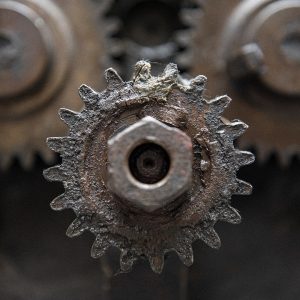


For most of history, machines were lubricated with whatever local material was lying around — animal fat, vegetable oil, sometimes just water or mud. But the industrial revolution brought an explosion of new kinds of machinery. Factories sprung up, brimming with steam engines and spinning machines and looms. Everything newer, bigger, and faster…and in need of lubrication. And suddenly, whatever peanut oil was lying around was no longer good enough to keep the modern mechanical world moving at top speed. The 1800s saw a wave of patents for new kinds of lubricant. These were not materials just plucked out of nature, but refined and mixed together. There were blends of graphite and lard, olive oil with rock dust.
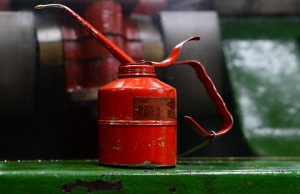


It was a world full of friction. Scientists and engineers were racing to design quality lubrication for it. And William F. Nye realized there was something special about the oil from those giant marine mammals landing in the port of New Bedford. by the half-million. Among other things, whale blubber stays slippery and it doesn’t congeal in the cold like other oils. Whale oil is also non-corrosive. It doesn’t wear down metals. A vital quality given the proliferation of metal machinery at the time. Oil from sperm whales was a particularly good all-temperature lubricant — and sperm whales live everywhere from the equator all the way to the edge of the sea ice in both the Arctic and Antarctic.
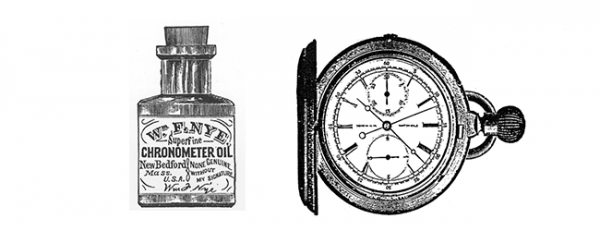


Many of his first customers were whalers themselves. He sold the refined oil from sperm whales and some other species as a lubricant for timepieces, including chronometers. Those machines helped ships navigate at sea, often for years on end. Nye’s business grew, and he moved his refining operation from his kitchen, into a store front and eventually into an entire factory where he could make lubrication for all the new fangled machines coming to the American home.
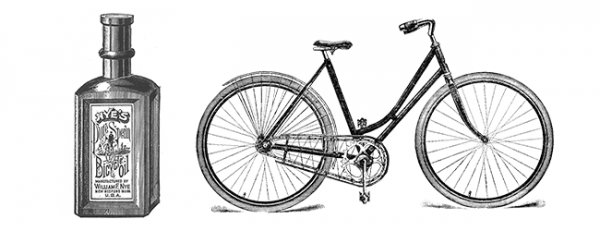


Nye wasn’t the only one refining whale oil into lubricant. But it was Nye who had the idea to specialize — to engineer a unique refining process for each application of lubricant. He made a super-fine lubricant just for music boxes. And thicker one just for firearms. For every machine, he had a lubricant. Nye led the charge of oil refiners who applied the principles of chemistry, physics and engineering to the problem of friction.

By 1900, Nye had started experimenting with lubricant from different sources, like olive oil and neat’s-foot oil made from cattle bones. His specialty, though, remained his high-end whale oil, which he was shipping to eager customers all over the world. Nye had accomplished what he set out to do: open up a whole new market for whale-based products, and make a lot of money doing it. But the early decades of the 20th century brought what we know today as: supply chain issues.
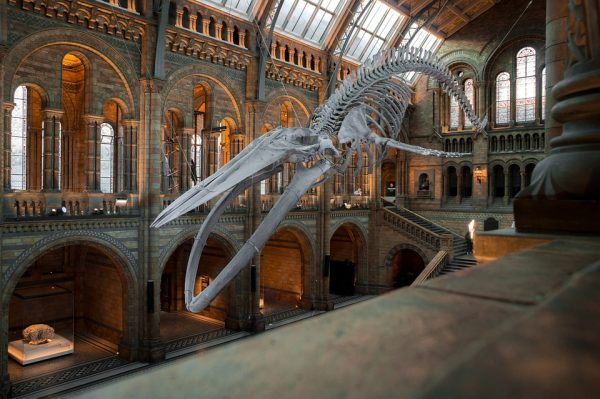


Through decades of overfishing, New Bedford’s whalers had harpooned themselves in the foot. Whales grew scarce. And ships had to chase their remaining prey further and further out to sea. The last whaling ship from New Bedford Harbor sailed in 1927. The city’s once-colorful mansions fell into drab disrepair. And Nye’s supply of raw materials largely dried up. The market for lubricants was taken over by cheaper, petroleum-based products.

Petroleum products were terrible for the climate and toxic to people living near refineries. But as lubricants, they had a lot going for them. They were cheap and they could be mass-produced by oil companies. And they didn’t require death-defying years-long voyages in pursuit of an elusive white whale.: But just because oil companies could make lubricants on a massive scale, doesn’t mean those lubricants worked perfectly. In 1966, a British engineer named Peter Jost published a paper that would become the constitution for the small-but-growing field of research he dubbed: tribology. The study of friction, wear, and lubrication. It found that unnecessary wear and tear on machinery–caused by bad lubrication–was dragging down the nation’s productivity by more than 1 percent of GDP, the equivalent of billions of dollars.
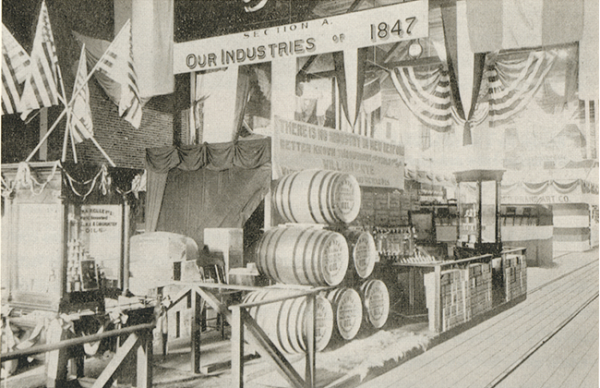


Around the time of the Jost report, Nye’s few remaining employees began tinkering with a new type of lubricant. Not whale oil, not petroleum, but synthetic lubricant–made with new kinds of chemicals cooked up in the lab. Synthetics meant the company could turbocharge their designing of specialty lubricants for particular applications. Because now there were so many different chemicals to try out.



As the computer era dawned, Nye spent the late 20th century crafting custom lubricants that were just right for keeping keyboards clacking, printers printing, and hard drives spinning at thousands of rotations per minute. With a focus on synthetics, the company built itself back up. Today they make more than 1000 different lubricants, each designed to enable the most important technologies of our time. Including the Perseverance Rover currently exploring the surface of Mars — not to mention Xbox controllers.

Good grease doesn’t happen by accident. It’s taken centuries of careful design and development to keep our machines running, from the seafaring age to the digital age. Even though William Nye was chasing a fad when he got into the whale business, he stumbled upon selling a solution to a problem that would need solving until the end of time.


To: Eric who wrote (1429261)12/18/2023 1:01:26 PM
From: Broken_Clock1 Recommendation

Recommended By
longz

  Read Replies (2) | Respond to of 1577126
 
more Ervasiveness


To: Eric who wrote (1429261)12/18/2023 1:02:32 PM
From: Broken_Clock1 Recommendation

Recommended By
bjzimmy

  Read Replies (1) | Respond to of 1577126
 
I assume you want Hunter and Swalwell jailed?

Eric Swalwell And The Politics Of Contempt

Monday, Dec 18, 2023 - 07:30 AM

Authored by Jonathan Turley,

Below is my column in The Hill on the bizarre scene last week in front of the Capitol when Rep. Eric Swalwell drove up with Hunter Biden and facilitated a flagrant act of contempt of Congress, a federal crime.

[url=][/url]

Swalwell used his office and presumably his staff to assist in the defiance of a valid subpoena for Hunter to appear before a House committee.

The House will now presumably hold Hunter in contempt and refer the matter for prosecution. The question is what to do with Eric Swalwell.

Here is the column:

This week, millions of people were glued to their televisions as Hunter Biden defied a House subpoena in a press conference with the Capitol building in the background. It was an act of legal self-immolation as the president’s son engaged in flagrant contempt of Congress, a federal crime.

Stranger still was that behind Hunter was standing his lawyer, Abbe Lowell, who watched as his client effectively begged to be criminally charged.

But it was a familiar figure behind Lowell that was the most incongruous: Rep. Eric Swalwell (D-Calif.).

At first, one had to wonder whether Swalwell had simply wandered by the presser on the way to his office. But the Biden team set up the conference on the Senate side — out of the reach of the House sergeant at arms, who might not have reacted well to an act of open contempt of Congress on his side of the Capitol.

We later learned that Swalwell was not there simply as a pedestrian, but as a participant. It was Swalwell who helped orchestrate the defiance of his own House and facilitated an alleged federal crime.

As first reported by the Washington Examiner, Swalwell used his official position to reserve the space for the press conference and lent his assistance to Hunter in refusing to appear before the House committees investigating his father, President Biden. It was a curious role for a former House impeachment manager to play in assisting in the obstruction of an impeachment inquiry of three House committees.

Of course, Swalwell has argued for the rounding up of anyone who aided and abetted the unlawful conduct during the Capitol riot on Jan. 6, 2021.

Indeed, in 2021 Swalwell sponsored a resolution exploring whether dozens of Republican colleagues could be expelled under the 14th Amendment for aiding and abetting an insurrection by “making unsubstantiated claims of systematic election and voter fraud.”

Now, Swalwell was standing in front of the same building aiding and abetting both a potential crime and the obstruction of congressional proceedings.

Hunter was not just committing contempt of Congress; he was parading his contempt with Swalwell as the drum major.

What followed him was contempt on steroids. All Hunter had to do was walk into the building behind him to appear in the deposition and plead the 5th Amendment to refuse to testify, as others have done. The only option he did not have was to refuse to appear.

Swalwell insisted that it was the fault of the House for insisting on a closed-door deposition, which he portrayed as outrageous. It was another hypocritical moment since the Democrats insisted on the same process for witnesses, including those who appeared before the Jan. 6th committee.

It was also how Swalwell and his colleagues handled the investigation of the Ukrainian telephone call by Trump. Indeed, Swalwell participated in closed depositions and then gave interviews after they were held in private.

There are various reasons for closed deposition preceding public hearings.

First, these depositions allow professional staff to conduct questioning in a methodical and professional manner.

In a public hearing, questioning is conducted by members who are often ill-equipped for substantive inquiries.

Second, Hunter must be asked about an array of financial documents and communications involving names and privacy protected information.

In a public hearing, the use of such documents would trigger redactions and interruptions in their use.

Third, these depositions allow for in-depth questioning on transactions and communications.

In a public hearing, members are confined to a five-minute rule that guarantees questioning cannot achieve much, if any, depth. Both Hunter and Swalwell likely knew that, and that is precisely why they wanted a public hearing. Notably, after saying that he wanted to answer all questions in public, Hunter then refused to answer any questions in public put forward by the press.

The fourth and most important reason for the deposition is that the House wants it this way. Witnesses, even a president’s son, do not get to choose how or when they appear.

Two Trump associates – Steven Bannon and Peter Navarro – refused to appear in the House and were quickly held in contempt by a majority of the House, including Swalwell.

Indeed, President Biden himself has maintained that defying subpoenas cannot be tolerated. When subpoenas were issued to Republicans during the House’s Jan. 6 investigation, Biden declared: “I hope that the committee goes after them and holds them accountable criminally.”

The Justice Department clearly agreed. Under Attorney General Merrick Garland, Bannon went from a failure to appear to an actual indictment in just two months.

It also does not matter that the House formally approved the impeachment inquiry only after Hunter’s press conference. As I testified in the first Biden impeachment inquiry hearing, there is no requirement of a formal vote. Indeed, the Democrats did not initially hold a formal vote in their own impeachment of Trump. Hunter’s subpoena was issued by two committees with inherent subpoena authority under three different House rules, including the authority given to the House Oversight Committee.

It was a valid subpoena.

The question is not whether Hunter Biden can be held in contempt; of course he can. The question is what to do with Eric Swalwell.

Swalwell has long courted controversy. Republicans tossed him off the House Intelligence Committee due to his purported affair with an alleged Chinese spy named Fang Fang.

This is different. Swalwell was not charged in the Chinese affair, including by the House Ethics Committee. This was a criminal act directed against the House itself.

Recently, the House censored Rep. Jamaal Bowman (D-N.Y.) for pulling a fire alarm before a major vote. Here Swalwell played a key role in obstructing a major House investigation. Where Bowman’s offense was treated as a misdemeanor, Hunter’s offense is a felony.

Swalwell did not simply facilitate a crime, he went out of his way to associate himself with it.

Swalwell surely knew that he was helping Hunter in defying a subpoena and obstructing the investigation into Joe Biden. He not only helped set up the press conference but made sure that he was in the camera frame behind Hunter for every network audience. He presumably utilized congressional staff to assist in this effort.

In taking these actions, Swalwell encouraged and facilitated the contempt of Congress. While his conduct may not warrant a criminal charge, it certainly warrants action from the House.

The issue is whether the House has a right to demand answers in this investigation. One member was particularly passionate in 2018 in calling for contempt sanctions against Steve Bannon: “If they don’t force him to answer legitimate questions, they will be ceding Congress’ authority, and we’ll be setting a very, very dangerous precedent that people can just tell Congress what they will and will not answer, and will show no resolve to use our subpoena power to get to the bottom of what’s going on.”

That was Eric Swalwell.

