US shocked that when it trains terrorists they actually become terrorists.
Like a pit bull owner when his fight dog attacks his "owner"....
Niger to US: Pack Up Your Forever War
April 3, 2024
Save
Nick Turse on the the latest in a series of stalemates, fiascos, or outright defeats in Washington’s Global War on Terror.
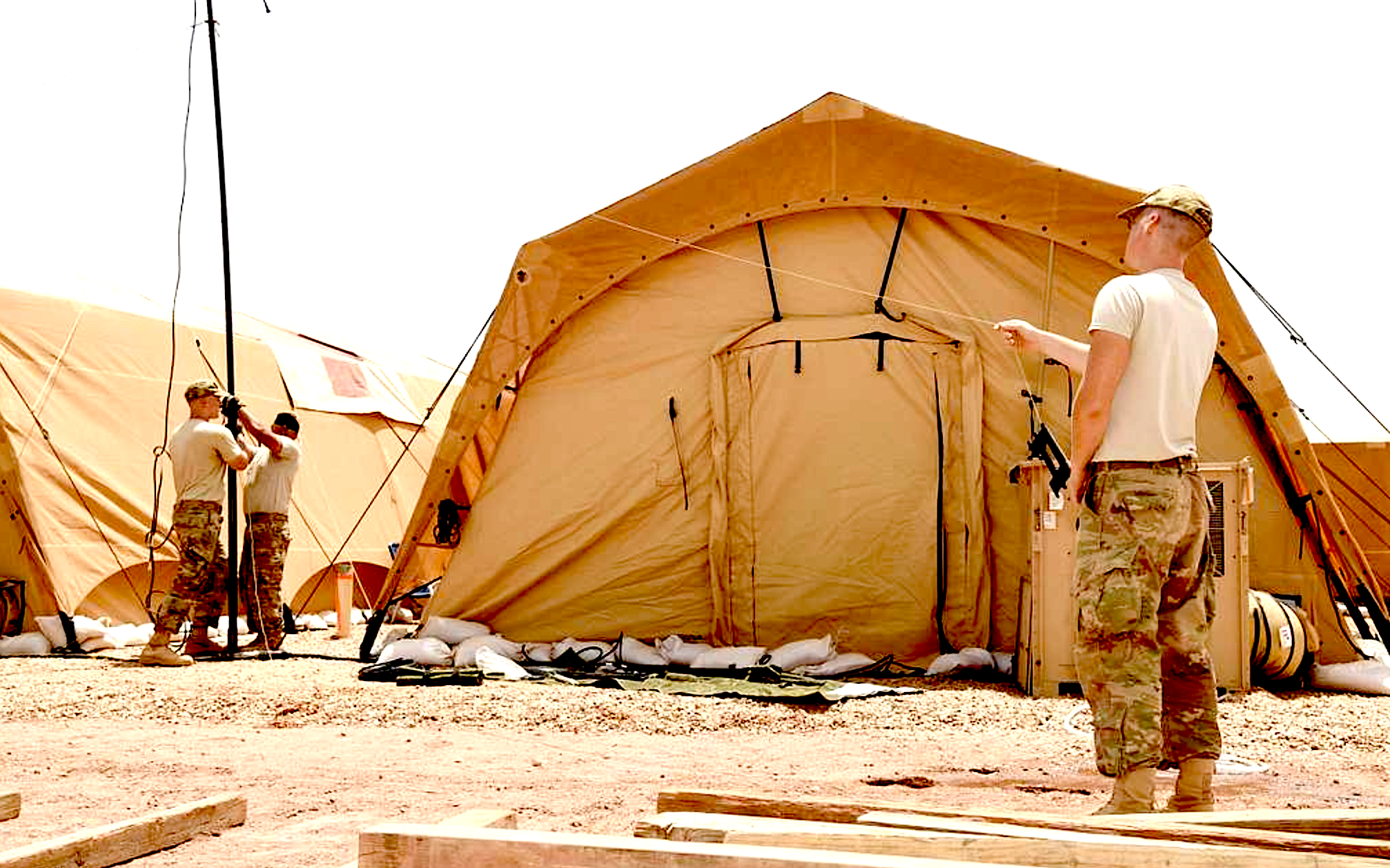 U.S. Air Force members setting up a communication antenna for use by deployed service members and contractors at Nigerien Air Base 201 in Agadez, September 2017. (U.S. Air Force, Joshua R. M. Dewberry) U.S. Air Force members setting up a communication antenna for use by deployed service members and contractors at Nigerien Air Base 201 in Agadez, September 2017. (U.S. Air Force, Joshua R. M. Dewberry)
By Nick Turse
TomDispatch.com
 Dressed in green military fatigues and a blue garrison cap, Colonel Major Amadou Abdramane, a spokesperson for Niger’s ruling junta, took to local television last month to criticize the United States and sever the long-standing military partnership between the two countries. Dressed in green military fatigues and a blue garrison cap, Colonel Major Amadou Abdramane, a spokesperson for Niger’s ruling junta, took to local television last month to criticize the United States and sever the long-standing military partnership between the two countries.
“The government of Niger, taking into account the aspirations and interests of its people, revokes, with immediate effect, the agreement concerning the status of United States military personnel and civilian Defense Department employees,” he said, insisting that their 12-year-old security pact violated Niger’s constitution.
Another sometime Nigerien spokesperson, Insa Garba Saidou, put it in blunter terms:
“The American bases and civilian personnel cannot stay on Nigerien soil any longer.”
The announcements came as terrorism in the West African Sahel has spiked and in the wake of a visit to Niger by a high-level American delegation, including Assistant Secretary of State for African Affairs Molly Phee and General Michael Langley, chief of U.S. Africa Command, or AFRICOM.
Niger’s repudiation of its ally is just the latest blow to Washington’s sputtering counterterrorism efforts in the region. In recent years, longstanding U.S. military partnerships with Burkina Faso and Mali have also been curtailed following coups by U.S.-trained officers. Niger was, in fact, the last major bastion of American military influence in the West African Sahel.
Such setbacks there are just the latest in a series of stalemates, fiascos, or outright defeats that have come to typify America’s Global War on Terror.
During 20-plus years of armed interventions, U.S. military missions have been repeatedly upended across Africa, the Middle East, and South Asia, including a sputtering stalemate in Somalia, an intervention-turned-blowback-engine in Libya, and outright implosions in Afghanistan and Iraq.
This maelstrom of U.S. defeat and retreat has left at least 4.5 million people dead, including an estimated 940,000 from direct violence, more than 432,000 of them civilians, according to Brown University’s Costs of War Project. As many as 60 million people have also been displaced due to the violence stoked by America’s “forever wars.”
President Joe Biden has both claimed that he’s ended those wars and that the United States will continue to fight them for the foreseeable future — possibly forever — “to protect the people and interests of the United States.” The toll has been devastating, particularly in the Sahel, but Washington has largely ignored the costs borne by the people most affected by its failing counterterrorism efforts.
‘Reducing Terrorism’
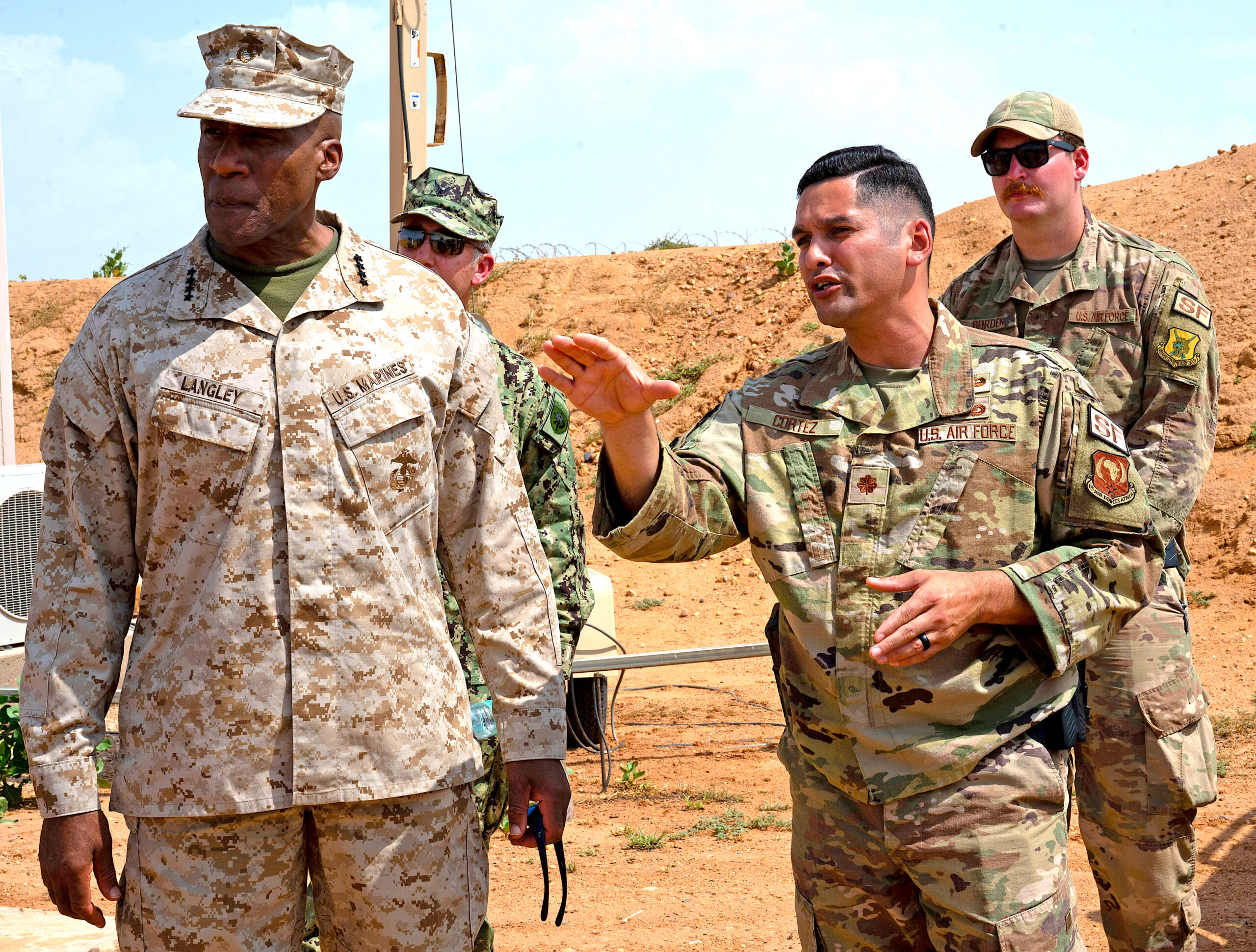 Langley, left, in September 2022, on his first visit to the Sahel as commander. (DoD, Alexandra Longfellow) Langley, left, in September 2022, on his first visit to the Sahel as commander. (DoD, Alexandra Longfellow)
Roughly 1,000 U.S. military personnel and civilian contractors are deployed to Niger, most of them near the town of Agadez at Air Base 201 on the southern edge of the Sahara desert. Known to locals as “ Base Americaine,” that outpost has been the cornerstone of an archipelago of U.S. military bases in the region and is the key to America’s military power projection and surveillance efforts in North and West Africa. Since the 2010s, the U.S. has sunk roughly a quarter-billion dollars into that outpost alone.
Washington has been focused on Niger and its neighbors since the opening days of the Global War on Terror, pouring military aid into the nations of West Africa through dozens of “security cooperation” efforts, among them the Trans-Sahara Counterterrorism Partnership, a program designed to “counter and prevent violent extremism” in the region. Training and assistance to local militaries offered through that partnership has alone cost America more than $1 billion.
Just prior to his recent visit to Niger, AFRICOM’s General Langley went before the Senate Armed Services Committee to rebuke America’s longtime West African partners. “During the past three years, national defense forces turned their guns against their own elected governments in Burkina Faso, Guinea, Mali, and Niger,” he said. “These juntas avoid accountability to the peoples they claim to serve.”
Langley did not mention, however, that at least 15 officers who benefited from American security cooperation have been involved in 12 coups in West Africa and the greater Sahel during the Global War on Terror. They include the very nations he named: Burkina Faso (2014, 2015, and twice in 2022); Guinea (2021); Mali (2012, 2020, and 2021); and Niger (2023).
In fact, at least five leaders of a July coup in Niger received U.S. assistance, according to an American official. When they overthrew that country’s democratically elected president, they, in turn, appointed five U.S.-trained members of the Nigerien security forces to serve as governors.
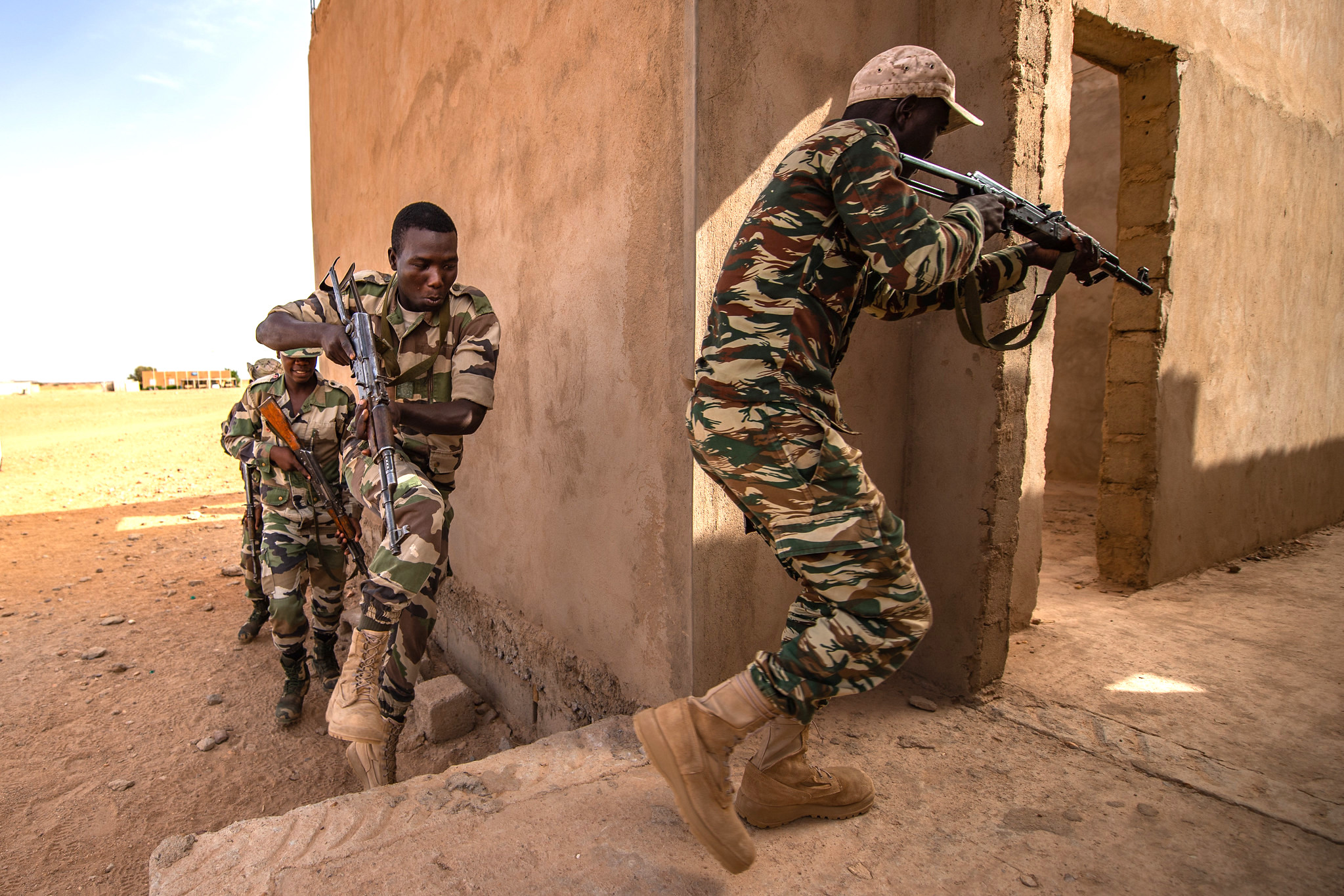 Niger Armed Forces training on U.S. Air Base 201 in Agadez, Niger, July 10, 2019. (U.S. Air Force, Devin Boyer) Niger Armed Forces training on U.S. Air Base 201 in Agadez, Niger, July 10, 2019. (U.S. Air Force, Devin Boyer)
Langley went on to lament that, while coup leaders invariably promise to defeat terrorist threats, they fail to do so and then “turn to partners who lack restrictions in dealing with coup governments… particularly Russia.” But he also failed to lay out America’s direct responsibility for the security freefall in the Sahel, despite more than a decade of expensive efforts to remedy the situation.
“We came, we saw, he died,” then-Secretary of State Hillary Clinton joked after a U.S.-led NATO air campaign helped overthrow Colonel Muammar el-Qaddafi, the longtime Libyan dictator, in 2011.
President Barack Obama hailed the intervention as a success, even as Libya began to slip into near-failed-state status. Obama would later admit that “failing to plan for the day after” Qaddafi’s defeat was the “ worst mistake” of his presidency.
As the Libyan leader fell, Tuareg fighters in his service looted his regime’s weapons caches, returned to their native Mali, and began to take over the northern part of that nation.
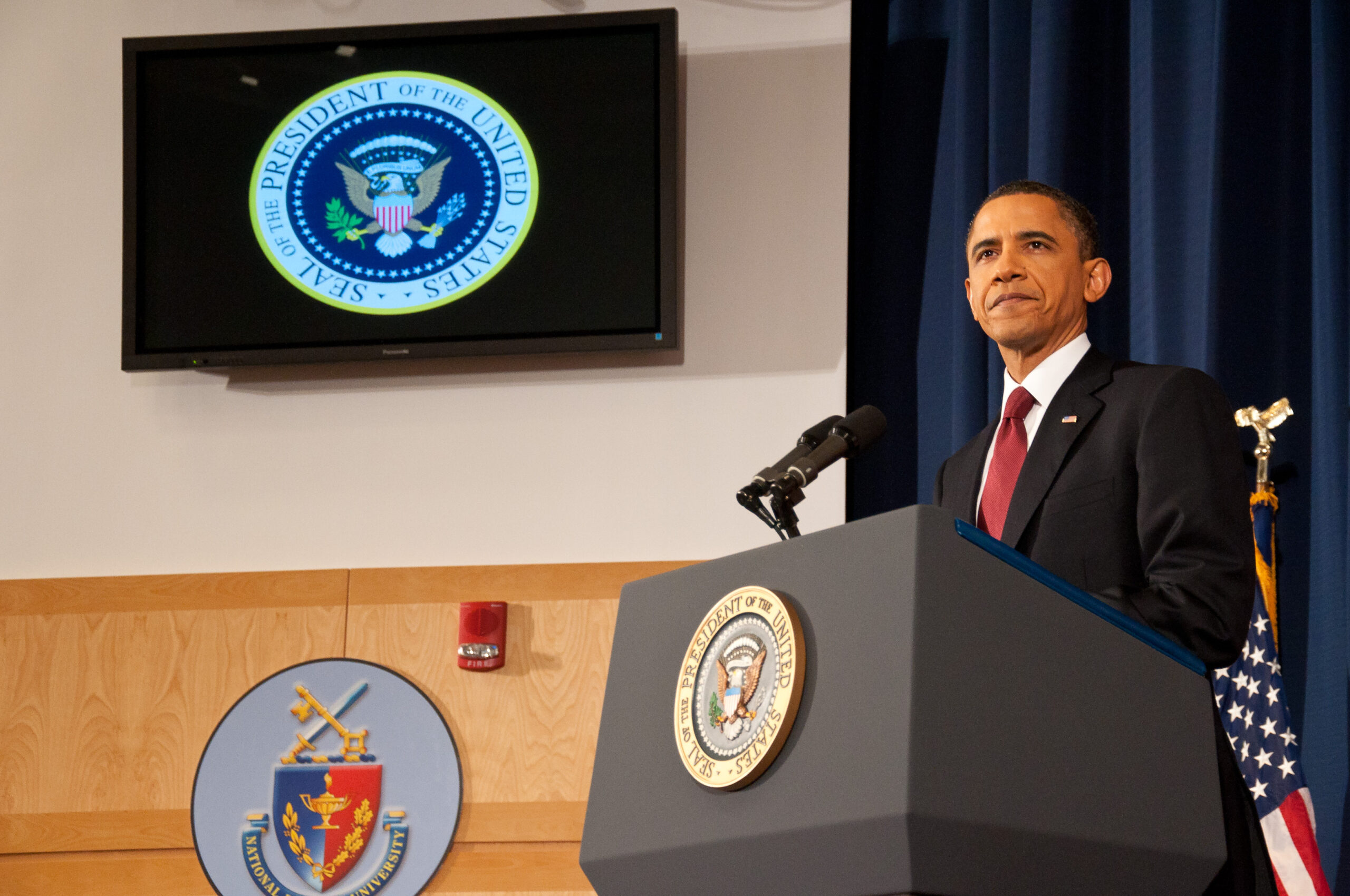 March 28, 2011: Obama delivering an address in Washington, D.C., to update the American people on the situation in Libya, including the transition to NATO command and control. (National Defense University, Wikimedia Commons, CC BY 2.0) March 28, 2011: Obama delivering an address in Washington, D.C., to update the American people on the situation in Libya, including the transition to NATO command and control. (National Defense University, Wikimedia Commons, CC BY 2.0)
Anger in Mali’s armed forces over the government’s ineffective response resulted in a 2012 military coup led by Amadou Sanogo, an officer who learned English in Texas, and underwent infantry-officer basic training in Georgia, military-intelligence instruction in Arizona, and mentorship by Marines in Virginia.
Having overthrown Mali’s democratic government, Sanogo proved hapless in battling local militants who had also benefited from the arms flowing out of Libya.
With Mali in chaos, those Tuareg fighters declared their own independent state, only to be pushed aside by heavily armed Islamist militants who instituted a harsh brand of Shariah law, causing a humanitarian crisis. A joint French, American, and African mission prevented Mali’s complete collapse but pushed the Islamists to the borders of both Burkina Faso and Niger, spreading terror and chaos to those countries.
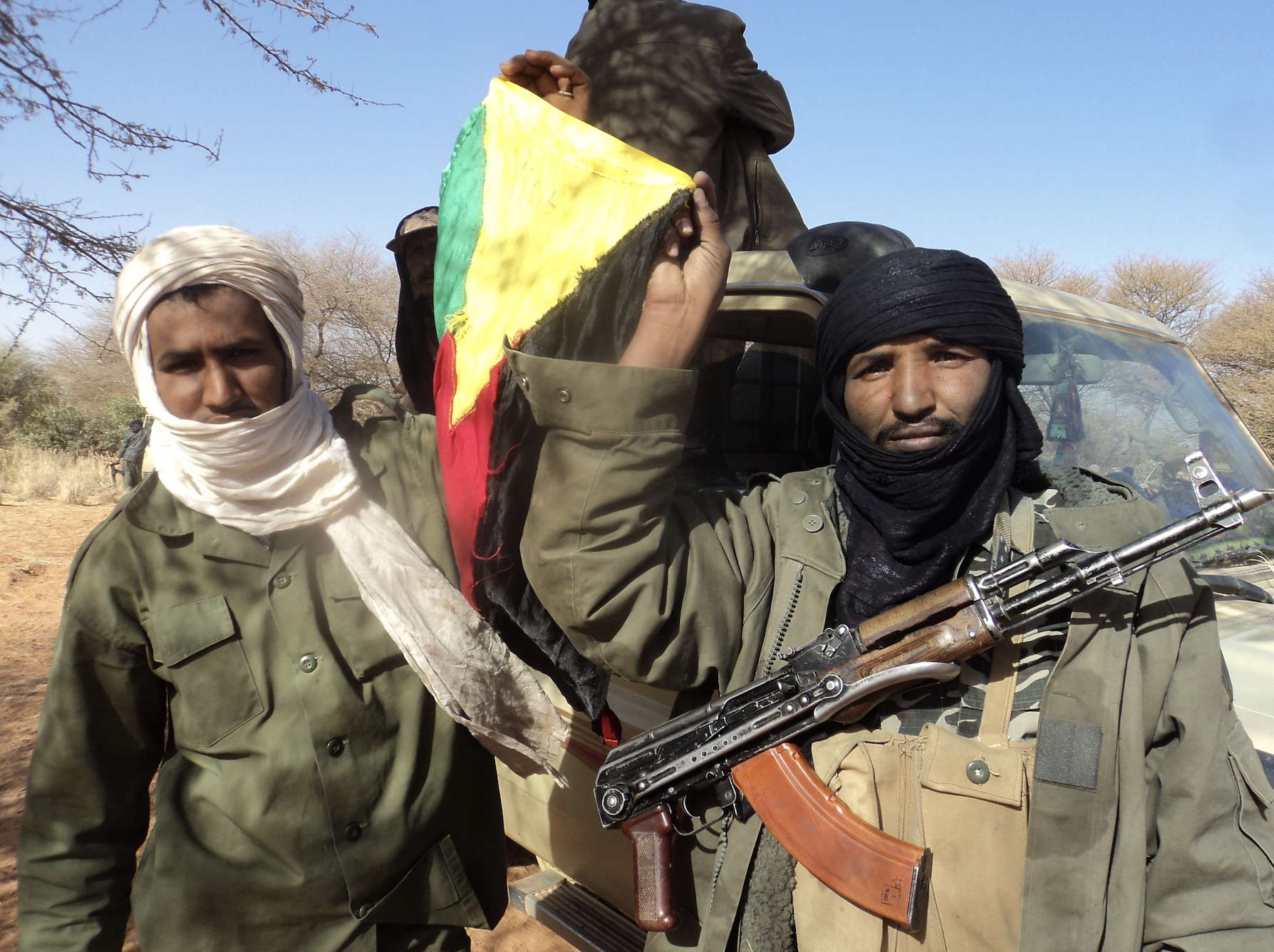 Touareg fighters in Mali, Jan. 26, 2012. (Magharebia, Wikimedia Commons, CC BY 2.0) Touareg fighters in Mali, Jan. 26, 2012. (Magharebia, Wikimedia Commons, CC BY 2.0)
Since then, the nations of the West African Sahel have been plagued by terrorist groups that have evolved, splintered, and reconstituted themselves. Under the black banners of jihadist militancy, men on motorcycles armed with Kalashnikov rifles regularly roar into villages to impose zakat (an Islamic tax) and terrorize and kill civilians.
Relentless attacks by such armed groups have not only destabilized Burkina Faso, Mali, and Niger, prompting coups and political instability, but have spread south to countries along the Gulf of Guinea. Violence has, for example, spiked in Togo (633 percent) and Benin (718 percent), according to Pentagon statistics.
American officials have often turned a blind eye to the carnage. Asked about the devolving situation in Niger, for instance, State Department spokesperson Vedant Patel recently insisted that security partnerships in West Africa “are mutually beneficial and are intended to achieve what we believe to be shared goals of detecting, deterring, and reducing terrorist violence.” His pronouncement is either an outright lie or a total fantasy.
After 20 years, it’s clear that America’s Sahelian partnerships aren’t “reducing terrorist violence” at all.
Even the Pentagon tacitly admits this. Despite U.S. troop strength in Niger growing by more than 900 percent in the last decade and American commandos training local counterparts, while fighting and even dying there; despite hundreds of millions of dollars flowing into Burkina Faso in the form of training as well as equipment like armored personnel carriers, body armor, communications gear, machine guns, night-vision equipment, and rifles; and despite U.S. security assistance pouring into Mali and its military officers receiving training from the United States, terrorist violence in the Sahel has in no way been reduced.
In 2002 and 2003, according to State Department statistics, terrorists caused 23 casualties in all of Africa. Last year, according to the Africa Center for Strategic Studies, a Pentagon research institution, attacks by Islamist militants in the Sahel alone resulted in 11,643 deaths – an increase of more than 50,000 percent.
Pack Up Your War
In January 2021, President Joe Biden entered the White House promising to end his country’s forever wars. He quickly claimed to have kept his pledge. “I stand here today for the first time in 20 years with the United States not at war,” Biden announced months later. “We’ve turned the page.”
Late last year, however, in one of his periodic “ war powers”missives to Congress, detailing publicly acknowledged U.S. military operations around the world, Biden said just the opposite. In fact, he left open the possibility that America’s forever wars might, indeed, go on forever.
“It is not possible,” he wrote, “to know at this time the precise scope or the duration of the deployments of United States Armed Forces that are or will be necessary to counter terrorist threats to the United States.”
Niger’s U.S.-trained junta has made it clear that it wants America’s forever war there to end. That would presumably mean the closing of Air Base 201 and the withdrawal of about 1,000 American military personnel and contractors.
So far, however, Washington shows no signs of acceding to their wishes. “We are aware of the March 16th statement… announcing an end to the status of forces agreement between Niger and the United States,” said Deputy Pentagon Press Secretary Sabrina Singh. “We are working through diplomatic channels to seek clarification… I don’t have a timeframe of any withdrawal of forces.”
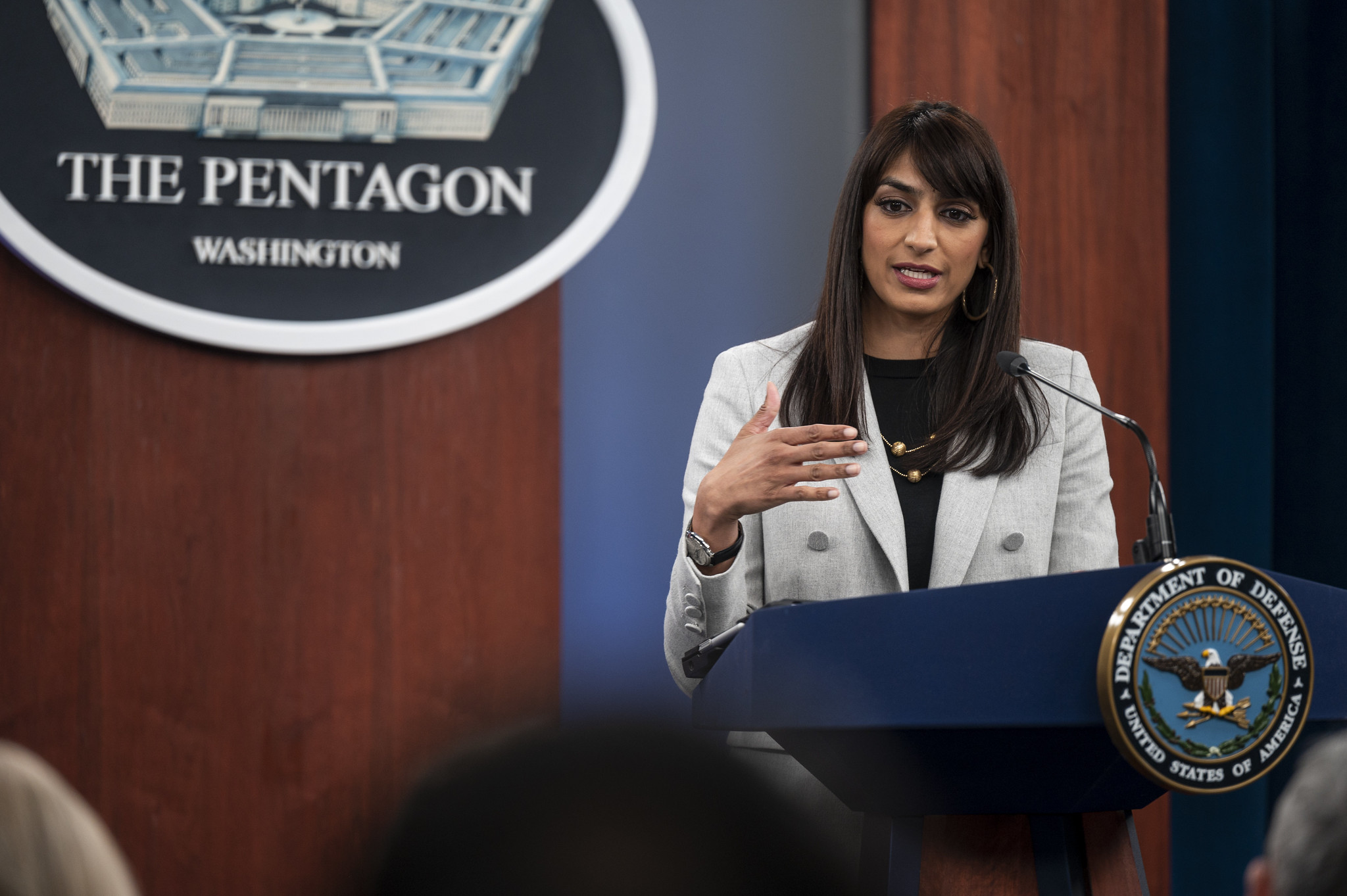 Singh addressing a briefing, November 2023. (DoD, Alexander Kubitza) Singh addressing a briefing, November 2023. (DoD, Alexander Kubitza)
“The U.S. military is in Niger at the request of the Government of Niger,” said AFRICOM spokesperson Kelly Cahalan last year. Now that the junta has told AFRICOM to leave, the command has little to say.
Email return receipts show that TomDispatch’s questions about developments in Niger sent to AFRICOM’s press office were read by a raft of personnel including Cahalan, Zack Frank, Joshua Frey, Yvonne Levardi, Rebekah Clark Mattes, Christopher Meade, Takisha Miller, Alvin Phillips, Robert Dixon, Lennea Montandon, and Courtney Dock, AFRICOM’s deputy director of public affairs, but none of them answered any of the questions posed.
Cahalan instead referred TomDispatch to the State Department. The State Department, in turn, directed TomDispatch to the transcript of a press conference dealing primarily with U.S. diplomatic efforts in the Philippines.
“USAFRICOM needs to stay in West Africa… to limit the spread of terrorism across the region and beyond,” General Langley told the Senate Armed Services Committee in March.
But Niger’s junta insists that AFRICOM needs to go and U.S. failures to “limit the spread of terrorism” in Niger and beyond are a key reason why.
“This security cooperation did not live up to the expectations of Nigeriens — all the massacres committed by the jihadists were carried out while the Americans were here,” said a Nigerien security analyst who has worked with U.S. officials, speaking on the condition of anonymity.
America’s forever wars, including the battle for the Sahel, have ground on through the presidencies of George W. Bush, Barack Obama, Donald Trump and Joe Biden with failure the defining storyline and catastrophic results the norm.
From the Islamic State routing the U.S.-trained Iraqi army in 2014 to the Taliban’s victory in Afghanistan in 2021, from the forever stalemate in Somalia to the 2011 destabilization of Libya that plunged the Sahel into chaos and now threatens the littoral states along the Gulf of Guinea, the Global War on Terror has been responsible for the deaths, wounding, or displacement of tens of millions of people.
Carnage, stalemate, and failure seem to have had remarkably little effect on Washington’s desire to continue funding and fighting such wars, but facts on the ground like the Taliban’s triumph in Afghanistan have sometimes forced Washington’s hand.
Niger’s junta is pursuing another such path, attempting to end an American forever war in one small corner of the world — doing what Biden pledged but failed to do.
Still, the question remains: Will the Biden administration reverse a course that the U.S. has been on since the early 2000s? Will it agree to set a date for withdrawal? Will Washington finally pack up its disastrous war and go home?
Nick Turse is the managing editor of TomDispatch and a fellow at the Type Media Center. He is the author most recently of Next Time They’ll Come to Count the Dead: War and Survival in South Sudan and of the bestselling Kill Anything That Moves.
This article is from TomDispatch.com. |



