Satellite images show damage at Iran military sites after Israel attack
Israeli strikes appeared to have damaged Iran's ballistic missile production and air defense sites, affecting Tehran's ability to carry out any future strikes, analysts told NBC News.
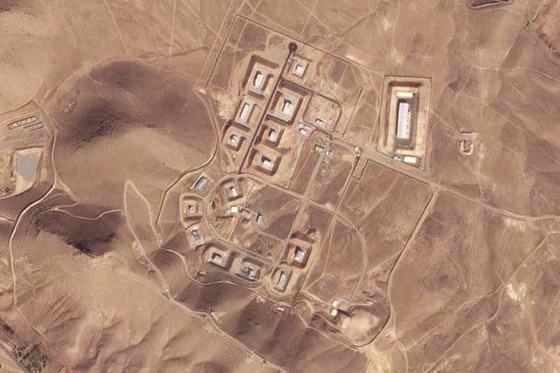
Damaged buildings at Iran's Khojir military base outside Tehran on Saturday.
Planet Labs PBC via AP
Oct. 29, 2024, 6:00 PM EDT
By Freddie Clayton and Mithil Aggarwal
Satellite imagery suggests that Israeli’s attack on Iran appears to have damaged a key element of Tehran’s ballistic missile production and air defense sites, potentially leaving it exposed to any future attacks, military analysts told NBC News.
It remains unclear exactly how many sites were targeted, but analysts said the satellite images from Planet Labs suggest that the strikes on Saturday appear to have hit Khojir, a sprawling missile site near Tehran, and Parchin, a massive military base that was part of Iran’s defunct nuclear program.
Israel's attack appears to have been more limited than some had expected.
0 seconds of 1 minute, 49 secondsVolume 90%

Tensions escalate after Iran says it will respond to Israel’s airstrikes
01:49
The rare direct attack — a response to Tehran’s Oct. 1 barrage of more than 200 ballistic missiles — followed intense U.S. diplomacy to try to contain a hostile exchange between the two powers that has stoked fears of an all-out war.
“We hit hard Iran’s defense capabilities and its ability to produce missiles that are aimed at us,” Israeli Prime Minister Benjamin Netanyahu said in a speech, adding that the attack had met all objectives.
Iran’s supreme leader, Ayatollah Ali Khamenei, said the attack “should neither be downplayed nor exaggerated,” with any possible response from Tehran still a subject of speculation.
Israel appears to have targeted Iran’s missile production process instead of storage sites — thereby making it harder for Tehran to add to an already dwindling supply of missiles.
It hit buildings where specialized fuel mixers produce propellent for ballistic missiles by mixing various chemicals, said Fabian Hinz, a research fellow for defense and military analysis at the International Institute for Strategic Studies, a London-based think tank. That's an easier, and more effective, target than missiles themselves.
“It was a very smart attack, targeting all the sensitive sites,” Hinz said in an interview.
"The missiles are dispersed all over the country, some of them are deep inside Iran and deep underground. Attacking them would be very difficult," he said. "But when you hit the missile production facilities, you can't produce them anymore."
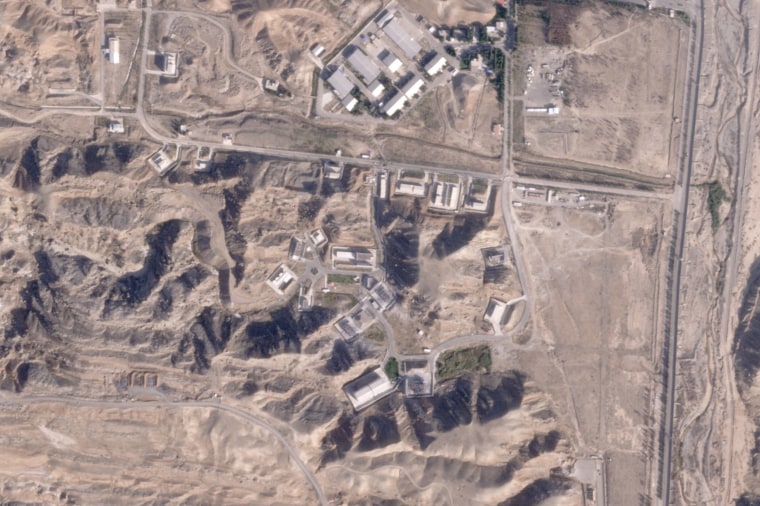 Damaged buildings at Iran's Parchin military base outside Tehran on Sunday.Planet Labs PBC via AP Damaged buildings at Iran's Parchin military base outside Tehran on Sunday.Planet Labs PBC via AP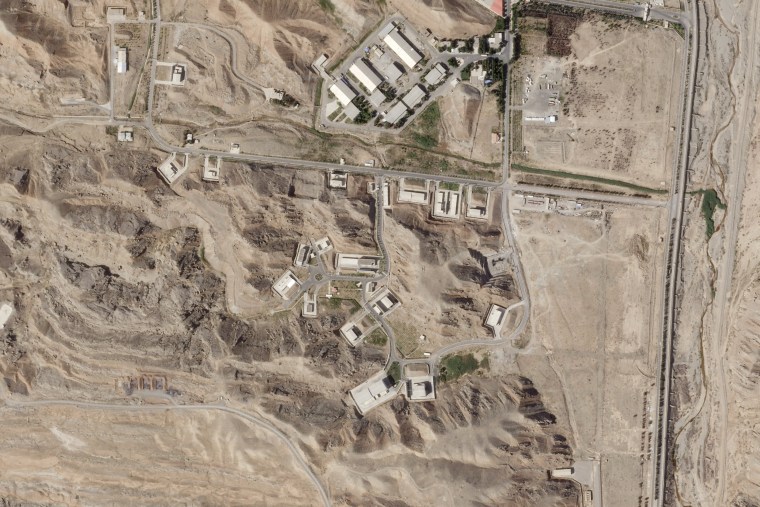 The Parchin military base on Sept. 9, before the Israeli attack.Planet Labs PBC via AP The Parchin military base on Sept. 9, before the Israeli attack.Planet Labs PBC via AP
Iran “will likely need months or possibly a year or more to acquire new mixing equipment,” said the Institute for the Study of War, a policy research organization focused on U.S. national security, citing the satellite images.
Iran initially downplayed Saturday's attack, acknowledging only that four soldiers were killed. But a spokesperson for Iran’s foreign ministry said Monday that the nation’s response will be “firm and serious.”
Tehran also has not acknowledged damage at either the Khojir or Parchin military sites.
"Downplaying the attack can be used to avoid a response, but it may also be a reflexive response, to buy time before a decision is made on whether and how to respond," said Michael Horowitz, head of intelligence at Le Beck International, a security and risk management consultancy.
The strikes also appear to have hit a site known as Taleghan 2, which was previously linked to Iran’s nuclear program. And Israel may have also hit some of Iran’s space capabilities in Shahroud, particularly the production of space launch vehicles, Horowitz said.
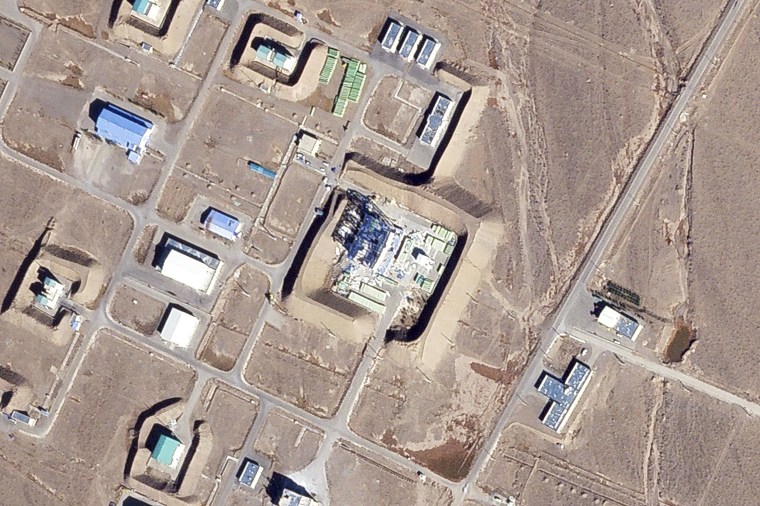 Damaged buildings at the Revolutionary Guard's Shahroud Space Center in Iran's Semnan Province on Tuesday. Planet Labs PBC via AP Damaged buildings at the Revolutionary Guard's Shahroud Space Center in Iran's Semnan Province on Tuesday. Planet Labs PBC via AP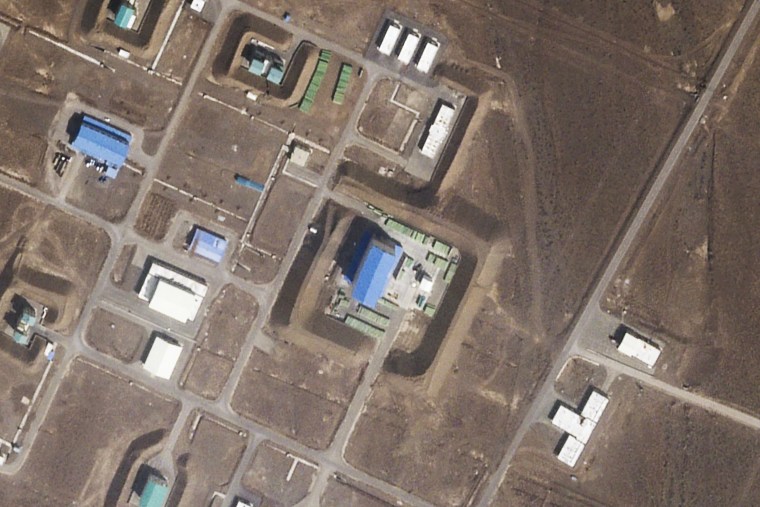 The Shahroud Space Center in March.Planet Labs PBC via AP The Shahroud Space Center in March.Planet Labs PBC via AP
While Iranian officials say the country will respond, Hinz and others said it doesn’t have a lot of options.
“Their arsenal is depleting,” Hinz said. “Imagine the Iranians conduct this retaliatory strike, and it doesn’t cause a lot of damage. Israelis will be like, well, they just spent 200 more of their missiles.”
Rebuilding any of these defense and weapons facilities could take months, putting a strain on any potential response by Iran, which is now more exposed and less able to replenish missiles.
"Any future Israel attack will be even more effective," Horowitz said. "This sends a message to Iran: Things will be much worse if you continue down the path of escalation and respond."
Freddie Clayton
Freddie Clayton is a freelance journalist based in London.

Mithil Aggarwal |



