SI
SI
discoversearch

We've detected that you're using an ad content blocking browser plug-in or feature. Ads provide a critical source of revenue to the continued operation of Silicon Investor.  We ask that you disable ad blocking while on Silicon Investor in the best interests of our community.  If you are not using an ad blocker but are still receiving this message, make sure your browser's tracking protection is set to the 'standard' level.
Politics : The Trump Presidency -- Ignore unavailable to you. Want to Upgrade?


To: i-node who wrote (311706)11/25/2024 11:43:10 AM
From: Brumar891 Recommendation

Recommended By
rdkflorida2

  Respond to of 363490
 
Grandpa0594

One of the things Musk wants to eliminate is the 52 billion left on the infrastructure bill that was to be used to supply low-cost internet to rural areas. He claims StarLink could be used at a quarter of the cost. Now put aside that this is an outrageous grit that he himself will benefit from, but StarLink installation costs range from $599 - $2,500, of which the home owner is required to pay for, as opposed to no cost for fiber optics other than about a $20 rental for a router. And monthly rental for fiber runs around $59 - $69, as compared to $120/month for StartLink.

This I'm guessing what to expect over the next 4 years. Pad the pockets of the already wealthy and screw the common folks


To: i-node who wrote (311706)11/25/2024 11:48:28 AM
From: Sam3 Recommendations

Recommended By
bentway
CentralParkRanger
ralfph

  Read Replies (2) | Respond to of 363490
 
More lies and lunacy from Trump and his team.

Since the night of the November 5, election, Trump and his allies have insisted that he won what Trump called “an unprecedented and powerful mandate.” But as the numbers have continued to come in, it’s clear that such a declaration is both an attempt to encourage donations— fundraising emails refer to Trump’s “LANDSLIDE VICTORY”—and an attempt to create the illusion of power to push his agenda.

The reality is that Trump’s margin over Democratic nominee Vice President Kamala Harris will likely end up around 1.5 points. According to James M. Lindsay, writing for the Council of Foreign Relations, it is the fifth smallest since 1900, which covers 32 presidential races. Exit polls showed that Trump’s favorability rating was just 48% and that more voters chose someone other than Trump. And, as Lindsay points out, Trump fell 4 million votes short of President Joe Biden in 2020.

Political science professor Lynn Vavreck of the University of California, Los Angeles, told Peter Baker of the New York Times: “If the definition of landslide is you win both the popular vote and Electoral College vote, that’s a new definition” On the other hand, she added, “Nobody gains any kind of influence by going out and saying, ‘I barely won, and now I want to do these big things.’”

Trump’s allies are indeed setting out to do big things, and they are big things that are unpopular.

Trump ran away from Project 2025 during the campaign because it was so unpopular. He denied he knew anything about it, calling it “ridiculous and abysmal,” and on September 16 the leader of Trump’s transition team, Howard Lutnick, said there were “Absolutely zero. No connection. Zero” ties between the team and Project 2025. Now, though, Trump has done an about-face and has said he will nominate at least five people associated with Project 2025 to his administration.

Those nominees include Russell Vought, one of the project's key authors, who calls for dramatically increasing the powers of the president; Tom Homan, who as acting director of Immigration and Customs Enforcement (ICE) oversaw the separation of children from their parents; John Ratcliffe, whom the Senate refused in 2019 to confirm as Director of National Intelligence because he had no experience in intelligence; Brendan Carr, whom Trump wants to put at the head of the Federal Communications Commission and who is already trying to silence critics by warning he will punish broadcasters who Trump feels have been unfair to him; and Stephen Miller, the fervently anti-immigrant ideologue.

Project 2025 calls for the creation of an extraordinarily strong president who will gut the civil service and replace its nonpartisan officials with those who are loyal to the president. It calls for filling the military and the Department of Justice with those loyal to the president. And then, the project plans that with his new power, the president will impose Christian nationalism on the United States of America, ending immigration, and curtailing rights for LGBTQ+ individuals as well as women and racial and ethnic minorities.

Project 2025 was unpopular when people learned about it.

And then there is the threat of dramatic cuts to the U.S. government, suggested by the so-called “Department of Government Efficiency,” or DOGE, headed by billionaires Elon Musk and Vivek Ramaswamy. They are calling for cuts of $2 trillion to the items in the national budget that provide a safety net for ordinary Americans at the same time that Trump is promising additional tax cuts for the wealthy and corporations. Musk, meanwhile, is posturing as if he is the actual president, threatening on Saturday, for example: “Those who break the law will be arrested and that includes mayors.”

On Meet the Press today, current representative and senator-elect Adam Schiff (D-CA) reacted to the “dictator talk,” with which Trump is threatening his political opponents, pointing out that "[t]he American people…voted on the basis of the economy—they wanted change to the economy—they weren’t voting for dictatorship. So I think he is going to misread his mandate if that’s what he thinks voters chose him for.”

That Trump and his team are trying desperately to portray a marginal victory as a landslide in order to put an extremist unpopular agenda into place suggests another dynamic at work.

For all Trump’s claims of power, he is a 78-year-old man who is declining mentally and who neither commands a majority of voters nor has shown signs of being able to transfer his voters to a leader in waiting.

Trump’s team deployed Vice President–elect J.D. Vance to the Senate to drum up votes for the confirmation of Florida representative Matt Gaetz to become the United States attorney general. But Vance has only been in the Senate since 2022 and is not noticeably popular. He—and therefore Trump—was unable to find the votes the wildly unqualified Gaetz needed for confirmation, forcing him to withdraw his name from consideration.

The next day, Gaetz began to advertise on Cameo, an app that allows patrons to commission a personalized video for fans, asking a minimum of $550.00 for a recording. Gaetz went from United States representative to Trump’s nominee for U.S. attorney general to making videos for Cameo in a little over a week.

It is a truism in studying politics that it’s far more important to follow power than it is to follow people. Right now, there is a lot of power sloshing around in Washington, D.C.

Trump is trying to convince the country that he has scooped up all that power. But in fact, he has won reelection by less than 50% of the vote, and his vice president is not popular. The policies Trump is embracing are so unpopular that he himself ran away from them when he was campaigning. And now he has proposed filling his administration with a number of highly unqualified figures who, knowing the only reason they have been elevated is that they are loyal to Trump, will go along with his worst instincts. With that baggage, it is not clear he will be able to cement enough power to bring his plans to life.

If power remains loose, it could get scooped up by cabinet officials, as it was during a similarly chaotic period in the 1920s. In that era, voters elected to the presidency former newspaperman and Republican backbencher Warren G. Harding of Ohio, who promised to return the country to “normalcy” after eight years of the presidency of Democrat Woodrow Wilson and the nation’s engagement in World War I. That election really was a landslide, with Harding and his running mate, Calvin Coolidge, winning more than 60% of the popular vote in 1920.

But Harding was badly out of his depth in the presidency and spent his time with cronies playing bridge and drinking upstairs at the White House—despite Prohibition—while corrupt members of his administration grabbed all they could.

With such a void in the executive branch, power could have flowed to Congress. But after twenty years of opposing first Theodore Roosevelt, and then William Howard Taft, and then Woodrow Wilson, Congress had become adept at opposing presidents but had split into factions that made it unable to transition to using power, rather than opposing its use.

And so power in that era flowed to members of Harding’s Cabinet, primarily to Treasury Secretary Andrew Mellon and Secretary of Commerce Herbert Hoover, who put into place a fervently pro-business government that continued after Harding’s untimely death into the presidency of Calvin Coolidge, who made little effort to recover the power Harding had abandoned. After Hoover became president and their system fell to ruin in the Great Depression, Franklin Delano Roosevelt took their lost power and used it to create a new type of government.

In this moment, Trump’s people are working hard to convince Americans that they have gathered up all the power in Washington, D.C., but that power is actually still sloshing around. Trump is trying to force through the Senate a number of unqualified and dangerous nominees for high-level positions, threatening Republican senators that if they don’t bow to him, Elon Musk will fund primary challengers, or suggesting he will push them into recess so he can appoint his nominees without their constitutionally-mandated advice and consent.

But Trump and his people do not, in fact, have a mandate. Trump is old and weak, and power is up for grabs. It is possible that MAGA Republicans will, in the end, force Republican senators into their camp, permitting Trump and his cronies to do whatever they wish.

It is also possible that Republican senators will themselves take back for Congress the power that has lately concentrated in presidents, check the most dangerous and unpopular of Trump’s plans, and begin the process of restoring the balance of the three branches of government.


Notes:

substack.com

substack.com

substack.com

substack.com

substack.com

substack.com

substack.com

substack.com

substack.com

substack.com

X:

elonmusk/status/1860425033450975678

Bluesky:

atrupar.com/post/3lbpdhkn5722f

bernybelvedere.bsky.social/post/3lbq5fdhzls2m

heathercoxrichardson.substack.com


To: i-node who wrote (311706)11/25/2024 11:53:46 AM
From: Brumar892 Recommendations

Recommended By
ralfph
rdkflorida2

  Respond to of 363490
 
@AntiToxicPeople


Elon Musk’s former pal, philosopher Sam Harris, claimed the billionaire is in the throes of social media addiction, “snorting ketamine and tweeting at all hours of the day and night,” he added in the Friday episode of his The Bulwark podcast. Harris called Musk’s X behavior “palpably, visibly deranged” and said he signal boosts “lunatics.” Harris explained, “We’re seeing the total derangement of a personality based on social media addiction.” Harris also slammed Musk’s so-called “service to humanity by boosting to 200 million followers obvious lies and conspiracy theories.” t.co

10:20 AM · Nov 24, 2024


To: i-node who wrote (311706)11/25/2024 12:17:18 PM
From: Brumar891 Recommendation

Recommended By
rdkflorida2

  Respond to of 363490
 
The Big Ticket Items to Consider Buying Before Trump's Tariffs Kick In
Published Nov 25, 2024 at 5:00 AM ESTUpdated Nov 25, 2024 at 9:16 AM EST

By Katherine Fung
Senior Writer

If your refrigerator is on the fritz, or your iPhone is starting to do the thing where it doesn't hold a charge, this holiday season might be the time to trade up — before the sweeping tariffs proposed by President-elect Donald Trump could go into effect next year.

On the campaign trail, Trump promised to implement a 60 percent blanket tariff on Chinese goods, and a 10 to 20 percent tariff on imports from all other trading partners. He also warned that he'd be willing to put a 25 percent tariff on Mexican goods if the country doesn't cooperate with his immigration plans.

The president-elect has claimed that the massive trade escalation wouldn't impact consumer prices and would tax other countries while boosting American manufacturing. Most economists, including Republicans, disagree and say tariffs tend to get passed on in the form of higher prices for consumers.

"Shoppers eyeing big-ticket items this Black Friday should consider moving quickly, especially with potential tariffs looming that could potentially raise prices," Chip Lupo, a writer and analyst at WalletHub, told Newsweek. "Electronics, appliances, cars, and furniture are particularly vulnerable to price increases because of their reliance on imported parts and materials."

This past year, the U.S. imported $4 trillion in goods and services, according to the U.S. Census Bureau. Of that total, $433 billion came from China. If Trump's proposed tariffs go into effect, the National Retail Federation (NRF) estimates that American consumers could lose between $46 billion and $78 billion in spending power each year.
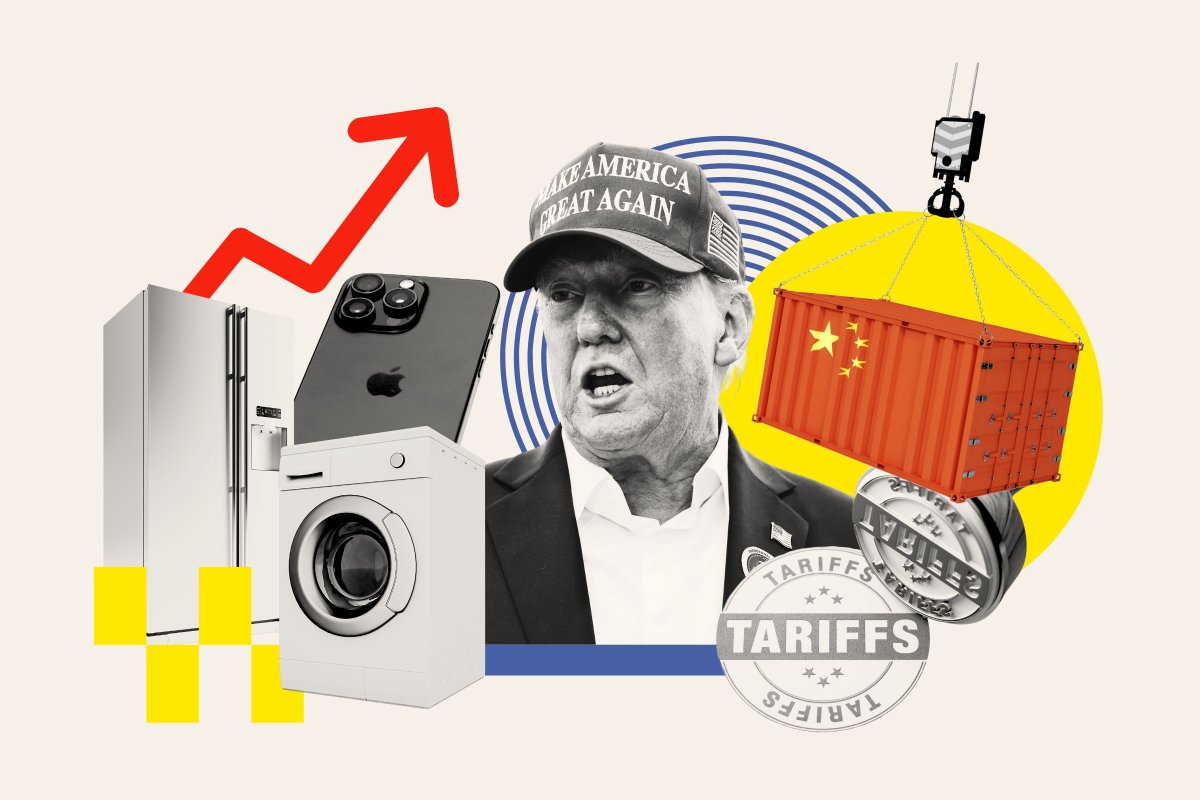

Photo-illustration by Newsweek/Getty"A tariff is a tax paid by the U.S. importer, not a foreign country or the exporter. This tax ultimately comes out of consumers' pockets through higher prices," Jonathan Gold, NRF's vice president of supply chain and customs policy, said in a press release earlier this mont

Raymond Robertson, the director of Texas A&M University's Mosbacher Institute for Trade, Economics, and Public Policy, told Newsweek that "people don't get that" tariffs and taxes are essentially the same thing.

"Tariffs are taxes. Taxes make prices go up," Robertson said. "I'm just so stunned that people don't put two and two together."

Despite consumer confusion and mixed signals from the market, NRF still expects steady sales growth for the holiday season. The world's largest retail trade association expects a record 183.4 million people to shop in store and online from Thanksgiving Day through Cyber Monday. The NRF also forecasts retail sales in November and December to grow between 2.5 percent and 3.5 percent from last year, amounting to an increase of $979.5 billion to $989 billion.
"For budget-conscious consumers, the advice is clear: prioritize purchasing now if you're in the market for items like stoves, smartphones, or cars," Lupo said. "With Black Friday deals in play, locking in lower prices before new tariffs take effect is a smart move. Waiting might result in sticker shock once tariffs are implemented and retailers are forced to adjust their pricing to accommodate higher import costs."

Here's are the big-ticket items to pay attention to as the holidays roll around:

Electronics: iPhones, laptops, tablets, cameras, headphones, video gamesSmartphones account for about a tenth of the goods imported this past year, data from the U.S. Census shows. Over 80 percent of those devices are manufactured in China.

If Trump were to move forward with his 60 percent tariff on Chinese imports, prices of iPhones will likely rise. Economists are projecting that a $1,000 iPhone 16 could cost Americans $300 more under such a tariff.


The new Apple iPhone 16 models on display upon release on September 20, 2024 at the Apple Store at The Grove in Los Angeles, California. A $1,000 iPhone 16 could cost Americans $300 more if... More Frederic J. Brown/Getty ImagesAnd it's not just phones. Lupo estimates that electronics such as laptops, tablets and gaming consoles could see price hikes anywhere between 25 and 45 percent.

"A lot of people, like students, are really interested in getting their laptops now, rather than waiting," Robertson said. "If you're going to start college or you're going to be starting a new program or you're just getting getting a new computer, people should start making moves on those now."

A 2017 report from the U.S. Bureau of Economic Analysis also found that roughly 90 percent of video and audio electronic equipment, 88 percent of electronic computers and 78 percent of small electric appliances are imported.

"[Electronics] are the ones that are probably going to be hit hard, both from Chinese tariffs and elsewhere, because we import a lots of electronics from Mexico and other places as well," Robertson said.

As of last year, Mexico has emerged as America's largest trading partner, eclipsing both Canada and China. In 2023, the U.S. and Mexico exchanged nearly $798 billion in goods and services.

"The U.S. market and the Mexican market are actually not separate markets," Robertson said. "There's a single labor market, there's a single studies market, single energy market, they're not separate markets. So, these tariffs on Mexico are a lot like putting tariffs on California... it's not good for our consumers."

Home Appliances: Stoves, Fridges, Dishwashers, Blenders and More

Household appliances are also likely to get hit with any new tariffs. Lupo forecasts prices for items like refrigerators and washing machines to increase by nearly 20 percent if the Trump tariffs go into effect. NRF predicts that American consumers will pay $6.4 billion to $10.9 billion more for these appliances.

"Having just renovated my kitchen and bath, I feel the pain!" Mary Lovely, a senior fellow at the Peterson Institute for International Economics, told Newsweek.
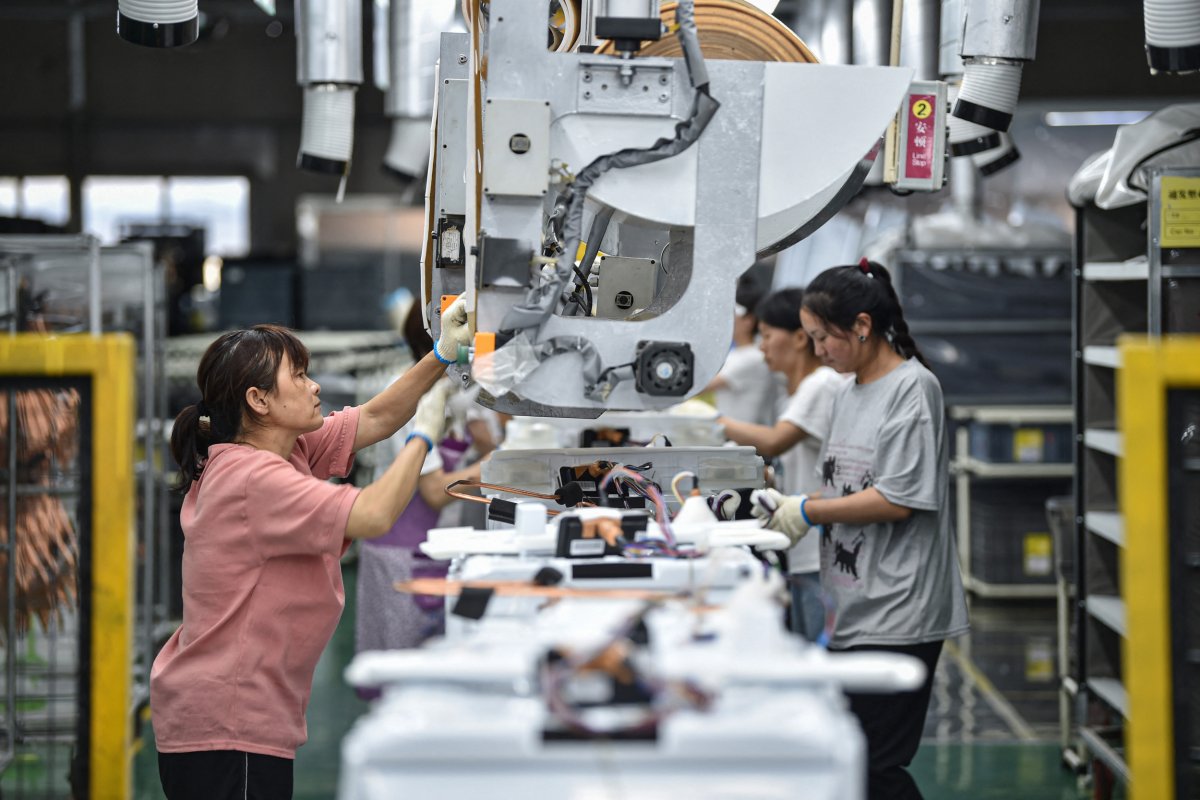

Employees work on a refrigerator assembly line at a factory for LG Electronics in Taizhou, in eastern China's Jiangsu province, on May 23, 2024. Household appliances, like refrigerators and washing machines, are also likely to... More STR/AFP"Many parts and pieces need for such renovations originate in China or contain parts made in China," she said. "Many kitchens are designed around cabinets that originate in China. Appliances either come from China or have Chinese parts. If the manufacturer is in the U.S., the factory will have to pay more for those Chinese parts. So many other products will be affected as well – wood, paints, tools, screws."

Robertson added that home appliances could actually be hit twice, because steel and aluminum were significantly impacted by the last round of tariffs Trump implemented.

"It's kind of a double whammy," he said. "Because you're getting the direct tariffs, plus the input tariffs, which drive up prices doubly."

Other Items: Cars, Apparel, Toys, FurnitureShoppers can also expect clothes, toys, furniture and gas-powered cars—not though not electric vehicles—to become more expensive.

Under the proposed tariffs, the NRF expects Americans to pay $13.9 billion to $24 billion more for apparel, $8.8 billion to $14.2 billion more for toys and $8.5 billion to $13.1 billion more for furniture.

"The cost of these items isn't just tied to the tariffs themselves but also to the ripple effects throughout the supply chain, which could further drive inflation," Lupo said. "Companies facing higher import taxes may pass those costs on to consumers, leaving shoppers with little choice but to pay more."

"The range of products and levels of trade taxes (tariffs) make the new Republican party the most pro-tax party in recent history," Robertson added.

The Target logo is displayed at a Target store on August 20, 2024 in Los Angeles, California. Target shook Wall Street on Wednesday after its shares tumbled to it's biggest slide in two and a... More Mario Tama/Getty Images

"All of the kinds of things you see at the larger department stores like Target or Walmart are likely to get hit hard by tariffs."

There are already signs of stress among retailers heading into what is typically their strongest season. Target's stock tumbled 22 percent on Wednesday —it's biggest slide in two and a half years — after telling investors it was dealing with increased cost pressures and continued supply chain issues.

The big-box retailer should have seen an uptick in spending between the back-to-school and Halloween season.

"Consumers tell us their budgets remain stretched, and they are shopping carefully," Target CEO Brian Cornell told investors on a conference call. He said the company was navigating through "a volatile operating environment," and that's before any tariffs have been implemented.

Appliances, iPhones and more: The big ticket items to buy before Trump's tariffs - Newsweek


To: i-node who wrote (311706)11/25/2024 3:09:37 PM
From: koan4 Recommendations

Recommended By
bustersmith
Cautious_Optimist
onepath
rdkflorida2

  Respond to of 363490
 
What in the fuck are you talking about now-lol!!??

Creating a Department of Education is not only allowed in the constitution, it is sort of mandated as in the tending to the welfare of the people.

Public education is what has allowed us to evolve our civilization for Christ's sake-lol!!

It is where we all learned NOT to be stupid!

The constitution was framed around giving the power of government to the people, so the congress has the most power and the House more power than the senate.

Power to the people was our founding fathers mantra, and Trump intends to reduce that as much as possible, and the Department of Education is his enemy because it deals with learning to think.


You have posted here for years and not learned a thing it seems.


There are a lot of smart posters here like Bentway, Wharfrat, Combjelly, etc and you could have learned so much from them as they usually have it right, and all you want to do is fight with them and oppose them with the most outrageous made up shit.

And you seem to have no idea how the constitution works. It is a living document NOT set in stone, and meant to evolve.

And whatever the fuck Madison was talking about is immaterial, and that goes for the rest of our founding fathers as well.

By todays standards they were very primitive in their thinking-lol!! The best for that time period, but primitive.

They all lived 250 years ago when they didn't even allow women to vote and had slavery-egads-lol!!.

As we evolve we up date the constitution with amendments.

And Trump intends to mute the intent of the constitution as much as possible, so he can rule as a dictator!

And history will not be kind to MAGA, and will compare them to those who enabled Putin.

