SI
SI
discoversearch

We've detected that you're using an ad content blocking browser plug-in or feature. Ads provide a critical source of revenue to the continued operation of Silicon Investor.  We ask that you disable ad blocking while on Silicon Investor in the best interests of our community.  If you are not using an ad blocker but are still receiving this message, make sure your browser's tracking protection is set to the 'standard' level.
Strategies & Market Trends : 2026 TeoTwawKi ... 2032 Darkest Interregnum -- Ignore unavailable to you. Want to Upgrade?


To: Julius Wong who wrote (209509)12/16/2024 10:29:35 PM
From: TobagoJack1 Recommendation

Recommended By
Cogito Ergo Sum

  Respond to of 218448
 
re <<Scientists>>
... the news flow seems relentless and keeps on coming

another one nailed by one side and failed to be nailed by the other
scmp.com
World-leading Chinese cancer scientist Sun Shao-Cong has left US for Beijing
Updated: 11:19am, 17 Dec 2024

Sun has begun work to establish a new immunology lab in Beijing following investigations of him by the US government, a source says


After three decades of distinguished work in the United States, world-leading cancer researcher Sun Shao-Cong has returned to China to establish a new lab in Beijing, following what a source said were investigations of him by the US government.

Sun joined the Chinese Institutes for Medical Research (CIMR) as a distinguished investigator in July, he told the Post via email last week.

Known for his pioneering research on T cells – white blood cells that fight infections and destroy abnormal cells – Sun’s roles in the US have included director of the Centre for Inflammation and Cancer at the University of Texas MD Anderson Cancer Centre in Houston from 2014 to 2022.


An illustration of T cells attacking cancer cells. Photo: Shutterstock

Since then, he has focused on recruiting for his lab and a new immunology institute. He said his team will study the molecular mechanisms of anticancer immunity, autoimmunity and inflammatory diseases, with an emphasis on T cell function and regulation.

Sun was removed from his position in 2022 after being investigated for his ties to China, a source told the Post on condition of anonymity.

Details of the investigations remain unclear, but MD Anderson was among the first institutions to dismiss China-born researchers after warnings from the National Institutes of Health (NIH), one of their major funders, about potential theft of US scientific research.

In 2018, the NIH and the Department of Justice launched separate probes into alleged economic espionage and technology theft from China. But the investigations sparked controversy over concerns about racial profiling.

By April 2019, MD Anderson had expelled three unnamed Chinese researchers, citing conflicts of interest or undisclosed foreign income, the Houston Chronicle reported.

During a career spanning decades, Sun has received more than US$24 million from NIH-affiliated institutes, including the National Institute of Allergy and Infectious Diseases and the National Cancer Institute, according to the NIH RePORTER website.

In 2012, Sun was named a Cheung Kong Scholar, a prestigious talent recruitment programme supported by China’s Ministry of Education and the Li Ka Shing Foundation to foster student training and research collaboration at Shanghai Jiao Tong University.

Sun earned a bachelor’s degree in biology from Hubei University and a PhD in microbiology from Stockholm University. He moved to the US for a postdoc position at the University of California, San Francisco in 1992.

He then conducted T cell-focused leukaemia research at Pennsylvania State University’s Hershey Medical Centre, and rose to distinguished professor status in 2007 before transitioning to MD Anderson.

Sun’s research employs cutting-edge immunological and molecular biology techniques, including mouse models, to explore T cell activation, functionality, and the impact of the tumour micro-environment, according to a July job posting on CIMR’s official WeChat account.

“Professor Sun has made numerous far-reaching contributions to this field and is an internationally recognised leader,” the post said.

Although the Department of Justice’s China Initiative was terminated in 2022, US government agencies have continued to scrutinise China-born researchers.

Most investigations have failed to reach court, and a small number of prosecutions were for charges unrelated to the espionage the probes sought to address.


To: Julius Wong who wrote (209509)12/16/2024 10:35:18 PM
From: TobagoJack  Respond to of 218448
 
re <<breakthrough>>

... let's see if the trump can walk the talk and do the Nixon thing and join the Putin-Xi club and wear big boyz pants

scmp.com

Trump meets TikTok CEO after saying China, US can ‘solve all world’s problems’
Updated: 11:24am, 17 Dec 2024
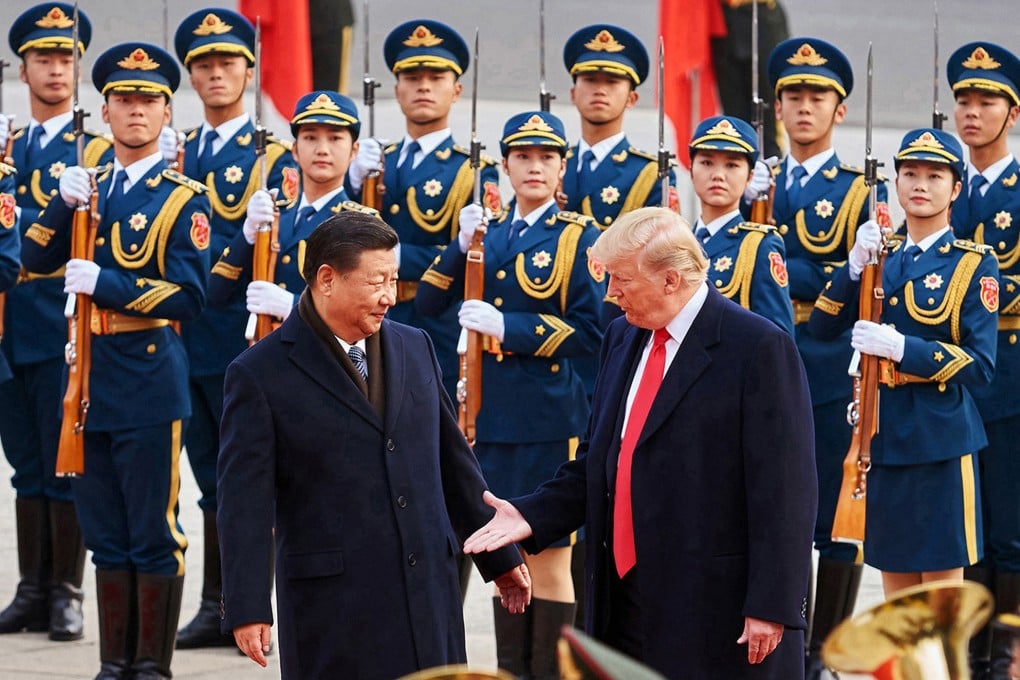

President-elect said the two countries can work together when pressed about his invitation to the Chinese leader to attend inauguration

US president-elect Donald Trump said on Monday that Beijing and Washington could work together “to solve all of the problems of the world”, a sweeping statement issued a little more than a month before he returns to office.

Hours after making the remarks in a press conference at Mar-a-Lago, Trump met TikTok CEO Chew Shou Zi at the Florida resort, according to US media reports.

The meeting coincided with the company’s emergency appeal to the US Supreme Court for a temporary halt on the ban, which would take effect if it fails to secure a non-Chinese buyer on January 19, a day before Trump officially takes the White House.

Earlier in the day, Trump signalled during a news conference that he was willing to block the ban on TikTok, which has more than 170 million domestic monthly users on its platform in the US.

“We’ll take a look at TikTok. You know, I have a warm spot in my heart for TikTok. TikTok had an impact, so we’re taking a look at it”, he said, hailing the platform for boosting his connection with young American voters during the campaign.

Both Trump and the social media platform kept the meeting low-key, with neither side confirming the meeting, nor issuing any statement on what was discussed. Media reports from the US said it was not clear what the two men talked about.

Experts have said that Trump has limited options when it comes to saving TikTok from the ban.
The meeting followed Trump’s hopeful remarks about Chinese President Xi Jinping’s response to his invitation to attend the January 20 presidential inauguration. During his press conference at Mar-a-Lago ahead of the TikTok meeting, Trump said Xi “hasn’t said one way or the other” about whether he will attend.

The issue was “something we barely discussed”, Trump said, adding that he has had “some very good conversations” with the Chinese leader through letters.

“You know, because China and the United States can, together solve all of the problems of the world, if you think about it. So it’s very important. And you know, he was a friend of mine”, Trump added.

Chinese leader Xi tells US President Biden he is ‘ready to work’ with Donald Trump

Reflecting on the meeting the two men had at Mar-a-Lago in 2017, Trump said: “He was here for a long time, right in that spot, except sitting in a very comfortable chair. He wasn’t standing like you are. But we spent hours and hours talking, and he’s an amazing guy”.

Trump’s latest Beijing-friendly comments inject more mystery into the approach he will take when he is back in the White House next month, as they send different signals compared with the incoming president’s cabinet picks like Florida Senator Marco Rubio – one of Congress’ harshest critics of the Chinese government – for secretary of state.

According to Jake Werner, acting East Asia director of the Quincy Institute, a think tank in Washington, Trump’s latest comments “signal a real openness to doing some sort of deal” with Xi.

“While many of Trump’s national security appointments seemed to promise an immediate, sharp deterioration in US-China relations, Trump’s comments, and his decision to extend Xi an invitation to his inauguration, indicates that we have a genuine opportunity to build the relationship on a new foundation”, Werner added.

On Sunday, Florida lawmaker Mike Waltz, who will be Trump’s national security adviser in the White House, in an interview with CBS downplayed the invitation to Xi, saying the ongoing conversations between Trump and other world leaders were “really nothing beyond congratulatory and niceties”.

No Chinese head of state has ever attended a presidential inauguration in the US. Such a move would be a departure from a decades-long tradition whereby the White House includes foreign dignitaries and diplomats at the ceremony, but not world leaders.

Some analysts have expressed doubt that Xi would attend the inauguration, pointing out hat the diplomatic groundwork for such a visit would likely require more than the five weeks remaining before the president-elect is sworn in.

Denis Simon of the Institute for China-America Studies, another Washington-based think tank, said it has “more or less been determined that Xi is not coming, and the only question will be, ‘Who would come?’”.
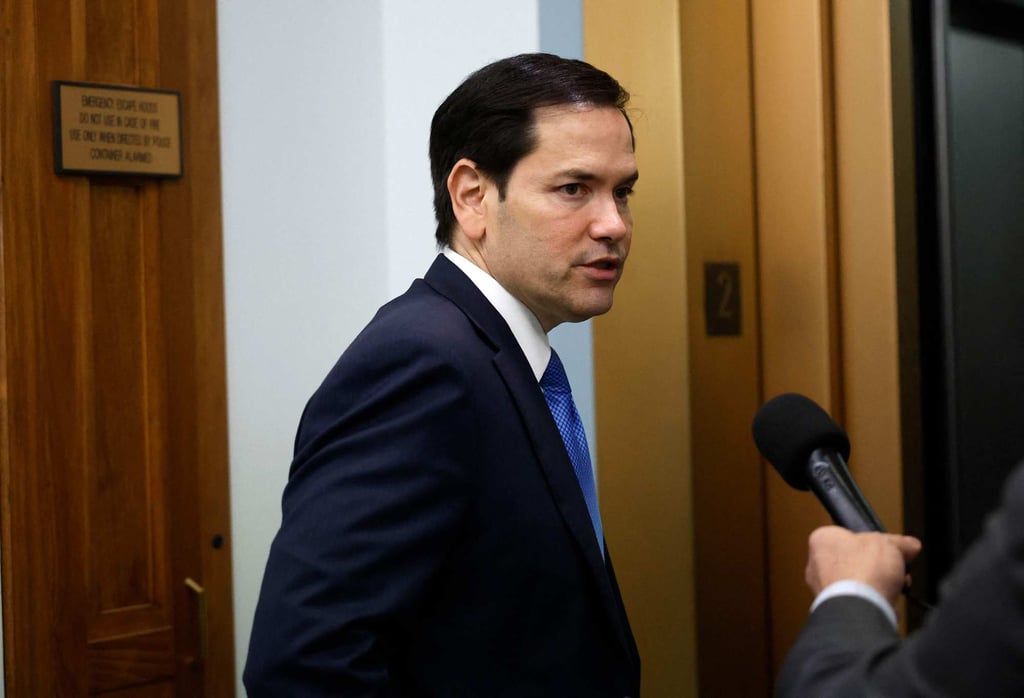

US Republican Senator Marco Rubio, president-elect Donald Trump’s nominee for secretary of state, speaking to reporters in Washington last week. Photo: Getty Images

Describing Trump as a “deal maker”, Simon reckoned that by inviting Xi, the US president-elect wants to be “seen as some kind of grand statesman” with a knack for personal diplomacy, and added that Beijing might be inclined to send a high-level delegation.

“I really do think Trump wants a Nobel Peace Prize win. I think that’s his aim here. So I think that this grand statesman status, if he can work with Xi, and then Xi can work with Putin and all of a sudden we can find peace in several areas, I think that would be Trump’s dream”, the long-time China scholar contended.

Earlier this month, Trump had suggested that China could play a key role in brokering peace between Russia and Ukraine.

“Too many lives are being so needlessly wasted, too many families destroyed, and if it keeps going, it can turn into something much bigger, and far worse. I know Vladimir well. This is his time to act. China can help. The World is waiting,” Trump said in a social media post on December 9.

In an interview aired later that day Trump told NBC that he “got along very well” with Chinese President Xi Jinping and that the two leaders had “communication as recently as this week”.

At the time, the Chinese embassy in Washington declined to comment on any recent communication between Xi and Trump, saying only that Beijing “welcomes and supports all effort conducive to the peaceful settlement of the crisis”.

Werner of the Quincy Institute noted that “China would not be willing to do a one-sided deal”.

“Trump would need to begin by offering a stable trade environment and clarity on what realms of exchange are off-limits and enter negotiations on China’s core complaints around security and space for economic development”, he added.


To: Julius Wong who wrote (209509)12/16/2024 10:58:15 PM
From: TobagoJack  Read Replies (3) | Respond to of 218448
 
re <<Scientists>>

... imagine the fury had the scientist Picard, Rosalind specified some other tribe / nation in her slide deck in similar way ...
Most ________ who I know are honest and morally upright

:0)))

... instead, nary a mention google.com
registrar.mit.edu
facts.mit.edu


... and therefore I reckon most 'asians' in MIT are ethnic Chinese, and at least in the graduate programs, most ethnic Chinese are foreign students from China

scmp.com

Chinese ‘behaviour’ remarks by MIT scientist Rosalind Picard rattle top AI conference
Updated: 11:29pm, 16 Dec 2024

Keynote speaker apologises after using ‘irrelevant’ example of misbehaviour that specified a Chinese student’s nationality


A speech by an American scientist from the Massachusetts Institute of Technology (MIT) during a top AI conference last week has sparked anger for comments that specified the Chinese nationality of a university student in an example of misbehaviour.

Rosalind Picard, a professor of health sciences and technology at the MIT Media Lab, was speaking during a keynote speech in Vancouver, Canada on Friday at NeurIPS 2024 – the 38th annual conference on neural information processing systems, during which she highlighted an incident involving a Chinese student who had been expelled.

According to Picard, the student – who was from a well-known school in China – tried to justify using AI for an assignment by explaining that “I did it to make my paper results look better. Nobody at my school taught us morals or values”.

“I was shocked to hear that they thought this was justifiable behaviour there,” Picard told the conference, adding that “most Chinese who I know are extremely honest and morally upright”.


After her presentation, MIT’s Rosalind Picard was challenged by an audience member for pointing out the nationality of a student who had been expelled from a university for misbehaviour. Photo: Handout

During a Q&A session that followed, a Chinese attendee challenged Picard on her remarks, noting that it was the only time in the entire lecture where she explicitly mentioned nationality in relation to behaviour.

What Picard said “reflected a deeply troubling and racist view of Chinese scholars”, Furong Huang, an associate professor in the computer science department at the University of Maryland, remarked on social media, adding: “This was not just inappropriate but also profoundly disheartening.”

Huang said that it was entirely unnecessary to mention the student’s nationality when discussing an example of cheating, yet Picard chose to highlight it. “This choice perpetuates harmful stereotypes about Chinese scholars and reflects a broader bias against Asians,” Huang said.

“Racism has no place in academia, and incidents like this tarnish the principles of inclusion and respect that we, as a global research community, should uphold.”

Picard later apologised. In a statement posted on the MIT Media Lab website on Saturday, she said she “regretted” including the nationality in her presentation.

“I see that this was unnecessary, irrelevant to the point I was making, and caused unintended negative associations,” she said. “I apologise for doing this and feel very badly about the distress that this incident has caused.”

Picard’s keynote speech was entitled “How to optimise what matters most?”

The NeurIPS conference organisers also responded quickly, saying that the cultural generalisation “reinforces implicit biases by making generalisations about Chinese scholars”. “This is not what NeurIPS stands for,” the organiser said in a statement on social media.

According to the MIT Media Lab information, Picard is a scientist, inventor, entrepreneur, author and engineer.

She is best known for her book Affective Computing, which proposed and described how to give computers emotional intelligence capabilities, including voice assistants, robots and agents, among other interactive technologies.

