SI
SI
discoversearch

We've detected that you're using an ad content blocking browser plug-in or feature. Ads provide a critical source of revenue to the continued operation of Silicon Investor.  We ask that you disable ad blocking while on Silicon Investor in the best interests of our community.  If you are not using an ad blocker but are still receiving this message, make sure your browser's tracking protection is set to the 'standard' level.
Strategies & Market Trends : 2026 TeoTwawKi ... 2032 Darkest Interregnum -- Ignore unavailable to you. Want to Upgrade?


To: Julius Wong who wrote (212451)3/23/2025 3:06:35 PM
From: TobagoJack  Read Replies (1) | Respond to of 218960
 
shall add to Zijin this day should the market be tepid

bloomberg.com

Copper’s Uber-Bull Predicts New Record on Most-Profitable-Ever Trade
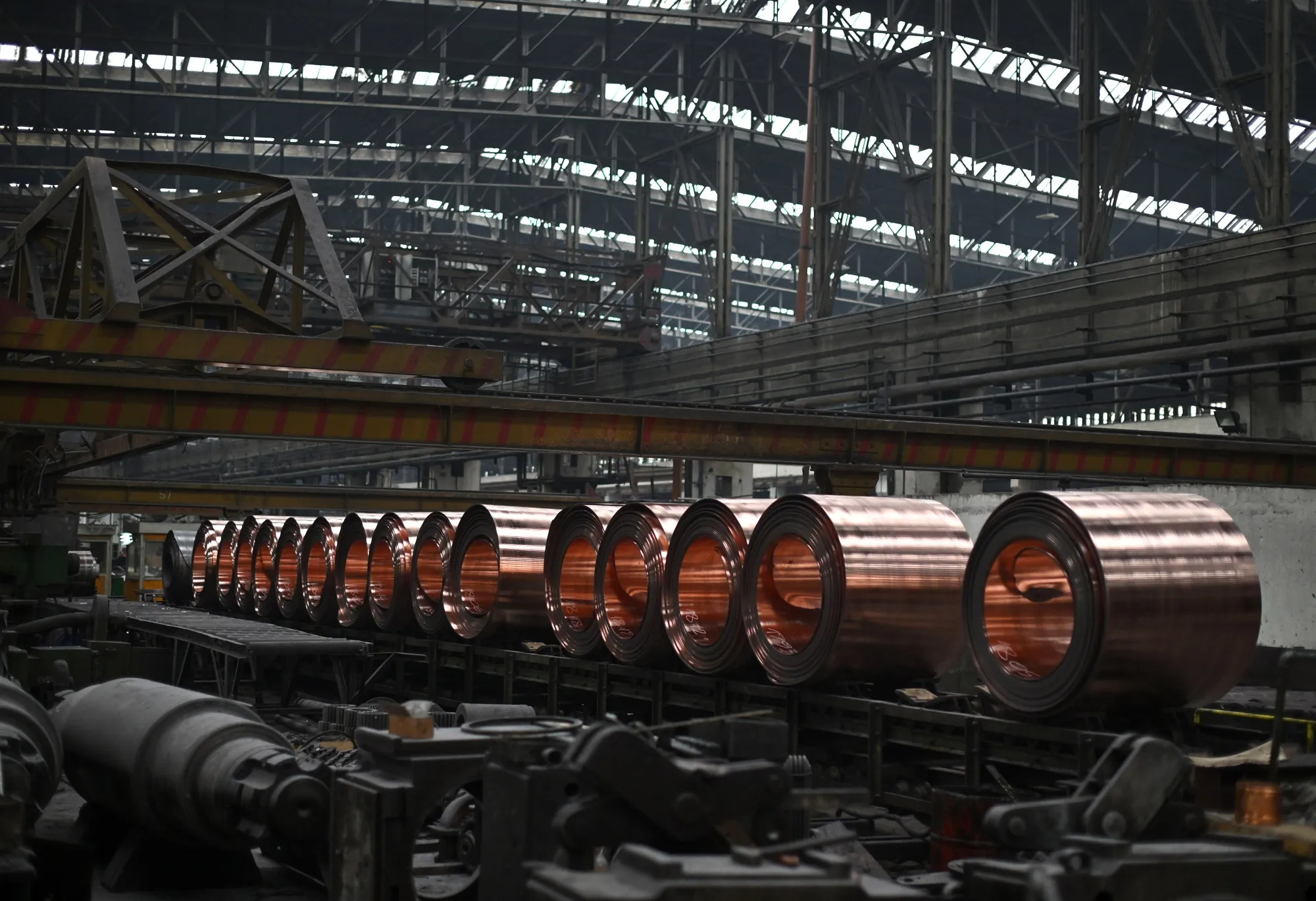

Global copper prices have already risen sharply, with benchmark LME prices up 12% so far this year.

Photographer: Oliver Bunic/Bloomberg

By Jack Farchy and Mark Burton

24 March 2025 at 02:00 GMT+8

  • Kostas Bintas, a copper bull, predicts copper prices will surge to record highs, up by as much as a third from current levels, due to the US drawing huge amounts of metal and leaving the rest of the world, including top consumer China, short.

    Summary by Bloomberg AI

  • The threat of copper tariffs has changed the market dynamic, creating a huge incentive for traders to ship copper to the US, where prices have soared to over $1,400 a ton above the rest of the world.

    Summary by Bloomberg AI

  • Mercuria estimates that about 500,000 tons of copper is heading to the US, which will leave the Chinese copper market with insufficient stocks and force Chinese buyers to compete with the US market.

    Summary by Bloomberg AI
One of the highest-profile copper bulls is back predicting new price records, as Donald Trump’s threat of tariffs drains global stocks and creates what he sees as unprecedented opportunities for trading profit.

Kostas Bintas became one of the best-known metals traders during his years building Trafigura Group’s copper book into the world’s largest, before his departure in late 2023. Now spearheading a push into metals at energy trader Mercuria Energy Group Ltd., he is again calling for copper to surge to record highs, up by as much as a third from current levels.

The huge amounts of metal being drawn into the US will leave the rest of the world — and crucially, top consumer China — perilously short, Bintas said in an interview.

“We think there is something exceptional happening in the copper market,” he said. “Is it unreasonable to expect a copper price of $12,000 or $13,000? I’m struggling to put a number on it because this has never happened before.”

Bintas was one of the first of a growing chorus of traders and investors to predict that copper was about to enter a multiyear bull market in the wake of the coronavirus pandemic, and that rising demand for electrification would outpace supply growth. At Mercuria, he’s teamed up with another prolific bull: former Goldman Sachs Group Inc. metals strategist Nick Snowdon, who roughly a year ago was forecasting average prices of $15,000 a ton in 2025.

Still, copper bulls have been disappointed on several occasions, most recently last year when prices surged to a record high above $11,000 a ton, only to falter as Chinese buyers stepped back from the market.

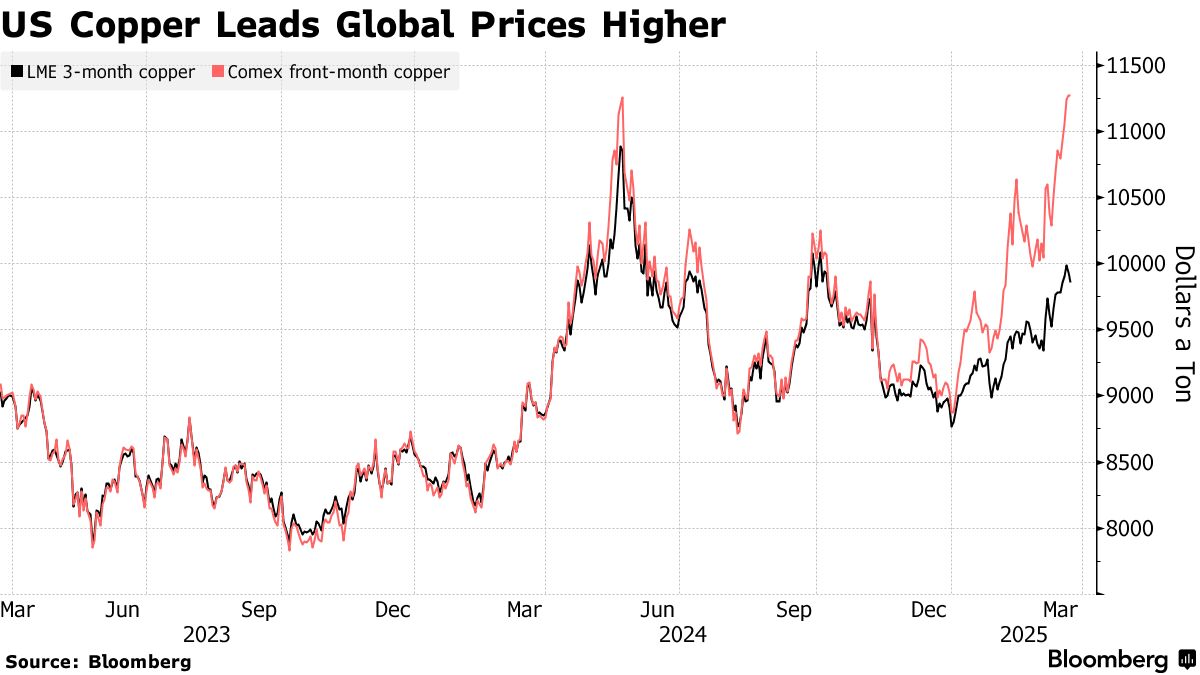
Now the dislocations caused by Trump’s threat of copper tariffs have changed the market dynamic. While the US has yet to impose broad tariffs on copper imports, domestic prices have soared to over $1,400 a ton above the rest of the world, creating a huge incentive for traders to ship every spare ton to the US.

“In terms of the margins per ton, I’ve never seen a better trading opportunity,” Bintas said.


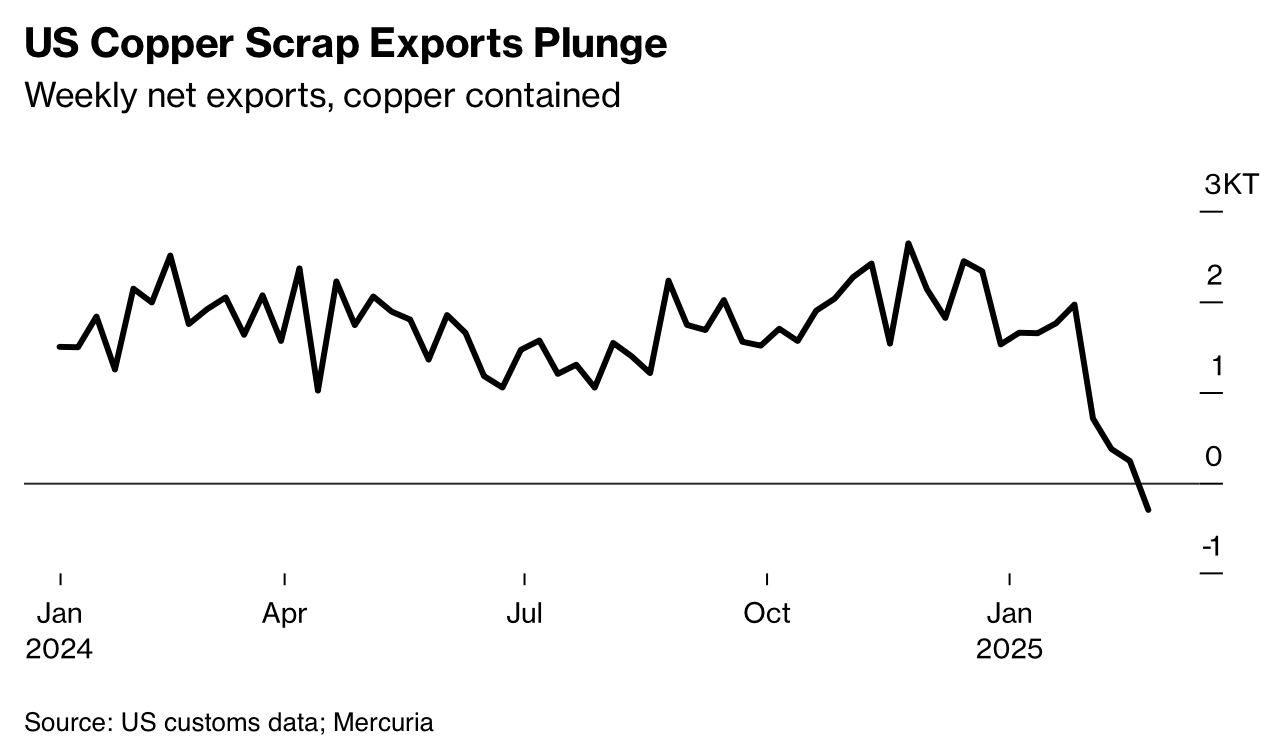
The shift of inventory to the US means the Chinese copper market will be left with insufficient stocks, Bintas said. Chinese buyers — who account for more than half of global demand — will be forced to compete with the US market. At the same time, the large volumes of scrap copper that typically flow out of the US have effectively dried up.

“China has been successful historically in rejecting high prices,” said Bintas. “This is the first time in recent history that another market is taking tons away from the Chinese market. That’s why it’s uncharted territory.”

Mercuria estimates that about 500,000 tons of copper is heading to the US, most of which is already on the way. That compares with normal monthly imports of about 70,000 tons. Traders are shipping metal to opportunistically profit from the large price differential, as well as frontloading already-planned shipments in order to clear customs before any potential tariffs are imposed.

Mercuria itself has 85,000 to 90,000 tons en route to the US. Bloomberg reported previously that some traders have been redirecting shipments from Asian customers to the US.

Bintas isn’t alone is his bullish call. Investment funds have lifted their net bullish positions in LME copper to the highest since last May, according to exchange data. David Lilley, chief executive of hedge fund Drakewood Capital Management Ltd., predicts that the pull of copper to the US will leave Chinese buyers facing “much more aggressive competition for metal.”

Global copper prices have already risen sharply, with benchmark LME prices up 12% so far this year to $9.855.50 a ton on Friday, and US futures on Comex, inflated by the tariff threats, nearing a record high.

US Copper Scrap Exports Plunge
Weekly net exports, copper contained
Source: US customs data; Mercuria

The global market is showing some signs of tightness, but not yet indicating the extreme squeeze that Bintas is predicting. On the Shanghai Futures Exchange, copper has moved into the widest backwardation in more than a year, with nearby contracts trading above later-dated ones in an indication of tight supplies. Copper premiums in China have been rising since the end of February, although they remain at modest levels by historical standards.

Of course, the prediction for a surge higher in copper prices could be undercut if worries that a trade war could cause a global economic slowdown prove accurate.

Mercuria is unconcerned about that risk, predicting that global demand will outstrip supply by 320,000 tons this year, which, together with the draw of stock to the US, could drain a large share of the inventories outside the US.

What’s more, the tariff threat has caused exports of copper scrap from the US to dry up. About a third of global copper production comes from scrap, and the flow of scrap often acts as a market buffer, rising when prices are high and falling when they are low.

“Already through February, US scrap exports have gone to negligible levels,” said Snowdon, who is head of metals research at Mercuria. “You’re seeing an under-appreciated shock on the global copper market through this scrap channel.”


To: Julius Wong who wrote (212451)3/23/2025 3:16:58 PM
From: TobagoJack  Read Replies (1) | Respond to of 218960
 
re <<Super>> ... officialdom thinking and acting ahead of possibilities

scmp.com
China moots Himalayan ark project to survive climate ‘tipping point’, with some AI help

As the threat of global climate collapse grows, Beijing is considering a plan to turn the Tibetan Plateau into an agricultural stronghold


Stephen Chenin Beijing

Published: 2:13pm, 23 Mar 2025

The plot of the Hollywood doomsday film, 2012 – where China builds survival arks on the Tibetan Plateau – is edging closer to reality with Beijing’s latest plan for getting through a global climate catastrophe.

Alarmed by accelerating global climate collapse, Chinese government scientists have proposed transforming the “roof of the world” into an agricultural stronghold.

It is a move that underscores Beijing’s increasing desperation in the face of looming ecological tipping points.

In a solemnly worded report published in Chinese-language journal Climate Change Research on March 4, the National Climate Centre (NCC) in Beijing warned that cascading climate breakdown – including the collapse of the Amazon rainforest, Atlantic Ocean currents and polar ice sheets – could destabilise global food systems within decades.

Their answer? According to the report, rapidly scaling up high-altitude farming on the Tibetan Plateau could enable the nation to survive the global disaster.

“Several climate tipping elements are approaching critical thresholds. It will have profound and extensive impacts on the Earth and its inhabitants – ranging from unprecedented sea-level rises to extreme weather events that render regions uninhabitable and overwhelm existing adaptive capacities,” wrote Ma Lijuan, senior NCC engineer and lead author of the study.

“The Tibetan Plateau, recognised as the engine of environmental change in Asia, plays vital roles in water conservation, soil retention, wind breaking and sand fixation, carbon sequestration, and biodiversity preservation. Serving as a critical ecological security barrier for China and Asia, it is also a globally significant hotspot for biodiversity conservation.

“By rigorously protecting its ecological environment and leveraging its unique natural and socio-economic conditions to develop plateau-specific agriculture, it is entirely feasible to turn the Tibetan Plateau into China’s future granary,” Ma and her colleagues wrote.

The NCC, operating under the China Meteorological Administration, serves as China’s premier institution for climate monitoring, research and policy advice.

What worries the agency most is polar meltdown. Greenland now sheds around 30 million tonnes of ice each hour, while Antarctica’s ice shelves fracture like shattered glass.

It is predicted that the sudden increase of fresh water in the oceans could lead to current collapse. The Atlantic Meridional Overturning Circulation – the ocean mechanism responsible for moving heat energy around the planet and thus regulating Earth’s climate – had weakened to an alarming low, with estimates that it could collapse by as early as 2050, Ma’s team warned.

Meanwhile, vast swathes of trees are dying in the Amazon due to drought as well as fires ravaging the rainforest. The “lungs of the Earth” now emit more carbon than they absorb, according to recent studies.
Across Siberia, erupting methane geysers are destabilising landscapes and resurrecting ancient pathogens. In Australia, the Great Barrier Reef has bleached catastrophically – with increasing frequency in recent years – with its fish populations also vanishing.

And monsoon mayhem is already at China’s doorstep: the Indian Ocean Dipole, which influences weather patterns in the Indo-Pacific region, see-saws between extremes, triggering deadly floods in Pakistan and crop-killing droughts along China’s Yangtze River.

The NCC’s plan leans into paradoxical climate shifts: while rising temperatures scorch tropical farmlands, Tibet’s once-frigid plains are wetting up and warming twice as fast as the global average.

Glacial meltwater now irrigates valleys where frost once ruled year-round. Growing seasons have expanded by 34 days since 1980, according to some studies.

The warming climate has come at the same time as an agricultural technology revolution. Scientists have created new cold-resistant barley strains that yield crops at an altitude of 5,000 metres (16,400 feet) – a feat previously thought impossible.

China has also achieved a milestone in potato cultivation, with yields surpassing ?75 tonnes per hectare on the plateau, or twice the productivity of lower lands, thanks to superb sun conditions at the high altitude.

This feat, driven by ?cold-resistant hybrid varieties? and advanced agricultural techniques including optimised soil management, greenhouse adaptations and precision irrigation, addresses historical limitations of low productivity in extreme environments, according to state media reports.

But the vision is not without challenges. Rampant mining and other human activities are threatening ecological sustainability on the plateau, and the melting ice has the potential of causing lakes and dams to collapse, which in turn would put new settlers at risk, according to Ma’s team.

But Beijing is doubling down. Artificial intelligence (AI) is set to be used to monitor real-time data from vast numbers of sensors planted across the plateau to predict glacial floods and optimise crop rotations, according to the researchers.

“This is an engineering project of a large and complex system; we need the assistance of AI,” they said.

