SI
SI
discoversearch

We've detected that you're using an ad content blocking browser plug-in or feature. Ads provide a critical source of revenue to the continued operation of Silicon Investor.  We ask that you disable ad blocking while on Silicon Investor in the best interests of our community.  If you are not using an ad blocker but are still receiving this message, make sure your browser's tracking protection is set to the 'standard' level.
Strategies & Market Trends : 2026 TeoTwawKi ... 2032 Darkest Interregnum -- Ignore unavailable to you. Want to Upgrade?


To: Box-By-The-Riviera™ who wrote (215845)8/9/2025 5:06:12 AM
From: TobagoJack  Respond to of 219795
 
re <<shit fest>>

quite funny, almost hilarious

bloomberg.com

US, Japan Working to Announce Reciprocal Tariffs Won’t Stack

US to Cut Car Levies and End Tariff Stacking, Japan Says

By Chris Gallagher, Yoshiaki Nohara, and Sakura Murakami

August 8, 2025 at 7:24 AM GMT+7
Updated on
August 9, 2025 at 3:50 PM GMT+7

Trade wars, tariff threats and logistics shocks are upending businesses and spreading volatility. Understand the new order of global commerce.

The US is working to finalize an announcement that would end the stacking of universal tariffs on Japanese goods, a senior Trump administration official said Friday.

The plans, detailed on the condition of anonymity, would resolve prolonged confusion over how US President Donald Trumpintended to impose levies on a key trading partner after striking a deal, and match public comments made by Ryosei Akazawa, Tokyo’s top trade negotiator, after a meeting on Thursday with his counterparts in Washington.

The announcement, which could take the form of a joint statement from the two countries, would clarify that Japan — like the European Union — would see its 15% reciprocal tariff rate incorporate existing most-favored nation duties.

Akazawa, who met with Commerce Secretary Howard Lutnick and Treasury Secretary Scott Bessent, said US officials expressed regret that the stacking rule had been applied to Japan despite a verbal agreement, and said Washington would refund any overpaid levies, he said.

“We’ve strongly urged our counterparts to promptly implement these measures,” Akazawa told reporters on Saturday, shortly after returning to Tokyo. He declined to comment on when a decision will be made, but made mention of the US-UK trade pact and how it took 54 days to take effect.

“Keeping such things in mind when it comes to timing, we believe every day matters,” Akazawa said.
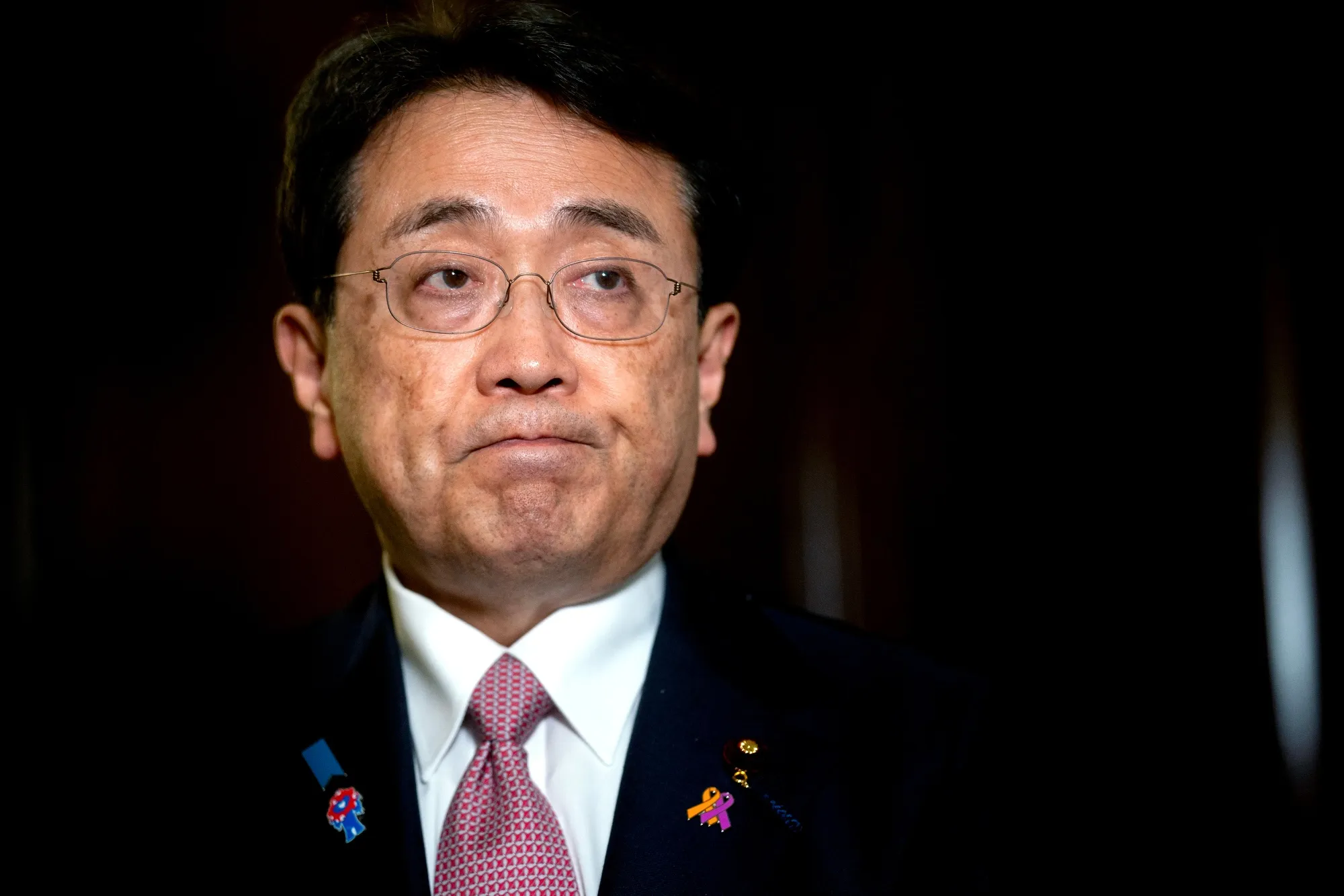

Ryosei AkazawaPhotographer: Stefani Reynolds/Bloomberg

Japan was hit with higher-than-expected universal tariffs as part of the wave of new levies introduced by the Trump administration Thursday. While the scale of the discrepancy was likely minor, the confusion sparked renewed criticism of Prime Minister Shigeru Ishiba, who already faces calls to step down over a poor election showing.

“We have confirmed that when the US side takes measures to revise the executive order on universal tariffs, they will issue another order to reduce tariffs on cars and auto parts,” Akazawa said. “We will continue to urge the US side, through all available means and channels” to make those things happen, he said.

He added that he wasn’t sure when the orders would be issued, but he didn’t expect it to take as long as six months or a year.

Under the stacking system, the 15% tariff applied to Japan is being added to existing levies on its products. When Japan receives an exemption, Akazawa said that the 15% rate would apply to items that previously had levies of less than 15%, while items that in the past had tariffs of more than 15% will no longer face additional levies.

More importantly for the Japanese economy, carmakers are still struggling with tariffs at 27.5% — a combination of a previous 2.5% rate and a new 25% levy applied by Trump.

“With each day that passes, the losses incurred by Japanese companies are mounting,” Akazawa said, adding that some companies are seeing an hourly loss of ¥100 million ($679,000), without citing which companies they are.

“In this respect, there is no change to what we have been saying previously. We are seeking the issuance of the executive order as quickly as possible — whether by a day or even by a moment,” he said.

The lack of clarity on the timing of a promised cut to 15% is making it hard for the companies, mainstays of the economy, to plan ahead. The auto sector employs roughly 8% of the nation’s workforce and is a trend setter for wage growth, which has supported the central bank’s gradual interest rate hikes.

Toyota Motor Corp. this week lowered its annual guidance as it warned of a ¥1.4 trillion ($9.5 billion) hit to its bottom line from US tariffs. The world’s biggest carmaker now sees ¥3.2 trillion in operating income for the fiscal year ending in March 2026, down from its initial forecast of ¥3.8 trillion.

Some carmakers are already pinning their hopes on seeing the tariff cut sooner rather than later. Honda Motor Co. raised its annual profit forecast on Wednesday to reflect the 15% tariffs on Japanese goods, estimating ¥700 billion ($4.7 billion) in operating profit for the fiscal year ending March 2026, up from the prior guidance of ¥500 billion.

Japan’s benchmark Topix index climbed as much as 1.7% after Akazawa spoke, with a measure of automakers among sectors providing the biggest boost. Toyota and Honda each rose more than 3%.

The Trump administration has come under fire from the US car industry over the levies agreed with Japan, which critics say fail to address the biggest source of the US trade deficit with its Asian ally. About 80% of the trade gap was due to cars and car parts last year.

Akazawa chalked up the discrepancies over the stacked tariffs as a misstep introduced during the administrative processing of the agreement, insisting that Japan and the US were aligned on the trade deal agreed in late July. He also defended his call not to draw up the agreement in writing — a decision that has been questioned by opposition lawmakers as confusion mounted over the finer details of the deal.

Still, he did not give an indication of when the lower across-the-board and reduced auto tariffs may come into effect, instead saying it will happen “in a timely manner”. He hinted that he may continue to travel to Washington, and said he’d invited his US counterparts to Japan.

“As I understand it, the US side will handle the matter in a reasonable manner. That is why we are saying the tariffs will be implemented ‘in due course’,” he said.

— With assistance from Nicholas Takahashi, Akemi Terukina, and Jennifer A Dlouhy


To: Box-By-The-Riviera™ who wrote (215845)8/9/2025 5:09:51 AM
From: TobagoJack  Respond to of 219795
 
re <<LOL>>

really extremely funny should POTUS Trump 'just do it'

bloomberg.com

Confusion Over Tariff Stacking Hampers Japan’s Bid to Pin Down US Trade Deal

By Yoshiaki Nohara and Akemi Terukina

August 7, 2025 at 8:03 AM GMT+7
Updated on
August 7, 2025 at 3:29 PM GMT+7

Takeaways by Bloomberg AIHide

  • The US has imposed higher tariffs than Japan expected on a broad range of its goods, according to a senior Japanese ruling party official.
  • Japan faces "stacking" tariffs, where a new 15% levy is added to existing import taxes, even though it had expected to be given an exemption, Itsunori Onodera said.
  • Japan's top trade negotiator Ryosei Akazawa had earlier said "there will be no stacking", citing a "mutual understanding" on the matter, but the US has imposed the tariffs with no exemption.

The US has imposed higher tariffs than Japan expected on a broad range of its goods, a senior Japanese ruling party official said Thursday, after a day of confusion over what exactly had been agreed between the two countries.

Japan faces “stacking” tariffs, where a new 15% levy is added to existing import taxes, even though it had expected to be given an exemption stripping out the old tariffs, Liberal Democratic Party policy chief Itsunori Onodera said in Tokyo.

“The tariffs have been imposed with no exemption, so the rate has risen by 15% as it stands,” Onodera said. “We are requesting a prompt correction from the US.”

Fresh confusion over the US-Japan trade deal came to the fore on Thursday, as Japan’s chief negotiator visits Washington to press his counterparts to follow through on a pledge to cut a separate levy on car imports. The disagreement between the two nations over implementing the universal tariffs suggests more misunderstandings and friction may emerge in the future.


Ryosei AkazawaPhotographer: Alex Wroblewski/Bloomberg

Japanese media reports said Washington would not exempt Tokyo from an order stacking new 15% across-the-board tariffs on top of existing levies, hours before they came into effect. Japan’s top trade negotiator Ryosei Akazawa had earlier disputed such an understanding.

“There will be no stacking,” Akazawa said on Tuesday before leaving for Washington. “There’s mutual understanding on this matter.”

The controversy is the latest in a series over the agreement, which hasn’t been laid out in an official joint document, and has been described differently by each side. Trump has said the deal opens up Japan’s markets to US cars and other goods and brings $550 billion in investment, while Japan has touted lower tariffs for its own products.

Asked about the difference in understanding between the US and Japan Thursday, Japan’s chief spokesperson Yoshimasa Hayashisaid Akazawa had reconfirmed the agreement on universal tariffs with the US.

Akazawa met with US Commerce Secretary Howard Lutnick on Wednesday in the US, reiterating the terms of the trade agreement reached last month and calling for its quick implementation. The top priority for Japan is to have the US carry out a promise to cut car tariffs.

An executive order released by the US administration last week indicated that the European Union will be given an exemption from tariff stacking, but didn’t mention that Japan would also get such treatment.

The impact from the stacking may be limited in scope. Before Trump began announcing new tariffs on nations around the world, the US had applied levies averaging 1.4% on Japanese goods, according to estimates by Kenichi Kawasaki, a professor at the National Graduate Institute for Policy Studies.

More importantly, Japan is urging US President Donald Trump to lower tariffs on cars to 15% from 27.5%, a combination of an existing 2.5% and additional 25%, as agreed upon in the deal. The reduction wasn’t mentioned in the White House fact sheet on the agreement, and it remains unclear when the change will take place.

Toyota Motor Corp. cut its annual guidance as it warned of a ¥1.4 trillion ($9.5 billion) hit to its bottom line from US tariffs. The world’s biggest carmaker now sees ¥3.2 trillion in operating income for the fiscal year ending in March 2026, it said Thursday. That’s down from its initial forecast of ¥3.8 trillion.

The damage to Toyota and other automakers bodes ill for Japan’s economy as the auto sector employs roughly 8% of the nation’s workforce. Major carmakers are also a trend setter for wage growth, which has underpinned the central bank’s tapering of its monetary easing with gradual interest rate hikes.

Implementing the deal is one of the reasons Japanese Prime Minister Shigeru Ishiba has cited for staying in his role even after his ruling party suffered a historic election loss last month.

“There are all sorts of debates over the tariffs, but we have reached an agreement,” Ishiba said at a press conference in Hiroshima on Wednesday. “As stated by US government officials involved in previous US-Japan trade negotiations, it is much, much more difficult to implement the deal than agree on it.”

— With assistance from Sakura Murakami, Takashi Hirokawa, and Nicholas Takahashi


To: Box-By-The-Riviera™ who wrote (215845)8/9/2025 5:26:38 AM
From: TobagoJack  Respond to of 219795
 
re <<at it>>

am told that ...
- Team USA allowing and helping Team Russia to take down EU
- Team USA taking down QUAD members India / Japan, and Taiwan Republic of China
- Team USA isolating self by doing above

Very extremely strategic, per 9D chess am almost sure, just not yet figured out how the move 'focuses on China as main strategic competition'

Agnostic, but watching if trend continues


To: Box-By-The-Riviera™ who wrote (215845)8/9/2025 1:45:51 PM
From: Box-By-The-Riviera™1 Recommendation

Recommended By
bull_dozer

  Read Replies (1) | Respond to of 219795
 
one vote from a nice listener

so, let's start with Osteoporosis.

Affects more females than male but hey regardless, if you have it, could be the bitch that gives your end years the hell you are trying to avoid besides cancer. Weak bones are the everything for end of life pain.

Let me know if you wanna talk to Dr. Box about this.

Dr. Chen can talk about the prostrate, right Jay?

