SI
SI
discoversearch

We've detected that you're using an ad content blocking browser plug-in or feature. Ads provide a critical source of revenue to the continued operation of Silicon Investor.  We ask that you disable ad blocking while on Silicon Investor in the best interests of our community.  If you are not using an ad blocker but are still receiving this message, make sure your browser's tracking protection is set to the 'standard' level.
Politics : Formerly About Advanced Micro Devices -- Ignore unavailable to you. Want to Upgrade?


To: Wharf Rat who wrote (1556453)9/3/2025 1:33:48 AM
From: Maple MAGA 2 Recommendations

Recommended By
longz
Mick Mørmøny

  Read Replies (2) | Respond to of 1577167
 
"Because she invited that guy to the event, or because she's a woman who you don't like?"

Freeland was the Deputy Prime Minister and holds a PhD in Russian / Ukrainian studies and is a granddaughter of a NAZA propaganda agent. Freeland would have known Yaroslav Hunka came from the area in Ukraine fighting on the side of the NAZI regime.


To: Wharf Rat who wrote (1556453)9/3/2025 1:35:48 AM
From: Maple MAGA 2 Recommendations

Recommended By
longz
Mick Mørmøny

  Respond to of 1577167
 
Jaime Kirzner-Roberts: Nazis must not be allowed to live quiet lives amongst us

Hunka affair shows the pressing need for better Holocaust education and ensuring Canada does not harbour those who participated in genocide

By Jaime Kirzner-Roberts, Special to National Post

Sep 28, 2023

92 Comments


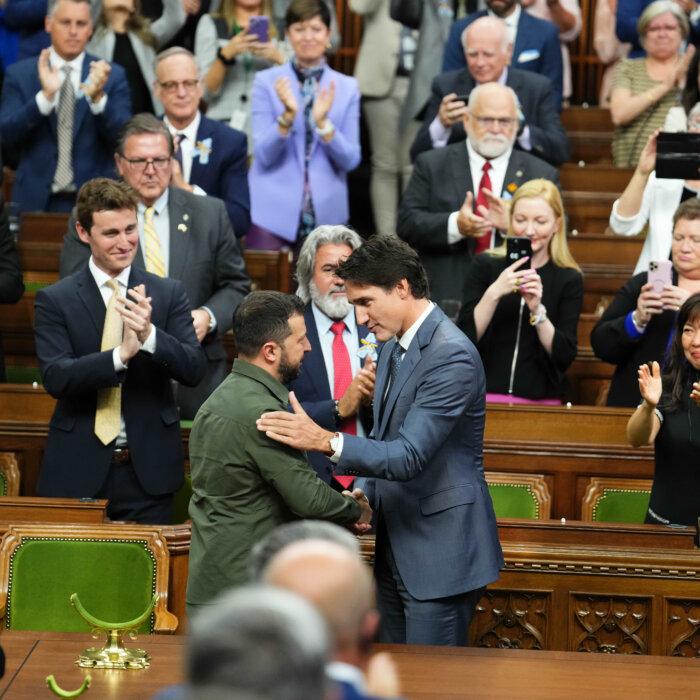
Ukrainian President Volodymyr Zelenskyy, front centre, and Prime Minister Justin Trudeau, front right, recognize Yaroslav Hunka, who turned out to be a Nazi war veteran, in the House of Commons on Friday. Photo by Patrick Doyle/The Canadian Press

The official recognition in Parliament of a former member of the Waffen-SS — the Nazi unit well-known for its role in implementing the Holocaust — was an outrage. It was an insult to our veterans; a slap in the face to Jewish, Polish and other communities targeted by the Nazi killing machine; an indignity to modern-day Ukrainians as they defend their country from Russian attack; and an embarrassment for our Parliament and for all Canadians. It never should have happened.

But it did. And, regardless of the immediate political fallout — including the correct decision of the Speaker of the House to resign — Canada’s Jewish community, Second World War veterans and all Canadians deserve a promise from the federal government to do better.

Doing better includes putting into place a process of having future events vetted by the Prime Minister’s Office, to ensure that visits of foreign dignitaries are not tarnished and Canada’s global reputation remains intact. Had the PMO fully reviewed the program in advance, such an egregious error would never have occurred. This deficiency must be acknowledged and addressed.

As the number of living witnesses to Nazi horrors dwindles, and memories of the Second World War fade, this incident reminds us how easily the facts of the Holocaust can be twisted and manipulated, or simply forgotten. Canadians must learn an important lesson and use this experience as a starting point to confront the dangers of Holocaust distortion and minimization.

In this moment of rising antisemitism and hate crime targeting the Jewish community, the value of Holocaust education is clearer than ever.

Holocaust education programs, such as the one now mandated in Ontario, are important first steps, but there is much more that can be done. The federal government must now commit to funding a standardized national social studies curriculum focusing on antisemitism and the Holocaust to ensure our children understand why so many Canadians were willing to risk their lives in a far-off continent to defeat Hitler’s armies. We cannot afford to let the Holocaust and its vital lessons vanish from our collective memory.

Not only did this incident highlight a lack of understanding about the Holocaust, it also underscored Canada’s failure to reconcile fully with the reality that Nazis immigrated to our country and, notwithstanding the atrocities with which they were involved, went on to live quiet lives amongst us.

In 2021, Helmut Oberlander, a former member of Einsatzkommando 10a, a Nazi death squad responsible for the murder of tens of thousands of Jews, died while still residing in Waterloo, Ont., marking a decisive end to years of half-hearted federal efforts to deport him to Germany. That Oberlander died a free man, surrounded by loved ones in the comfort of his home — a peaceful end denied to the victims of his killing unit — was a stain on Canada’s reputation as an upholder of human rights and the rule of law.

And now, it is Yaroslav Hunka, whose appearance last week in Parliament ignited this national conversation, a North Bay, Ont., resident who called his time of service in his Nazi unit “the happiest years of my life,” who has apparently lived all these decades below the national radar, so unafraid of scrutiny of his war record that he accepted an invitation to be honoured by Parliament.

Think for a moment what it is like for Canada’s Holocaust survivors to know that those who perpetrated unimaginable crimes against them, and their families, may be living openly, freely, right here in our communities.

After all that has happened in a few short days, and with the consequent international spotlight now focused on Canada, it’s time to task Canada’s War Crimes Program to review and consider any new evidence that has emerged from newly released research and archival material that further implicates those now living in Canada who committed wartime atrocities. It is time to reopen a national dialogue that should never have been closed. It is time for Canada to fulfil its promise to uphold human rights and ensure it is no safe haven for war criminals.

National Post
t
Jaime Kirzner-Roberts is vice-president, Greater Toronto Area, for the Centre for Israel and Jewish Affairs.


To: Wharf Rat who wrote (1556453)9/3/2025 1:38:44 AM
From: Maple MAGA 2 Recommendations

Recommended By
longz
Mick Mørmøny

  Read Replies (1) | Respond to of 1577167
 
FIRST READING: Canada has long been slammed as a 'haven' for ex-Nazis like Yaroslav Hunka

Pierre Trudeau once said he intentionally didn't prosecute Nazi war criminals living in Canada lest it inflame European expat communities

By Tristin Hopper

Sep 26, 2023


Yaroslav Hunka, a former member of the Waffen-SS, seen sitting in the House of Commons in Ottawa on Friday, Sept. 22, 2023. Photo by The Canadian Press/Patrick Doyle

The House of Commons unwittingly applauding an ex-member of the Waffen-SS is obviously a spectacular embarrassment, but it’s not entirely off-brand for a country that never quite came to grips with the sheer number of ex-Nazis who found safe harbour in Canada at the end of the Second World War.

Nazi-hunters have often fingered Canada as one of the Western nations that has been most reluctant to prosecute and deport Axis war criminals, and even in 2023 there remain a handful of known Nazis living comfortable retirements as naturalized Canadian citizens.

“It is to the Canadian government’s great and eternal shame that more was not done,” war crimes investigator Steve Rambam told Postmedia in 2014.

Throughout the 1990s, Rambam adopted the guise of a university researcher in order to secretly record the wartime testimonies of as many as 60 former Nazi soldiers and collaborators living in Canada.

This most notably included Hope, B.C.’s Antanas Kenstavicius, a former member of a collaborationist Lithuanian police force who told Rambam about participating in operations to round up and murder an estimated 5,500 Jews.

Kenstavicius was the only one of Rambam’s cases to be pursued by Canadian law enforcement, and he ultimately died of natural causes on the first day of his deportation hearings.

“Canada is where the Nazis are. Canada is the unknown haven for Nazis. Everybody knows about Argentina, but nobody knows about Canada,” Rambam told the Los Angeles Times in 1997.


This is House of Commons speaker Anthony Rota as he introduced a former member of the Waffen-SS, Yaroslav Hunka, as a “Canadian hero” during the visit of Ukrainian President Volodymyr Zelenskyy. This image catches Rota as he raised an eyebrow and took a slight pause just after saying that Hunka had fought against “the Russians” during the Second Word War – and more than one observer has speculated that this is the precise moment that Rota realized he had brought a Nazi to Parliament. Photo by CPAC screenshot

In the late 1940s, the Canadian Jewish Congress actively petitioned Ottawa to keep a closer eye on refugee streams from Eastern Europe, as the CJC believed that many former Nazi collaborators were using them to enter the country under false pretenses.

These warnings were almost completely ignored, and the Congress’ low-end estimate is that 2,000 war criminals were able to settle in Canada, where most lived openly without any fear of prosecution.

Irving Abella, a historian and president of the CJC in the early 1990s, claimed that Canada’s decision to ignore the ex-Nazis in its midst was deliberate. In 1997, Abella cited a conversation with Prime Minister Pierre Trudeau in which he was told Canada did not pursue Axis war criminals because “they were afraid of exacerbating relationships between Jews and Eastern European ethnic communities.”

“So he didn’t do anything, and he admitted it quite openly,” said Abella, who died in 2022.

In 1986, the government of Prime Minister Brian Mulroney would convene a Commission of Inquiry on War Criminals with the intention of finding out just how many Nazi war criminals Canada had been allowed to fly under the radar.

The spur for the inquiry was a 1985 story in the New York Times alleging that Joseph Mengele, a Nazi doctor notorious for conducting human experimentation at the Auschwitz-Birkenau death camp, may have lived in Canada for a period in the 1960s. Supposedly based on declassified U.S. Army intelligence, the claim was later found to be false.

But the inquiry – unofficially known as the Deschênes Commission – did find that there were about 100 suspect Axis war criminals living in Canada, and another 90 who had already died. What’s more, the commission determined that the federal government had very limited means to bring them to justice.

The report also found that Canada was home to several thousand ex-Nazis who couldn’t be directly implicated in war crimes given the available evidence.

This was the inquiry’s verdict on the Galicia Division, the Ukrainian Waffen-SS unit in which Yaroslav Hunka – the man applauded Friday in the House of Commons – was a veteran.

While many ex-Nazis had become Canadians by assuming false identities or lying about their war records, veterans of the Galicia Division were let into the country en-masse in 1950 via a special cabinet-level dispensation.


This is a cenotaph at Oakville, Ont.’s St. Volodymyr Ukrainian Cemetery honouring the Galician Division, which it refers to as the First Ukrainian Division, Ukrainian National Army. It’s one of two monuments in Canada (the other one is in Edmonton) paying homage to a division of the Waffen-SS. Photo by Peter J. Thompson/National Post

The division had surrendered to the Western Allies at the close of the Second World War, and following a period of detention in the U.K. they were granted entry to Canada on the grounds that they had likely joined the SS to fight Communism, rather than any inherent pro-Nazi leanings.

The Galicia Division’s whole purpose was to help maintain Nazi supremacy over Ukraine and many of its German commanders were directly implicated in war crimes while serving with other units. But the unit itself had never been conclusively placed at the site of an atrocity, leading the Commission to conclude that “mere membership in the Galicia Division is insufficient to justify prosecution.”

Despite the Deschênes Commission’s promise to spearhead a “made in Canada” solution to bring Canada’s Nazis to justice, only a handful of cases were ever pursued by the Canadian government, and only three have yielded a successful deportation or extradition.

Probably the most high-profile of those was that of Dutch-born UBC botany professor Jacob Luitjens. Luitjens had served in the Landwacht, a collaborationist Dutch paramilitary group that was active in rounding up Jews and opponents of the Netherlands’ wartime Nazi occupiers.

The Netherlands had convicted Luitjens in absentia in 1948, but it took until 1992 that Canada would strip him of citizenship and send him back to Europe on the grounds that he had lied about his wartime record to enter Canada.

It took more than three decades of legal wrangling to establish that retired Waterloo, Ont. businessman Helmut Oberlander – a former member of the Einsatzgruppen “death squads” that roamed Nazi-dominated Eastern Europe during the war – owed his Canadian citizenship to a misrepresentation of his past.

But in 2021, just as authorities were moving forward on Oberlander’s deportation, he died comfortably of natural causes surrounded by family.

“He very successfully played a very poor Canadian immigration system — and won,” Bernie Farber, who had long worked with Canadian Jewish Congress to bring Oberlander to justice, told the National Post at the time.

Get all of these insights and more into your inbox by signing up for the First Reading newsletter here.


To: Wharf Rat who wrote (1556453)9/3/2025 1:40:48 AM
From: Maple MAGA 2 Recommendations

Recommended By
longz
Mick Mørmøny

  Respond to of 1577167
 
Denazification Relied on Proof of Individual Guilt, Rather Than Membership in Nazi Organizations


A visitor reads about the "Frankfurt Trial" of Auschwitz's Nazi commanders initiated in 1963, at an exhibition at the Martin Gropius Museum in Berlin on Nov. 14, 2004. John Macdougall/AFP via Getty Images

Conrad Black

10/2/2023

The condemnation of 98-year-old Yaroslav Hunka as a former member of the Waffen SS after he was honoured in Canada’s Parliament has been excessive. The person who exposed him in that capacity, Lev Golinkin, is a Nazi hunter whose criterion for the asseveration of capital crimes for a suspect of Nazi crimes is service in any capacity in a para-military or police unit that has reasonably been found guilty of the commission of such crimes.

That the Waffen SS committed terrible crimes is not at issue; all units of the Nazi SS may reasonably be assumed to have been complicit in many activities which undoubtedly constitute among the most heinous crimes in all of history. They were directly involved in the rounding up and inhuman transportation of many millions of unoffending people to perish in circumstances of unimaginable barbarity in the Nazi death camps. Approximately 12 million people died in those camps, about half of them Jews, and virtually all of them innocent of any significant wrongdoing.

From very shortly after the end of World War II, there has been active and legitimate disagreement over how best to conduct what was at first called the denazification of Germany. In general, the Allied powers of occupation—the United States, United Kingdom, Soviet Union, and France, who governed every square inch of Germany from 1945 until 1949—applied a standard of proof of individual guilt, especially where people were on trial for their lives, rather than membership in an organization that was proved to be guilty of acts of murder, even mass murder. Lev Golinkin does not subscribe to that standard and is a partisan of the view that anyone who belonged to any organization that committed such crimes was automatically guilty of them. It seems that it was by that concept of collective guilt by which Mr. Hunka has been condemned.

I understand that there are some allegations specifically against him personally, and these must be taken seriously, but they must not be prejudged. As a practical matter, it is not appropriate to try a man of his advanced age on the basis of allegations made by people who are now deceased. As far as what has come into the public domain, there is no reason to doubt that the offence of Mr. Hunka was to accept to serve in the Waffen SS, and nothing has come to light to overturn his claim that his motive was to fight for the independence of Ukraine—a cause that the Nazis, for their own wicked purposes, pandered to in order to drum up volunteers to support them in their barbarous invasion of the Soviet Union.

The Soviet oppression of the Ukraine, especially mass liquidations of the kulaks (small farmers) and millions of Ukrainians by Stalin in the 1930s, is well documented, and Mr. Hunka and many other Ukrainians had every right to aspire to, and fight for, the independence of their country. It hardly needs over-emphasis that this is a cause now being heroically pursued with the strong tangible encouragement of the government of Canada and the entire Western Alliance. If Mr. Hunka had remained in Ukraine, he would certainly have been murdered by the returning Soviets, thus he cannot be blamed for fleeing to the West.

Related Stories

Trudeau Offers Apology on Behalf of Parliament for Honouring of Nazi Unit Veteran


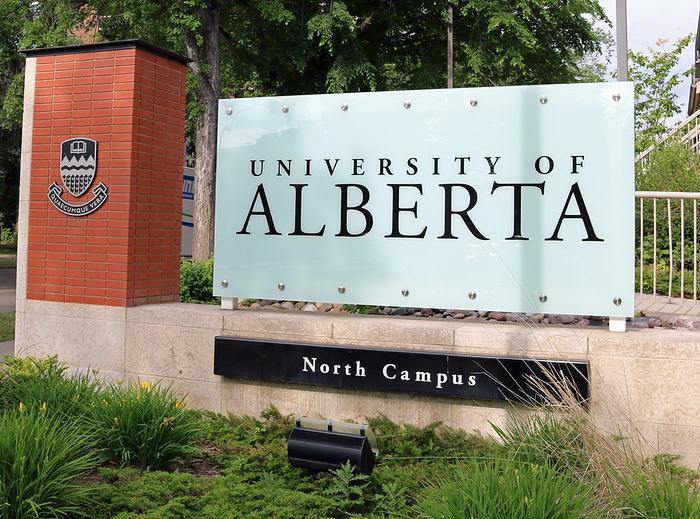
University of Alberta to Return Endowment Made in the Name of Nazi Unit Veteran Honoured in Parliament


The fact of having fought in what was a criminal organization that committed horrible crimes does not in itself justify the odium in which the Golinkin accusations have placed Mr. Hunka. A similar issue raising many of the same questions arose when President Ronald Reagan visited the military cemetery at Bitburg, Germany, on May 5, 1985. When it came to light that 48 members of the SS were buried there along with approximately 2,000 ostensibly non-political soldiers of the German army, President Reagan was widely urged not to proceed with his plan to give a speech at that cemetery. But the West German Chancellor, Helmut Kohl, strongly urged him not to cancel the engagement. President Reagan visited the Bergen-Belsen death camp before proceeding on to Bitburg, and he gave his address as scheduled.

“To the survivors of the Holocaust, your terrible suffering has made you ever vigilant against evil,” Mr. Reagan said.

“Many of you are worried that reconciliation means forgetting. I promise you we will never forget and we say with the victims of the Holocaust: ‘Never again.’ The war against one man’s totalitarian dictatorship was not like other wars; the evil of Nazism turned all values upside down. Nevertheless, we can mourn the German war dead today as human beings crushed by a vicious ideology. Of the 2,000 men buried in the cemetery, how many were fanatical followers of the dictator and willfully carried out his cruel orders? We do not know. Many, however, we know from the dates on their tombstones were only teenagers at the time. There were thousands of such soldiers to whom Nazism meant no more than a brutal end to a short life.”

“We do not believe in collective guilt,” the president continued. “Only God can look into the human heart, and all these men have now met their supreme judge, and they have been judged by Him as we shall all be judged. Our duty today is to mourn the human wreckage of totalitarianism and today in Bitburg cemetery we commemorated the potential good in humanity that was consumed more than 40 years ago. ... Too often in the past each war only planted the seeds of the next. We celebrate today the reconciliation between our two nations that has liberated us from that cycle of destruction. Look at what together we have accomplished. We who were enemies are now friends; we who were bitter adversaries are now the strongest of allies.”

Elie Wiesel, perhaps the leading Jewish advocate of both the punishment of Nazi genocidists and of collaborators and reconciliation among all the civilizations disrupted in World War II, who had opposed Reagan’s visit to the Bitburg cemetery, commented: “As we all know, President Reagan is a great speaker and that was a very fine speech. But I still wish he had not made it.”

Those who were not directly affected by the Holocaust may not be able to imagine themselves in the place of those who were. No one who was not a victim or relative or friend of victims of the monstrous crimes committed against the Jews and all who were singled out for liquidation by the Nazis, can judge these matters with the moral authority and awful familiarity with such soul-destroying evil as those who were. No matter how knowledgeable anyone may be of those atrocities, it is hard to impute them to the descendants of the civilization of Goethe and Beethoven.

No one can begrudge those closest to the Holocaust victims their desire for the collective punishment of anyone tainted by association with that wickedness and evil. But on the facts that are known in this case, it has not been just to invite Yaroslav Hunka to Parliament for the visit of the president of the country where he once lived, and for which he fought and risked his life, albeit in an army devoted to evil ambitions, and then suddenly to demonize him as a war criminal with no due process whatever, 80 years after the events. The great majority of those years were spent as an exemplary resident and citizen of this country.

