whilst the retards are one battery-fire away from erasure
continue to adore low density old home garden middle class existence, preferring over high-rise / high-risk living
Southeast Asia’s rich buy sky garages while the middle class lose their homes
As wealthy buyers seek penthouses with living-room supercar parking, struggling families battle banks to keep a roof overhead
Aidan Jones, Ushar Danieleand Iman Muttaqin Yusof
Published: 9:30am, 13 Dec 2025
Daniel Ho’s clients want the best money can buy: branded residences and glass-wrapped penthouses complete with panoramic views and high-rise parking spots fit for supercars in the elite enclaves of Bangkok, Jakarta, Kuala Lumpur and Manila.
A world away, or so it seems, mid-level asset manager Charoen Kijvekin sees a very different reality playing out. His clients are debt-stricken Thais trying to claw back repossessed homes from auction and families on the bottom rung of the property ladder clinging to dreams of ownership.
Though they work at opposite ends of the market, both see the same widening divide between the haves and the have-nots. Across Southeast Asia, the rich are paying record sums for prime real estate, while the indebted fight to keep a roof above their heads – often just a job loss or family crisis away from losing their homes.
“Most of my customers have lost their jobs,” said Charoen, 68, whose JZD Asset Management provides cheap loans to people the banks have turned away.
“If they can’t keep up with payments, the bank will repossess their homes. That’s when they come to me.”
His business model is built on buying repossessed homes at auction and selling them back to their former owners, offering loans at an interest rate he says undercuts most banks.
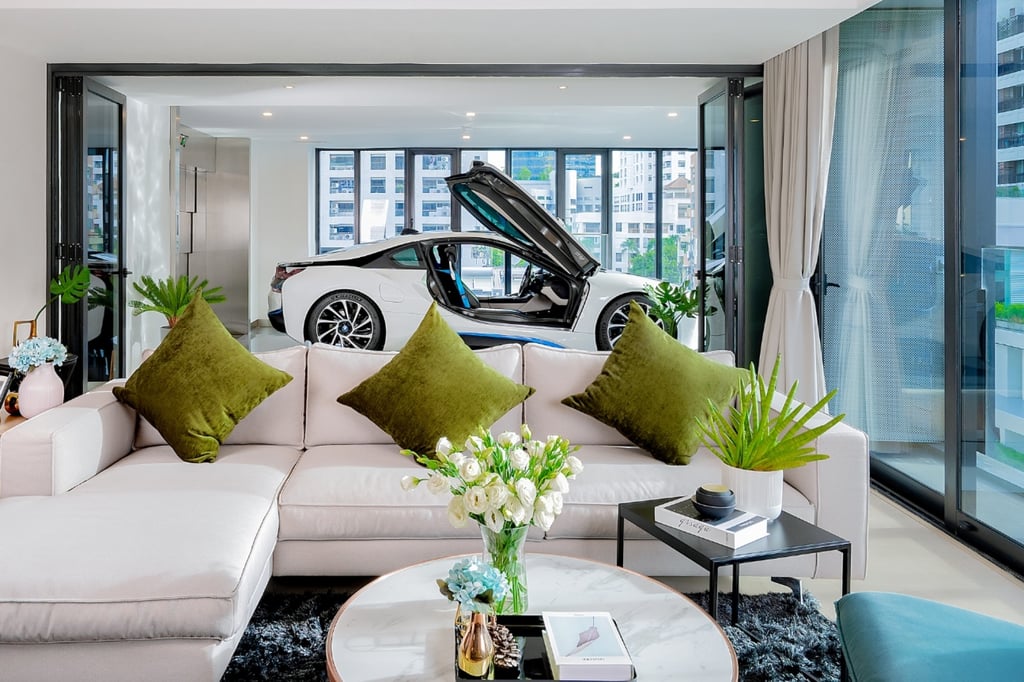
A “sky garage” in a luxury condominium in Bangkok. Photo: Richmont’s, Christie’s International Real Estate
Sky garages
Southeast Asia is home to some of the most unequal economies anywhere in the world. In Thailand, the richest 10 per cent hold over 70 per cent of all the wealth, according to the World Inequality Database. In the Philippines, the fortunes of the top 50 richest families equal nearly one-fifth of the entire economy.
The region’s middle classes, meanwhile, find themselves squeezed harder than ever. Each month brings a little more debt, a little less security. For those with loans they cannot repay, keeping their homes can feel like defying gravity itself as the banks start to close in.
This year, life has become harder still. US tariffs have hit growth, cut-price competition from China is eating into small-business margins and job losses are mounting as AI technologies threaten white-collar work once considered secure.
Yet the wealth at the top keeps multiplying, with multimillionaires being minted at record speed.
Last year, there were more than 850,000 people in the Asia-Pacific with a net worth of at least US$10 million, according to the 2025 Wealth Report from global property consultancy Knight Frank.
North America still has the highest concentration of super-rich, but Asia is catching up. By 2028, the region is forecast to have around 930,000 people in the high-net-worth bracket.
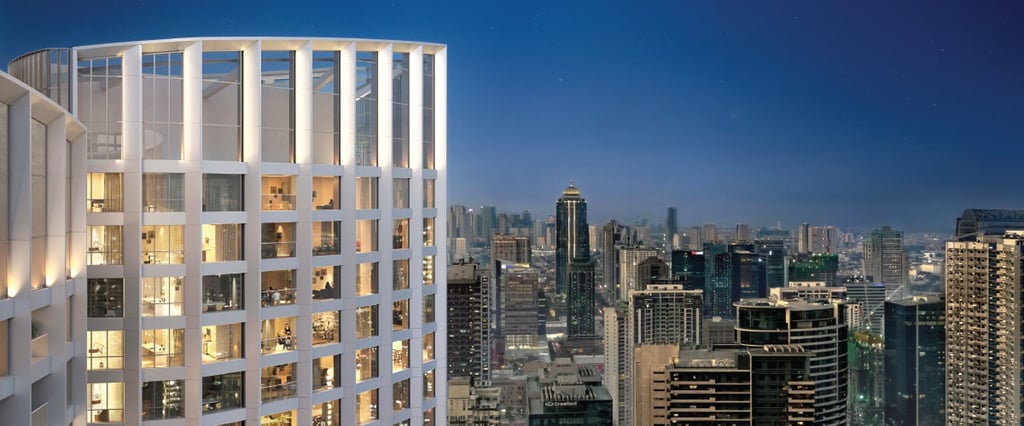
Aurelia Residences in Metro Manila. Construction finished on the building last year. Photo KMC Savills
As fortunes swell, developers are transforming city skylines. On Manila’s exclusive Ayala Avenue, “super penthouses” sell for over US$7 million, while the ultra-luxury Aurelia Residences – where the most affordable condominium apartments cost more than US$6,000 per square metre – helped propel the Philippine capital to second globally for luxury price growth in 2024, according to Knight Frank’s Prime Global Cities Index.
Branded residences are booming too, from the luxury villas at Raffles Residences Bali, with their private butlers and chefs, to the recently launched Residences at Mandarin Oriental in Da Nang.
Thailand leads the region in such developments, according to Ho, as luxury property purchases are increasingly paired with prestige brands like St Regis or Mandarin Oriental.
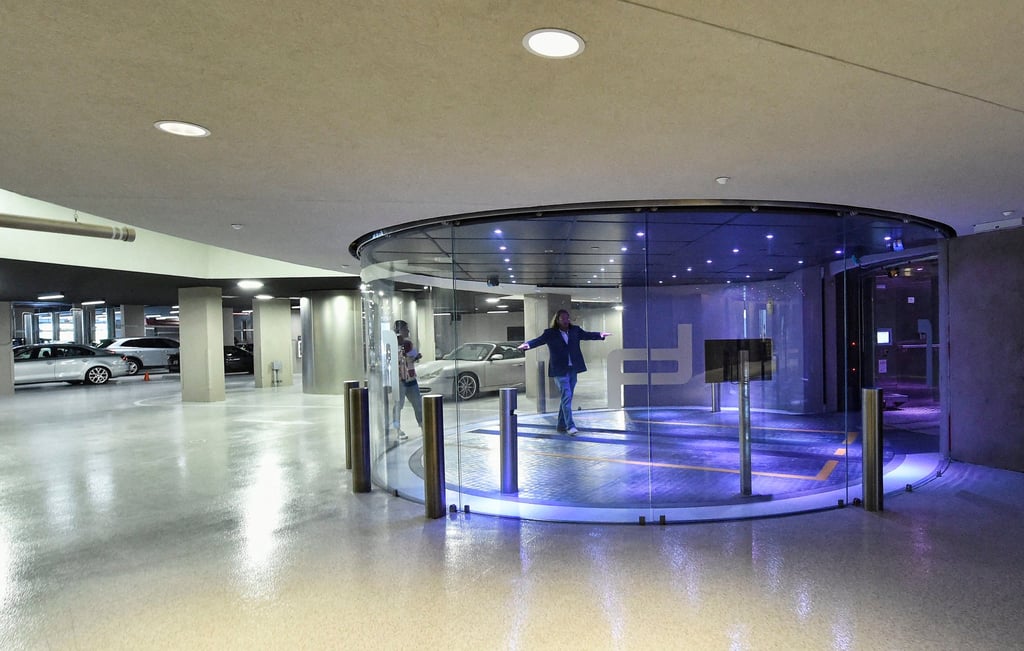
A developer stands in the car lift in the Porsche Design Tower in Florida. Photo: AFP
Bangkok’s Porsche Design Tower, billed to open in 2028, epitomises this blend of aspiration and excess. Residents will have access to a “sky garage” – an automated lift that parks their supercars beside their living rooms, separated by a wall of glass.
“Buyers generally consider high-quality branded residences as a relatively safe investment,” said Ho, who is co-founder and group managing director of Juwai IQI, which specialises in finding Asian buyers second homes across Southeast Asia.
“Most cross-border buyers are purchasing for their own use, and that may include renting it out when they’re not there.”
The Thai capital excels at mixed-use developments featuring high-end retail, hotels and restaurants, topped off with multimillion-dollar penthouses.
One Bangkok, the US$3.2 billion complex launched last year beside the city’s Lumphini Park, exemplifies how developers are tapping into the wealth washing around Southeast Asia’s cities.
“These districts are designed as high-traffic hubs that draw thousands of people every day and generate stable commercial activity,” Ho said. “If the project includes office, retail, hotel and residential elements, they are not at the mercy of trends in any one market segment.”
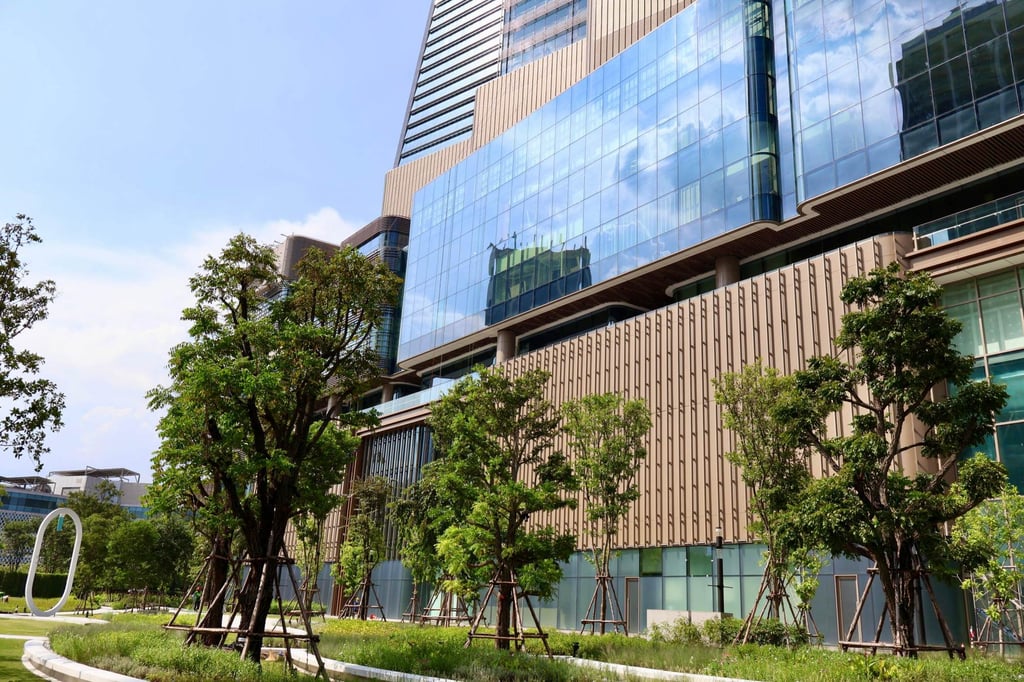
The new One Bangkok complex in the Thai capital cost an estimated US$3.2 billion. Photo: Donald Low
Repo-landMercy can feel in short supply for Southeast Asia’s indebted middle classes, however.
Thailand’s Legal Execution Department, the main government body that helps settle debt disputes, reported a 210 per cent increase in home foreclosures this year compared to last, as economic growth slowed to between 1.8 and 1 per cent, according to forecasts.
Around one-fifth of repossessed homes on the auction block were priced at under 1 million baht (US$31,000) – a clear indicator of strain on lower-middle-class buyers.
Across the country, nearly 190,000 second-hand properties changed hands this year, Real Estate Information Centre data shows, up about one-third from the year before as debt pressures push more homes onto the resale market.
Charoen offers families a chance to buy back their homes with loans at a 6 per cent annual flat rate, or 0.5 per cent per month per 1 million baht. That is far more generous than the terms offered by loan sharks, who are many borrowers’ only fallback option when the banks turn them away.

Commercial high-rise buildings and homes are seen in Bangkok, Thailand. Photo: AFP
But his work also touches on some of the underlying causes of indebtedness.
“We help them [clients] find new income streams. We teach them skills, show them how to start small businesses and help them get back on their feet,” he said. “I fill a crucial gap.”
Many of his customers are in their forties or fifties, have recently been laid off and are desperate to keep their homes, he says.
Last year, Thai household debt fell back below 90 per cent of gross domestic product for the first time in about 3 ½ years and has since inched down further, though authorities warn it is still dangerously high.
For middle-income earners elsewhere in the region, the strain feels familiar.
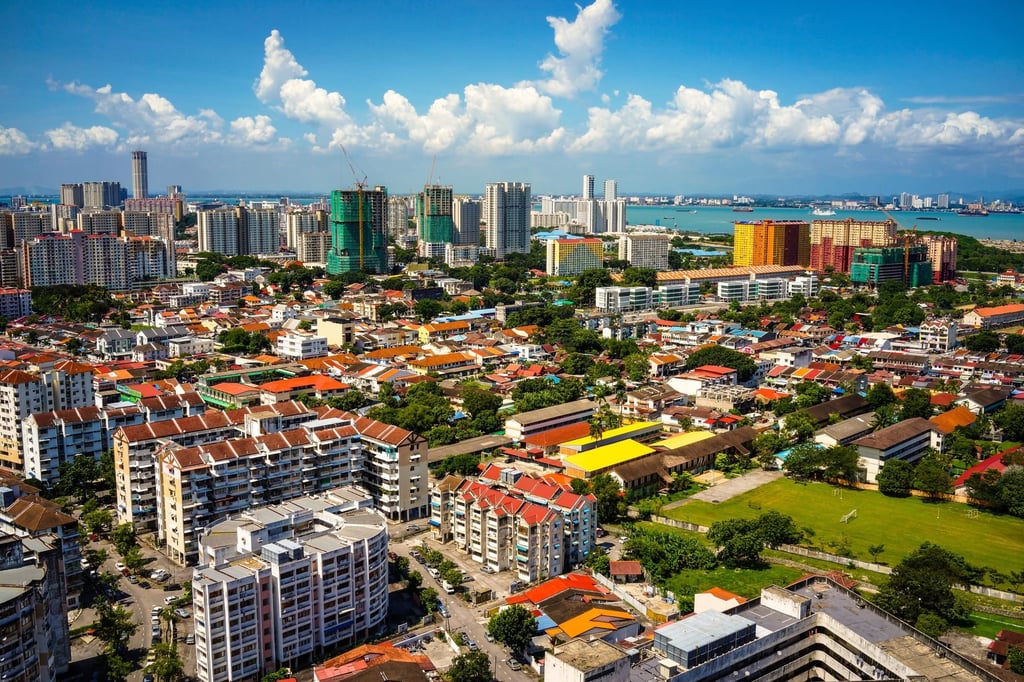
Homes in George Town, Malaysia’s Penang state. Malaysia’s economy is projected to grow around 5 per cent this year. Photo: Shutterstock
“Some months are tight,” said Wong*, 25, a private-sector worker in northern Penang who spends a quarter of her salary on a US$72,000 three-bedroom home.
“I manage my salary and keep my commitments within what I can afford. Sometimes I regret it because with the same monthly amount, I could have bought a better car. [But] a luxurious life definitely isn’t part of the picture.”
Malaysians are marginally wealthier than Thais on average and their economy, projected to grow around 5 per cent this year, offers slightly more breathing room. But even so, some are struggling.
Nearly 28,500 people were declared bankrupt between 2021 and October this year, according to figures shared with This Week in Asia by Malaysia’s Insolvency Department. Housing loans accounted for almost 2,350 of those cases.
Refinancing has been rising
Khairul Fitri, Malaysian mortgage agent
Mortgage agents also report a surge in refinancing requests, fuelled by middle-class dreams of upscale dining, premium cars and fancy holidays.
“Refinancing has been rising. Year on year, it’s up by around 20 to 30 per cent,” said Khairul Fitri, group sales manager at the Melaka-based AVC Mortgage Consultancy. “Many buy based on what they want, not what they can actually sustain.”
He said lifestyle choices were a major factor, as clients in early adulthood struggled to “juggle overlapping commitments”.
“Most of them are in their thirties,” Khairul said. “They’re starting to stabilise financially and only now they realise they can’t keep spending without thinking ahead.”
Residential buildings are seen in Chinese developer Country Garden’s Forest City development in Johor Bahru, Malaysia. Photo: EPA-EFE
All that glitters …From Bangkok to Ho Chi Minh City, the “ghost towers” of stalled luxury projects stand as cautionary tales, reminders of the perils of over-leverage and how quickly hype and debt can implode.
South of Malaysia’s Johor, the Forest City development – a US$100 billion eco-metropolis of man-made islands first announced in 2006 and intended for 700,000 residents – is still only 15 per cent complete, with fewer than 10,000 inhabitants.
Years of capital controls in China, Malaysian political turmoil and the pandemic halted sales and pushed Chinese developer Country Garden to default on its debts, leaving the project’s future uncertain, despite a major government effort to revive it.
Lessons have been learned, industry insiders say. “Today, the buyer profile is completely different,” Hilmi Akmal, a Kuala Lumpur-based real estate agent, told This Week in Asia. “More than nine out of every 10 [properties] are purchased for their own use.”

13:00
How Hong Kong's housing market became among the world’s most unaffordable
How Hong Kong's housing market became among the world’s most unaffordable
Outside luxury enclaves, Southeast Asia is reportedly struggling with a glut of unsold mid-range homes, ranging in price from US$67,000 to US$100,000, as developers blame a mismatch in the types of projects being built and buyers struggle to secure credit.
These patterns revealed structural weaknesses in housing and credit systems across the region, said Ahmad Farhan Khairulannuar, a social policy researcher at Malaysia’s Institute of Strategic and International Studies.
Land-scarce Singapore stands apart, with its housing supply tightly reined by the government’s Urban Redevelopment Authority.
To restore balance, Ahmad urged the authorities elswhere in Southeast Asia to take a much more active role in the market.
“Government must explore ways to reconfigure incentives for developers, to encourage truly affordable housing supply that does not project risk,” he said. |



