Quite funny, the premise / setup … and the oilfields seem to require de-complication :0)))
Venezuela belongs to no one and cannot be kept, and given so, no one can invest for some people against other people because the hot-blooded Latam people shall most assuredly revolt, am told
Cousin has a coal mine to sell to you; has been in the family since forever :0)
The whole show might give rise to years of good laughs
China’s residual 10 B left on the table is worthwhile as ticket at the table
bloomberg.com
The Trump administration is looking to use access to the world’s largest crude reserves to advance US interests.
Source: Bloomberg
Politics
The Big Take
Trump’s Team Orders Big Oil Into Venezuela: ‘Do It for Our Country’
Energy bosses see long haul ahead, but worry they’ll get railroaded into promising a quick fix
By Jennifer A Dlouhy, Josh Wingrove, Courtney Subramanian, Kevin Crowley, and Mia Gindis
January 9, 2026 at 6:30 AM GMT+8
The US embassy in Caracas sprawls across a lush hilltop, visible across the city, and for years just about the only people who set foot in it were cleaners. Now it’s powering up again — envisaged as the hub of President Donald Trump’s hemispheric oil empire.
This week has seen a frantic push toward the goals the president outlined after the capture of Nicolás Maduro: Vassalize Venezuela, and convert the world’s biggest crude reserves into US might. The Trump administration confiscated two more tankers and announced it would take delivery of millions of barrels of Venezuelan oil. There were non-stop calls with the makeshift regime in Caracas, with Secretary of State Marco Rubio conducting his in Spanish.
Also on speed dial were US oil bosses, who’ve been summoned to a crucial Washington meeting on Friday. They’re on the hook to turn Trump’s vision into reality. The pitch, one person said, will be: “Do it for our country.” That might be a hard sell, given the massive multi-decade investments that are needed.
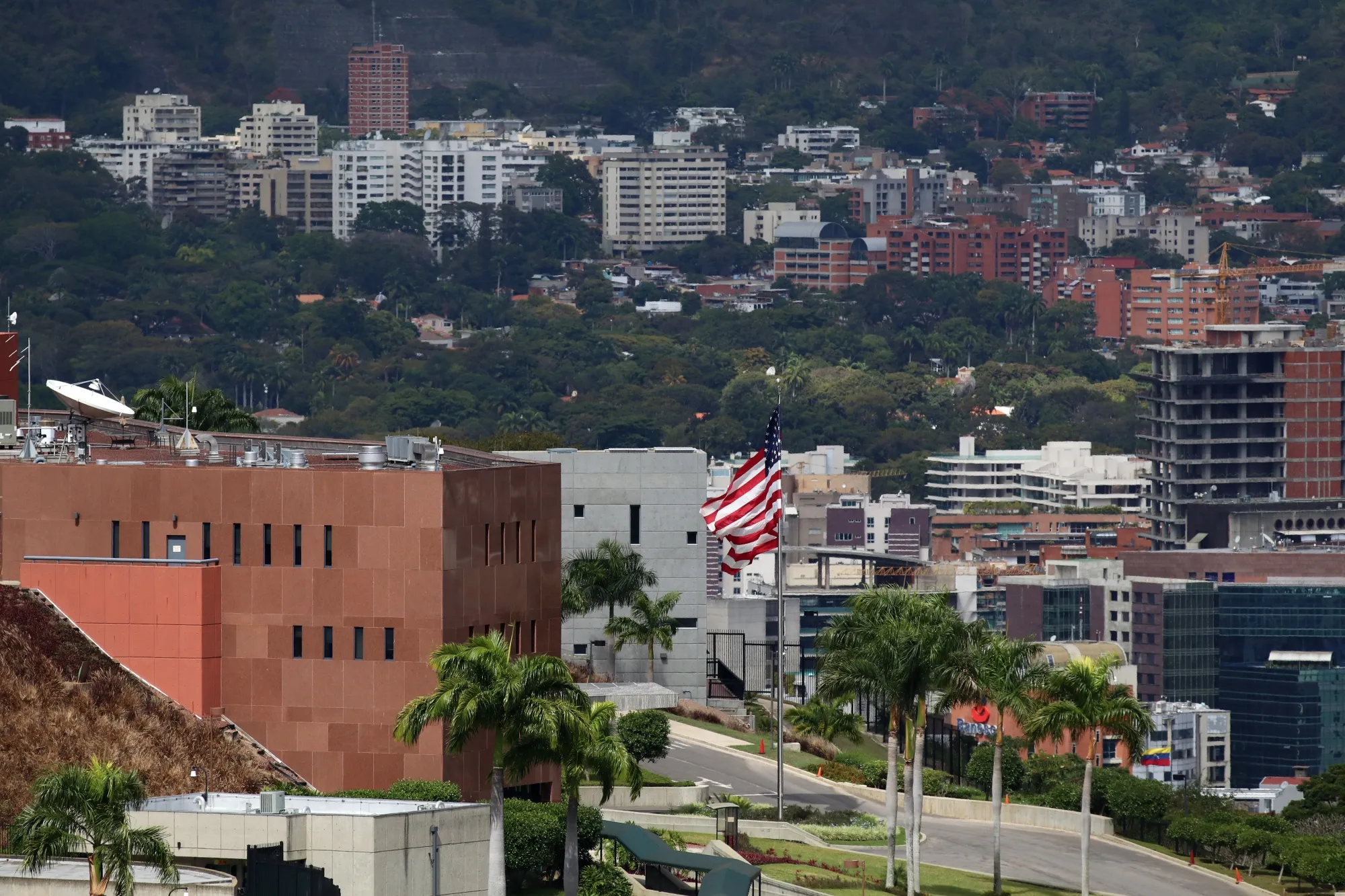
The US Embassy in Caracas closed in 2019, under the Trump Administration.Photographer: Lokman Ilhan/Anadolu Agency/Getty Images
This account, compiled in interviews with US officials and other people familiar with the deliberations, illustrates the frenzied effort since the raid to set the new landscape for ties between the countries and the fate of its oil.
To the White House, the prize is even bigger. In a dawning new era of great-power rivalry the US has two main adversaries. China depends on imported oil — and has been getting some of it from a friendly Venezuela, at discounted rates. Russia is a crude exporter that could struggle if prices fall too far. Trump’s play for Western Hemisphere dominance could increase US leverage over both. The administration has signaled that in the new Venezuela, Beijing and Moscow won’t be welcome.
That was the geopolitical backdrop to showtime at Mar-a-Lago last weekend, as the US military carried out the audacious raid to apprehend Maduro. Trump and key aides watched — like a television show, the president later said — from a makeshift operations center at the gold-trimmed Florida estate, where black drapes were hung haphazardly to obscure the top-secret event from passers-by. The operation had been meticulously planned: US forces built a replica of the Venezuelan strongman’s home to practice. Trump said he waited days for the weather to clear.
If that offered the kind of drama Trump loves, now comes the long grind he’s less enamored with.
For one thing, ties with the new administration of Acting President Delcy Rodríguez — sworn in hastily after Maduro’s capture — still look like they’re being crafted on the fly. Trump has said the US will be running Venezuela, likely for years. Rodríguez has balked at that. “We are here governing alongside the people, and no one else,” she told state TV on Tuesday. “There is no external agent governing Venezuela.”
A White House official said the US is proceeding with a plan but adjusting as circumstances change, downplaying any suggestion of an ad hoc approach.
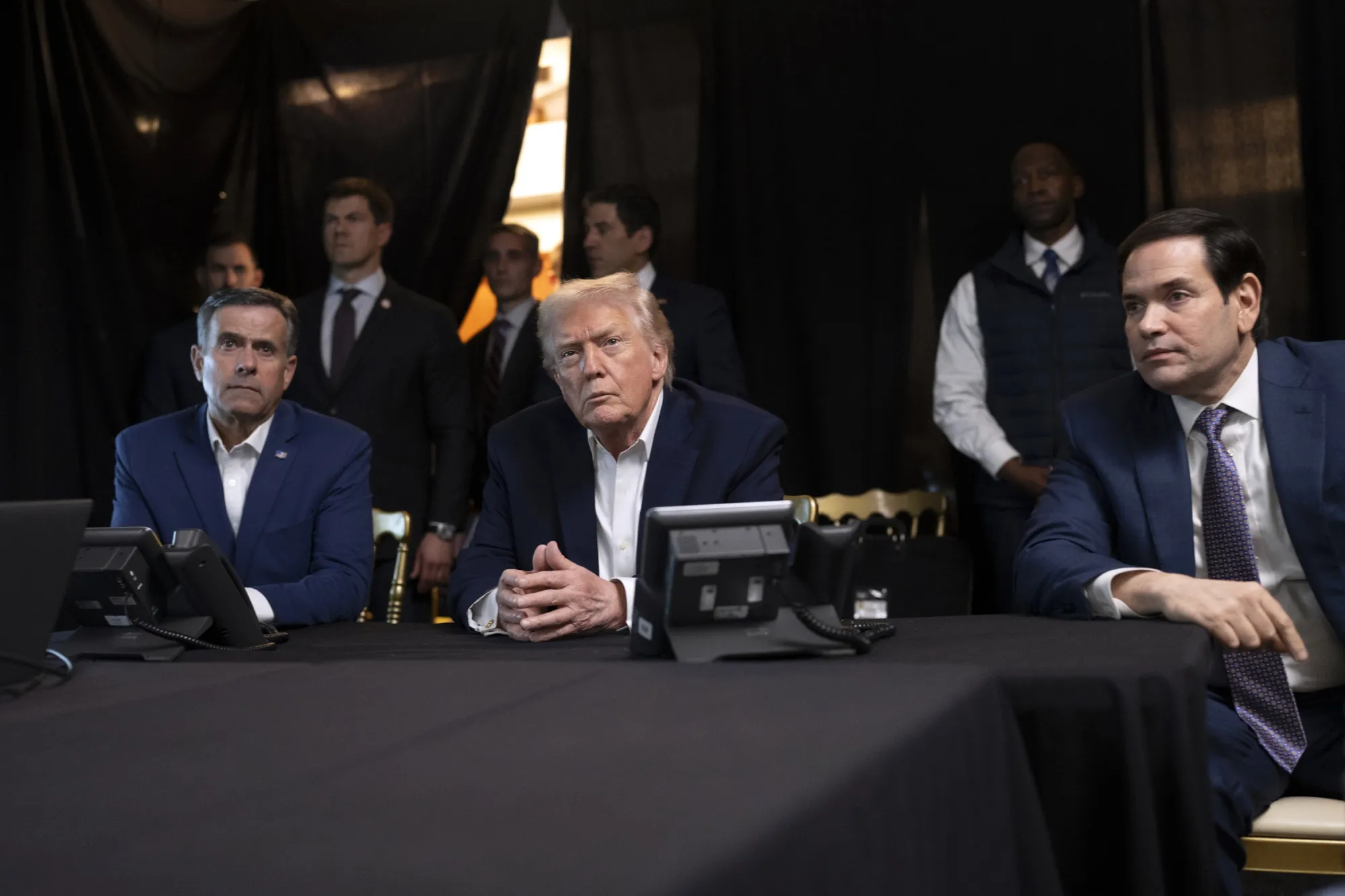
A handout image from the White House of President Donald Trump, CIA Director John Ratcliffe, left, and Secretary of State Marco Rubio monitoring US military operations in Venezuela, from Mar-a-Lago Club in Palm Beach, on Jan. 3.Photographer: Molly Riley/The White House via Getty Images
The country remains under heavy sanctions — and a naval embargo enforced by a massive US fleet just offshore, which the White House says will stay there. “For them to do any kind of commerce, they need our permission,” is how Trump’s Deputy Chief of Staff Stephen Miller put it.
They’ll also need investment — and the US oil industry, which has lost billions in Venezuela before, doesn’t see the country as quite the immediate gold-rush opportunity that Trump does. It’s not yet clear which companies will heed Trump’s call to action or what guarantees the US taxpayer may end up having to provide.
“Immediately following the successful arrest of narcoterrorist Maduro, the president brokered a historic energy deal to further strengthen America’s national security in the Western Hemisphere and help restore Venezuela as a responsible, prosperous ally of the United States,” said Taylor Rogers, a White House spokeswoman, in a statement. "President Trump continues to broker good deals on behalf of the American people.”
Trump has signaled he was in touch with energy bosses even before giving the final order to seize Maduro. But executives have told the administration they’re wary of the scale of work required in Venezuela, where they’d confront decades of abandoned rigs, leaky pipelines and fire-ravaged equipment. No one wants to tell Trump no, said one industry insider. But he shouldn’t hold his breath.
Venezuela Pumps a Lot Less Oil Than It Used To
A handful of foreign companies still partner with PDVSA, but have refrained from investing after US sanctions were imposed
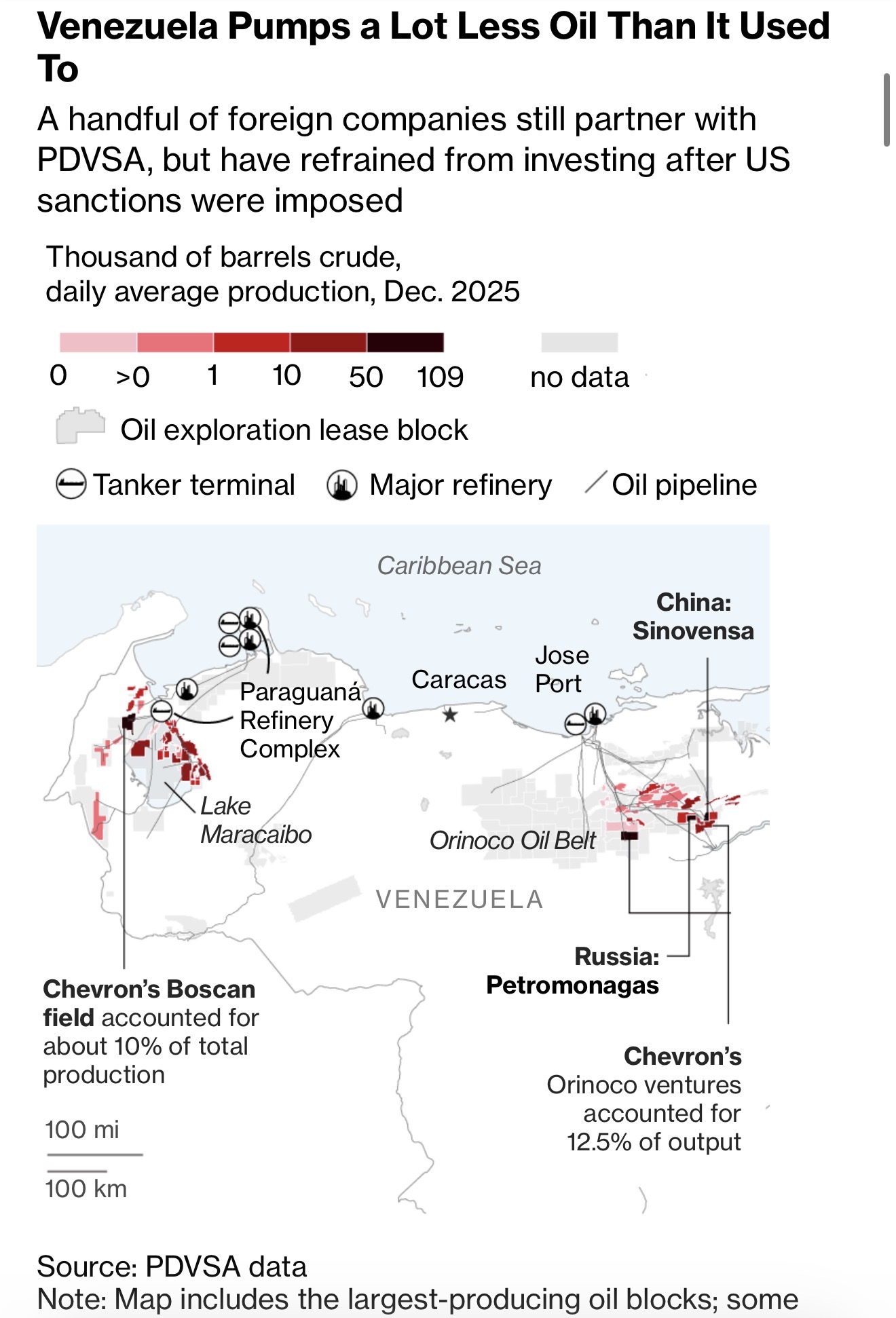
Source: PDVSA data
Note: Map includes the largest-producing oil blocks; some smaller blocks are not represented. Oil production data is December daily average as of Dec. 11 (western fields) and Dec. 15 only (Orinoco).
“There’s so much magical thinking, that we can go in and make everything right,” said Samantha Gross, director of the Brookings Institution’s Energy Security and Climate Initiative. “You look at Venezuela’s proved reserves, and that’s a lot of oil. But it’s not easy oil. The infrastructure is in shambles.”
And, Gross added, “you need to know you’re not going to get shot at.”
While oil executives have moved to temper expectations in the short-term, they're also aware Trump's actions represent a once-in-a-generation opportunity to gain access to some of the world's largest oil reserves, potentially on favorable terms. Oil company representatives say they want to see political and legal reforms in Venezuela that would enable them to move money in and out of the country as well as on-the-ground security before they make any big commitments. They're also looking for financial guarantees from the US government that would protect their investments even after Trump's current term ends.
But the situation raises the specter of past US interventions in oil-rich countries. After regime change in Iraq and Libya, both nations descended into civil wars. Trump has long assailed the US invasion of Iraq in particular — for reasons that foreshadow his plans for Venezuela.
America’s critics said its Middle East wars were all about oil. Trump makes no bones about that. “It used to be, to the victor belong the spoils,” he said in 2016. “I always said: ‘Take the oil.’” But Rubio is spelling out how this time needs to be different. “Step one is the stabilization of the country,” he told reporters Wednesday. “We don’t want it descending into chaos.”
Venezuela has long beckoned oil companies with its vast reserves of sludgy, sour crude — more like tar than the stuff that flows out of most US wells.
That underground bounty has largely been out of reach, because of above-ground risk. Chevron Corp. is the only US major still active in Venezuela, where it’s been exempted from sanctions by Washington. Two decades ago, Exxon Mobil Corp. and ConocoPhillips had their assets nationalized by Maduro’s predecessor, Hugo Chávez.
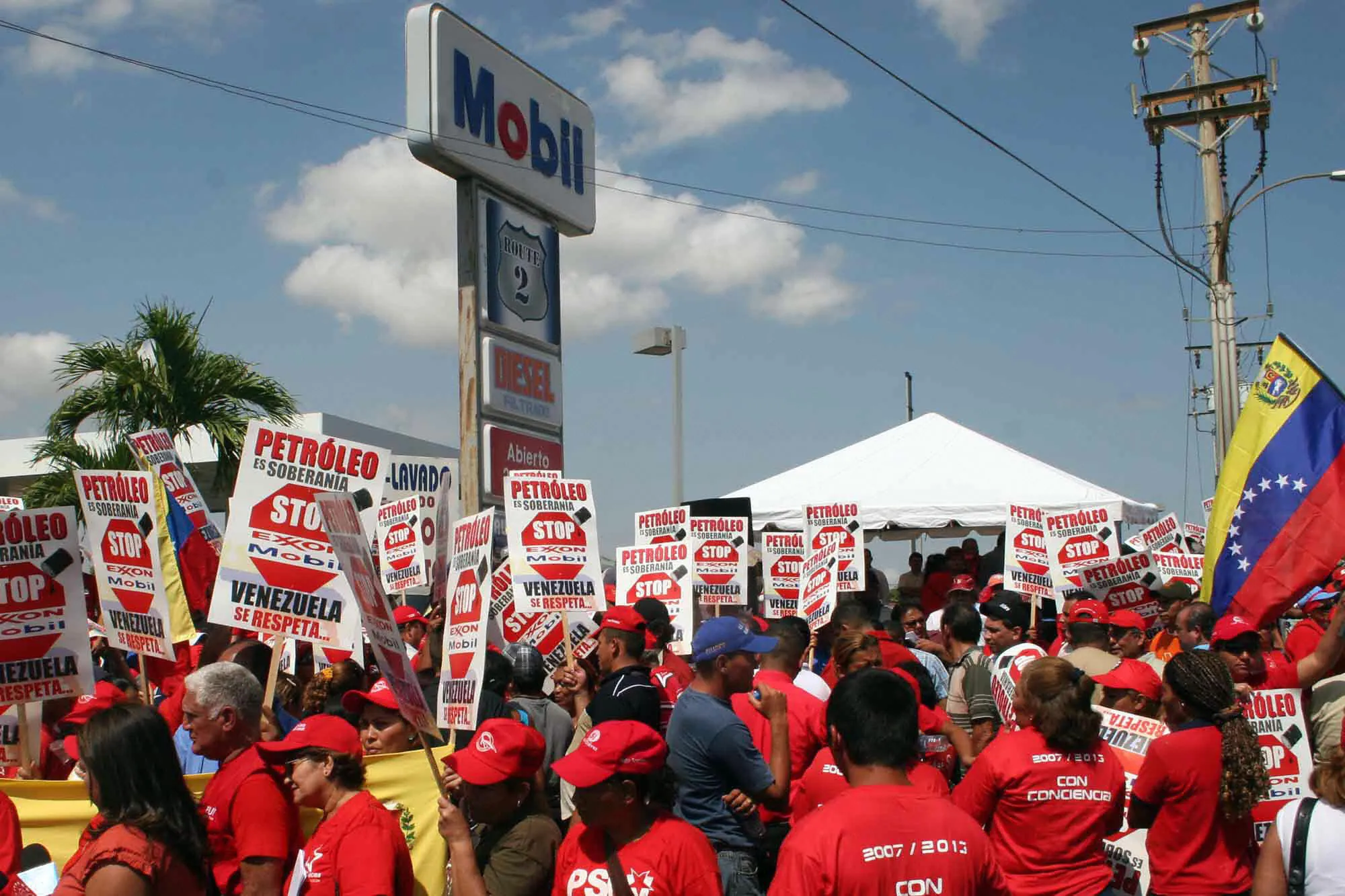
PDVSA employees demonstrate outside an Exxon Mobil Corp. service station in Maracaibo, in 2008, as the US oil producer sought arbitration over compensation for the country’s nationalization of key oil fields in the Orinoco Basin.Photographer: Rafael Navarro/AFP/Getty Images
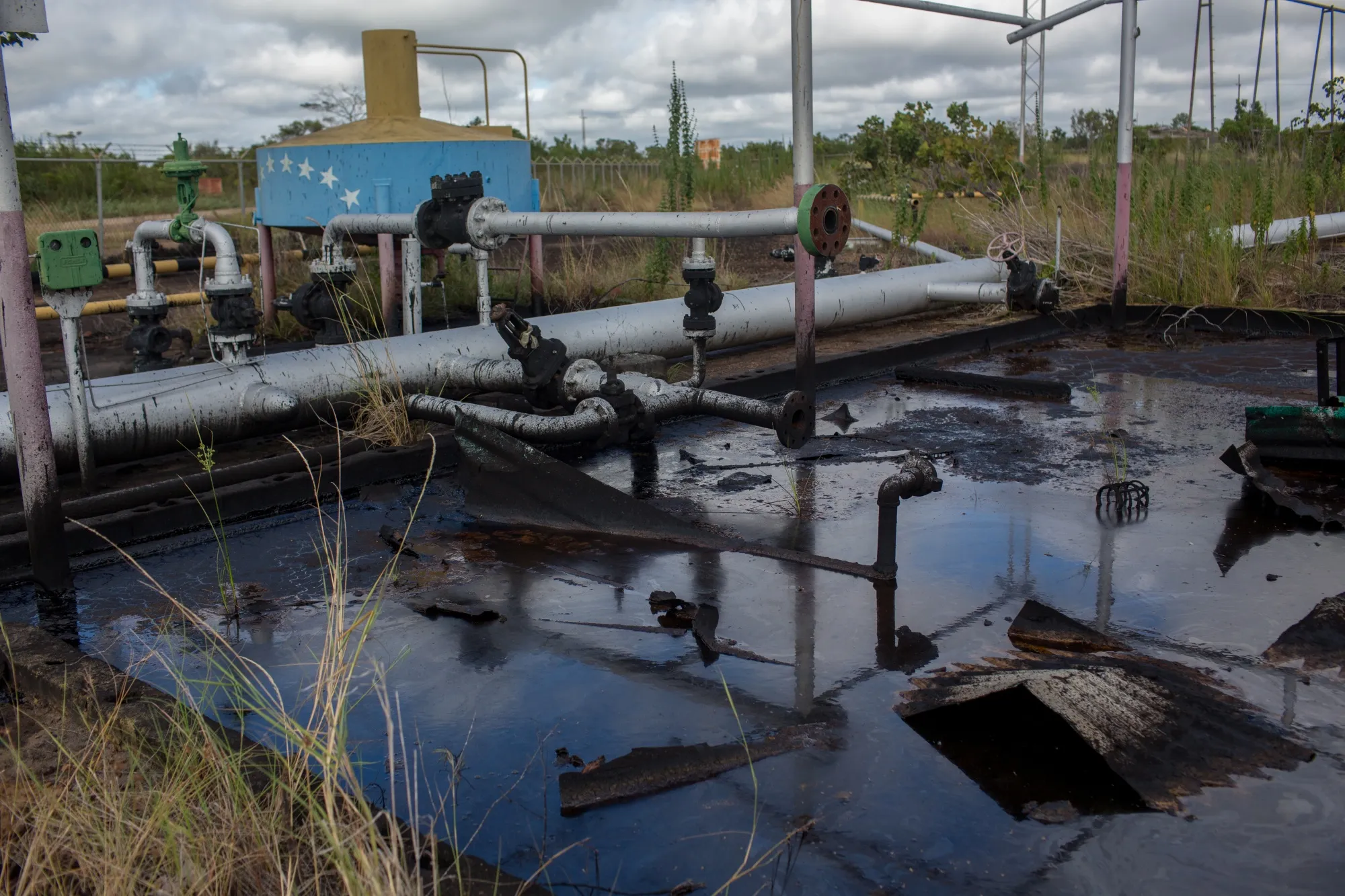
An abandoned PDVSA facility in the Melones oil field in El Tigre. Venezuela’s infrastructure is severely degraded and will require significant time and investment to repair.Source: Bloomberg
Trump’s Energy Secretary Chris Wright wants them, and others, to go back. Wright has said he was working the phones immediately after Saturday’s seizure of Maduro — placing calls to the executives of those oil giants, who’ll be key guests at the White House on Friday.
Read more: Trump Venezuela Meeting Is Shaping as Who’s Who of US Oil
They’ve all been doing their homework for a meeting that could get uncomfortable. Trump has a habit of parading business chiefs on TV, eliciting promises and praise. But the industry’s hunch is that expectations of a speedy Venezuelan revival aren't aligned with the scale of the challenge there. Some companies wanted assurances that Friday’s gathering would be conducted solely behind closed doors. A White House official denied that anyone asked for the meeting to stay private, describing oil executives as knowing full well Trump's a transparent president.
Just sustaining the country’s current production — until recently near 1 million barrels per day — would require $53 billion of investment over the next 15 years, according to Rystad Energy analysts — and a whole lot more, over a decade-plus, to get anywhere near the 1970s peak of around 4 million barrels.
Read more: With Maduro Out, Wall Street Chases After Venezuela’s Riches
The US government’s short-term goal is to get oil moving out of overflowing storage tanks, before companies are forced to shutter wells that are often complicated to restart, according to officials familiar with the planning. It’ll mean working with the regime Trump just decapitated.
In that unlikely new partnership, the US will enjoy “large leverage” if it controls the flow of oil and cash, Wright said Wednesday between meeting energy firms at a Goldman Sachs conference in Miami. He struck a cautionary note the same day — echoing the oil bosses who want to temper Trump’s expectations. "The upside there is huge," Wright said, but getting to it "takes time."
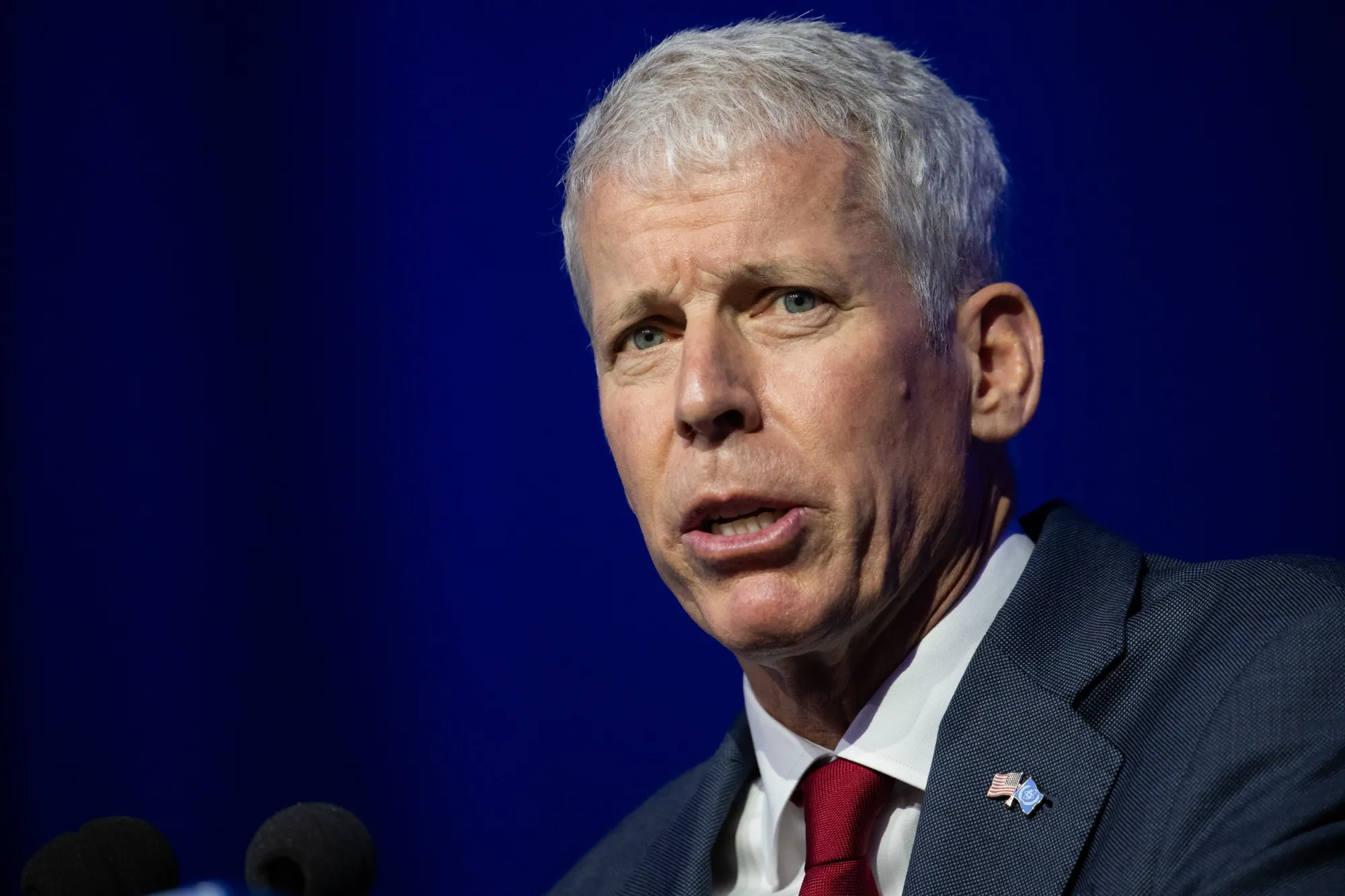
US Secretary of Energy Chris Wright.Photographer: Thomas Kronsteiner/Getty Images
The administration says Venezuela will be handing over up to 50 million barrels of oil — a down payment on more to come — to be sold at market prices, with revenues then doled out by Trump.
Earlier: Oil Moves Higher as Traders Assess Venezuelan Supply Outlook
There’s still little clarity on how some of this will work, though more plans — and the moves needed to impose them — are developing by the hour. By Thursday, oil traders Vitol Group and Trafigura Group had secured licenses to export crude. The president, who says Venezuelans and Americans will benefit, has griped about the need for the country to pay reparations to US oil companies and its own diaspora. Several large US banks approached by the administration for overseeing the oil funds have demurred, citing legal risks.
Stated reasons for the attack on Venezuela go beyond oil. It’s been framed as a law enforcement operation against Maduro, and a bid to halt the flow of drugs or migrants. But in the aftermath, team Trump’s focus has been on the country’s crude — and its sale to America’s foes, portrayed as encroaching on US turf.
“That’s one of the things that has been very upsetting to him since coming back in — the degree to which China has penetrated Latin America,” said Victoria Coates, a former deputy national security adviser to Trump and now at the Heritage Foundation. “A friendly law-abiding Venezuela that isn’t beholden to send deeply discounted oil to Cuba and China is very attractive to the United States.”
Read more: Trump Venezuela Meeting Is Shaping as Who’s Who of US Oil
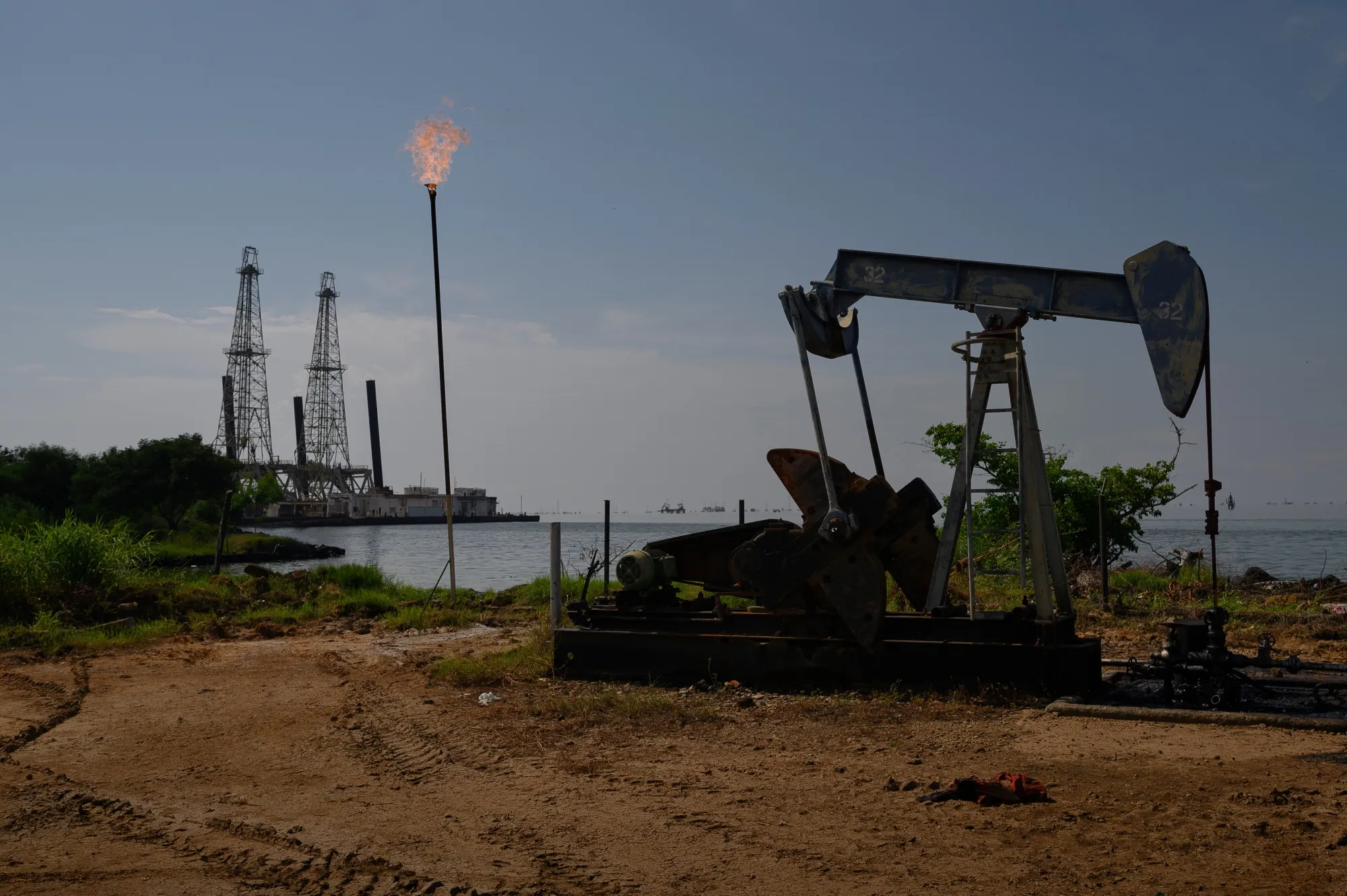
The Trump administration says Venezuela will be handing over up to 50 million barrels of oil.Source: Bloomberg
In his first term, Trump already showed he was eager to leverage American energy into global power. His administration branded US liquefied natural gas as “molecules of US freedom,” and tried to boost sales to US allies, which took off later after Russia’s invasion of Ukraine.
There’s a domestic calculus too. Trump’s Republicans face a midterm election fight in November to keep control of Congress, and the president has warned he’ll likely get impeached if they lose. Concerns over the cost of living are front and center for US voters, and the administration touts falling crude and gasoline prices as evidence he’s got a grip on the issue.
But cheaper oil is a problem for producers at home, with current prices around $56 a barrel already too low to support some domestic drilling. And while administration officials anticipate further price declines as a result of the Venezuela intervention, the timeline may be too long to be of electoral help this year.
“If it opens up, it’s a massive opportunity,” Girish Saligram, president of the oilfield service firm Weatherford International, said at the Goldman conference. “How it comes into fruition is TBD. |



