Commentariat suggests a 2-points Ukraine plan
Agnostic re whether it is time to consider / adopting such
Waiting for further developments
In the case that any peace plan is adopted involving Zelensky ceding Ukraine territory, Zelensky done-done, and doubtful ever again featured on cover of Vogue
Am also doubtful that Team Russia would get or want the reconstruction project, likely wishing to push the action onto Team China and tab to wherever else
scmp.com
A two-point plan for peace in Ukraine – while Kyiv still holds some leverage
- Ukraine has sustained massive losses of life, territory and infrastructure in the war, and may be disappointed if it expects Western countries to foot the reconstruction bill
- A realistic settlement would involve Ukraine declaring itself a neutral state and Russia agreeing to fund reconstruction with assets frozen by Western countries
As fighting rages on in Ukraine, a realistic settlement to the conflict is ripe for the plucking. The Ukrainians have proven to the world that with Western backing they are a fearsome opponent, driven by the hope of victory. But in military matters, as the saying goes, hope is not a method.
The Ukrainians are running out of ammunition, and Western countries’ manufacturing capabilities are struggling to keep up. Yes, they can continue to send what they do produce, but Russia has a head start as it began scaling up its military industrial manufacturing much earlier.
In the early days of the war, Ukraine backed away from a peace deal because, together with its Western backers, it hoped for better, without understanding the realities of war.
Throughout the war, the claim has been made that Ukraine needs to continue to improve its negotiating position. Yet, in reality, it has lost a substantial amount of territory, infrastructure, equipment and manpower, and will continue to do so. At this point, they are in danger of not only losing the war, but of messing up the aftergame as well.
Ukraine is probably expecting Western countries to foot the bill not only during the war, but also of the reconstruction after the dust settles. However, Western aid is already failing to meet Ukraine’s needs, and the economies of its backers are worsening.
The longer the war drags on, the more reconstruction will be needed while the resources for that reconstruction will dwindle, and Western politicians, despite their promises, quite simply won’t be able to write the cheque Ukraine may be hoping for. Businesses and investors aren’t going to want to operate in a country of leaders who couldn’t see the writing on the wall and swallow their pride to make peace.
With that in mind, a realistic settlement in Ukraine would look something like this: Ukraine declares itself a neutral state, and demilitarises to the required extent to be considered truly neutral and non-belligerent. Russia buys the territory it has seized from Ukraine with its assets that were frozen by Western countries.
This money is administered for reconstruction by an independent body appointed and overseen by the UN Security Council to ensure the funds are used for Ukraine’s reconstruction, and not diverted or lost due to corruption.
If Ukraine is truly a neutral state, Russia’s security concerns would be addressed. If Russia buys the territory it has taken by ceding its claim to its frozen foreign assets, funding for Ukraine’s reconstruction is secured. Without Russia ceding claim to the money, it could create costly legal and international claims on it for generations. It would also be in Russia’s interest to see Ukraine rebuilt into a stable country.
There is actually precedent for this in American history. In the treaty that concluded the Mexican-American War on February 2, 1848, Mexico ceded all claim to territory which now belongs to the United States, and the US paid the Mexican government US$15 million.
The origins and reasons behind that conflict had some similarities with the dispute in Ukraine. However, the US army seized territory all the way up to and including Mexico’s capital city before the Mexican government saw sense and negotiated the terms of the treaty.
Ukraine should be mindful of the fact that if it forces the Russians to go all the way to Kyiv, Moscow might not be inclined to be as magnanimous in their treaty terms as the US was.
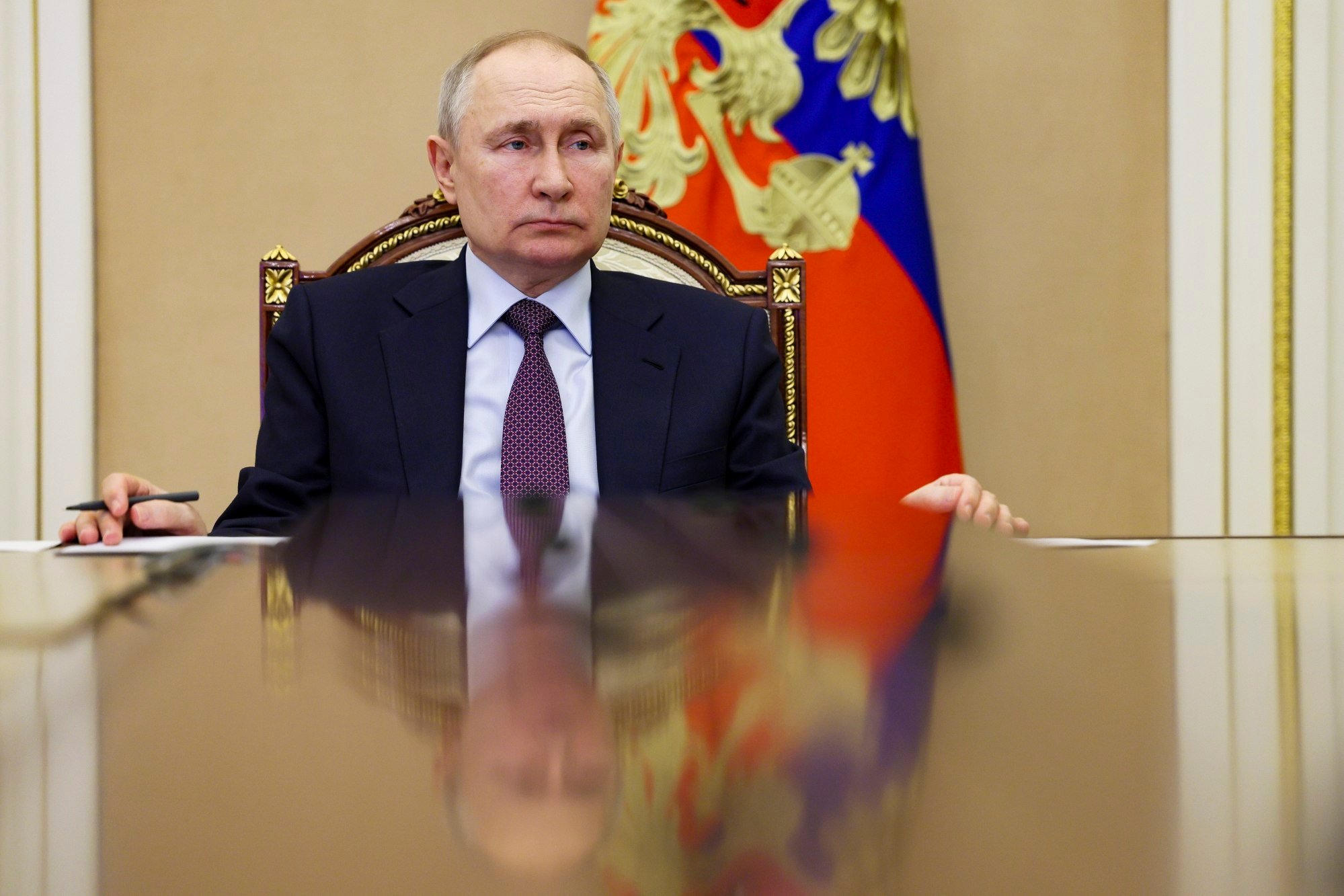
Russian President Vladimir Putin attends a ceremony to open new pharmaceutical production facilities via video conference in Moscow, Russia, on March 30. Photo: Sputnik/AP
Thousands of years ago in a massive war between the two superpowers of the ancient world, Sparta and Athens, a similar situation unfolded. A Spartan delegation advised the Athenians to make peace, saying, “True wisdom is shown by those who make careful use of their advantages in the knowledge that things will change.”
That is what the Ukrainians and their Western backers should have done before scuttling the peace deal that could have been concluded early last year. The Athenians didn’t listen and ended up losing the great power that they once held in the ancient world.
Ukrainian leaders should swallow their pride and make peace before the last vestiges of their leverage are gone and they have no say whatsoever in the final outcome of the conflict, and its aftermath. Like the Athenians, I doubt they will listen to the sage advice of the Spartans, but they might surprise us.
Daniel Covany is the author of War Strategy: Lessons from Alexander, and a former military instructor |



