SI
SI
discoversearch

We've detected that you're using an ad content blocking browser plug-in or feature. Ads provide a critical source of revenue to the continued operation of Silicon Investor.  We ask that you disable ad blocking while on Silicon Investor in the best interests of our community.  If you are not using an ad blocker but are still receiving this message, make sure your browser's tracking protection is set to the 'standard' level.
Strategies & Market Trends : 2026 TeoTwawKi ... 2032 Darkest Interregnum -- Ignore unavailable to you. Want to Upgrade?


To: Snowshoe who wrote (113329)9/10/2015 7:31:28 AM
From: elmatador  Respond to of 218584
 
Farmers Welcome Fertilizer Price Cut The winners: 45 are importers of oil derivatives,

LPG, Kerosene, gasoline, Diesel and petrochemicals and fertilizer

Farmers Welcome Fertilizer Price Cut

August 21, 2015


The impending 20% in the price of fertilisers has been welcome by most farmers as this will help boost the crop production.

If implemented, the price reduction would see a 50kg bag of fertiliser which is selling at $38, coming down to $30. While that price remains high compared to prices in the region, it would be a good starting point for most farmers.


Fertiliser industry spokesman Mr Misheck Kachere yesterday attributed the price reduction to increased capacity utilisation from last year’s 30 percent to 80 percent this year after local and foreign interventions.

Mr Kachere said farmers can expect to start feeling the price reduction by the end of this month.

“The industry ran at 30 percent last year, but this has increased to 80 percent. As we increase the capacity, unit production costs will go down with the same people and resources and we will produce more. As we move into the season we will see the decline in prices.

“When we get to 80 percent, we should see a 20 percent reduction in fertiliser prices in Zimbabwe. We have established a working capital of local facilities of $80 million and consignments stock collateral management agreement of $40 million worth of arrangements.

“We will be working hard to achieve this. Our business is on farmers and if they are viable, we will also be viable.

- See more at: zimeye.com


To: Snowshoe who wrote (113329)9/10/2015 7:32:58 AM
From: elmatador1 Recommendation

Recommended By
Elroy Jetson

  Respond to of 218584
 
DEFLATION IS GOOD!!!
“We’re talking huge savings.”Farmers and ranchers are noticing the difference, and while analysts expect the price to tick up a bit when the harvest season begins in earnest this month, they still expect to pay less this year for what are often referred to as the “Three Fs” — feed, fuel and fertilizer.

We’re at a point where we are feeling pretty good about fuel prices across the board. Jim Sartwelle, Texas Farm Bureau economist

DEFLATION IS GOOD!!!For the first time since 2009, the USDA is predicting that total costs for farming will decline, a drop largely fueled by the drop in diesel prices, said Jim Sartwelle, a Texas Farm Bureau economist. The USDA predicts the agriculture sector will spend $60 billion — or about $1.5 billion less — after seeing those prices rise 8 percent annually from 2010 to 2014.

“We’re at a point where we are feeling pretty good about fuel prices across the board,” he said.

Read more here: star-telegram.com
star-telegram.com

Read more here: star-telegram.com


To: Snowshoe who wrote (113329)9/10/2015 7:49:31 AM
From: elmatador  Read Replies (1) | Respond to of 218584
 
Ms Rousseff also called for "bitter medicine" to strengthen the Brazilian economy, signalling a commitment to austerity measures advanced by Finance Minister Joaquim Levy in an effort to save the country's investment-grade credit rating.

Spending cuts and tax increases have turned congressional allies and fellow ministers against Mr Levy, alienated Ms Rousseff's political base and pushed her approval rating into single digits in recent polls.

Read more: http://www.smh.com.au/world/contrite-brazilian-president-dilma-rousseff-admits-contribution-to-recession-20150908-gjhh8s.html#ixzz3lKrvVXpy
Follow us: @smh on Twitter | sydneymorningherald on Facebook


To: Snowshoe who wrote (113329)9/10/2015 8:16:00 AM
From: elmatador  Respond to of 218584
 
Low oil prices=low oil or low energy subsidies=lower current account deficits.

Nigeria: Lower oil price cuts petrol subsidy by N1bn
The federal government’s daily spending on petrol subsidy has dropped to N1.1bn as at Tuesday from an average N2.06bn in June and N1.6bn in July, according to latest petroleum pricing statistics from the Petroleum Products Pricing Regulatory Agency (PPPRA).
dailytrust.com.ng

Oil producers such as Egypt, Angola, Gabon and Indonesia have cut domestic fuel subsidies as crude-oil export revenue has tanked.

Indonesia
still has some of the cheapest fuel prices in the world and it removed most of its subsidies at the start of this year.
The United Arab Emirates is considering similar steps.

With lower oil prices, “there is an opportunity for each country to look at subsidies,” Bahrain’s oil minister, Abdul Hussain bin Ali Mirza, said at an oil conference in March in Bahrain.

For oil exporters, “low prices provide a great opportunity to remove subsidies at less political cost,” Olivier Blanchard, chief economist at the International Monetary Fund, and Rabah Arezki, its head of commodities, wrote in a blog posted on the organization’s website in December.

Middle Eastern and North African oil producers—which account for the vast majority of OPEC’s output and oil subsidies—pour around $200 billion a year into energy subsidies, according to International Energy Agency estimates.

Such subsidies, usually for motor fuel or power generated by burning crude, are an important benefit to the citizens of many oil-exporting nations, whose populations are growing and becoming more affluent. Encouraging domestic consumption, however, decreases the share of crude for exports. At the same time, with oil prices roughly half what they were nine months ago, the governments of these countries can less afford the subsidies.

wsj.com


To: Snowshoe who wrote (113329)9/10/2015 8:39:15 PM
From: TobagoJack  Respond to of 218584
 
africa is being saved, or so the reports coming in seem to indicate

either that or what got interrupted in 1400s is recommencing at a clip per peaceful rise etc etc

watch & brief

chinaafricaproject.com

The Chinese in Africa: Meet Mister ChenScan the headlines about the Chinese in Africa and the predominant theme focuses almost exclusively on the infrastructure-for-natural resource deals. The Chinese are signing multi-billion dollar oil and mineral deals up and down the continent while spending a comparable fortune building desperately needed infrastructure in many of the least developed countries on earth. Here in Kinshasa, evidence of China’s foreign and trade policies is everywhere. New roads, hospitals, parliament buildings are all being built at record speeds by Chinese construction conglomerates. Yet not far away from the heavy earth moving trucks and the billion dollar mineral deals, a separate, yet equally transformative revolution is underway. Quietly, tens of thousands, possibly even hundreds of thousands of Chinese immigrants are moving in to neighborhoods across Kinshasa and dozens of African cities. While there is no reliable data available to estimate just how many emigres have come here, there is no doubt the Chinese population is rising quickly.

When I first heard that Kinshasa was now home to thousands of Chinese immigrants, I naturally assumed there would some sort of “Chinatown” with a population cluster just as there is in Paris, Los Angeles, Buenos Aires and even Asian cities like Kuala Lumpur. It just made sense that the first wave of Chinese arrivals would huddle together as immigrants have done the world over for generations. ”So where is the Chinese community?” I asked a several of our local staff. Puzzled, they responded “what do you mean? There is no Chinese community here, they live with us.” Time and again I received the same answer. The Chinese immigrants in Kinshasa are skipping an entire phase of assimilation by moving directly to the sprawling neighborhoods and shantytowns that is home to the capital’s 8-10 million residents. By any standard, this is a remarkable phenomenon as there are few more seemingly divergent cultures than Chinese and Congolese. Yet despite overwhelming differences in language, race and culture, the Chinese are adapting in ways that Westerners could never begin to imagine.

Mister Chen is one of those thousands of new arrivals to Kinshasa. He and his family moved from China’s southern Fuzhou province three years ago to come to Africa. When he first learned of the opportunity to come to the DRC he admitted that he knew nothing about the country as was made clear by their decision to settle in the eastern Congolese city of Kivu. Traveling over land from the Rwandan capital of Kigali, they arrived in Kivu unaware that it is the epicenter of Congo’s violent 10-year war. Hundreds of thousands of people, possibly millions, have died in the region surrounding Kivu and after three weeks he packed up his family to move west across the country to the relative safety of Kinshasa. Upon arrival here he was introduced to a “Chinese association” that would provide him the logistical and financial support for him to open a small shop in one of Kinshasa’s vast, densely populated neighborhoods. These associations are critical to understanding the success of the Chinese, both here in Kinshasa and the world over. Just as Chinese immigrant associations in San Francisco and New York, the Chinese associations in the DRC provide what is essentially a micro-loan to new immigrants and the necessary logistical support to open a small business. The association handles the legal paperwork, ensures the necessary bribes are paid to relevant neighborhood police and government authorities; connects the shop owner with a distribution network of Chinese importers to supply their business. Mister Chen said he arrived from China with “only a few dollars” but was able to get his start through the help of the association. In turn, as his business develops, he re-pays the association back in small increments until the loan is fully paid. The association also plays another critical role that insulates the shop owner from the volatility of daily life in Kinshasa. When the police or some other government authority comes to his store for bribes or extortion, he simply calls the association who then quickly respond to handle the situation. This rapid response and protection from the association is an immensely important aspect of the Chinese entrepreneurial success here as it offers a level of reliability largely unavailable in a society as unstable as Kinshasa.

Mister Chen’s store has the feel of an inner-city American liquor store where all of the products are on display behind a think glass window. He largely sells cheap, low quality Chinese-made knick-knacks that range from one-dollar headphones to shoes to plastic tableware. Although business in his 1,500 square foot (estimate) shop was brisk during my 45-minute mid-day visit, not once did I see him sell a single product. Instead, locals would approach the counter, throw down a $20 or $50 US bill and he or one of his local staff members would hurl a wad of Congolese francs and dollars back at the customer. In addition to selling low-cost Chinese imports, shop owners like Mister Chen have also established themselves as among the most reliable money changers in the city. ”I trust the Chinese more than I do Congolese,” one customer explained when I asked why he changed his money with Mister Chen and not at one of the countless money changers on the street. ”They give us a fair price and don’t cheat us.” By selling low-cost products along with doing a brisk currency trading business, Mister Chen said he is able to squeeze out a small profit. ”It’s not a lot because the Congolese are very poor but I earn more here than what I was making back in Fuzhou,” he said.

When you consider the hundreds of billions of dollars Western governments and NGOs have spent in Africa to help build civil society programs none seem anywhere near as effective as what Mister Chen is doing. His small business is simultaneously providing jobs, goods and services that are vital in a region desperate for this kind of economic activity. Mister Chen does not think of his business as anything other than a means to earn a meager living. What he may not realize is that what he and his family are doing is part of a larger, more powerful trend that will re-shape Africa in a far more profound way than any of the roads and hospitals Beijing is building here.


To: Snowshoe who wrote (113329)9/21/2020 6:22:17 AM
From: TobagoJack  Respond to of 218584
 
Re <<sinking currencies>> and following up to my comment 2015 re China in monetary normal space Message 30227497


It would have worked out had the fellow waiting for interest rate to rise instead reckoned interest rate to do the diametric drop, and drop some more. In both foresight and hindsight what was to happen and has happened is so glaringly obvious.

In any case, there is no telling what strange ideas people can harbour when too long isolated from mathematical sense and historical logic

Right now, pity Kyle Bass, full of hate, minus a friend Bannon who has to practice deep breathing, and short the Yuan presumably

bloomberg.com

Don't Overthink China's Strengthening Yuan


Its economy is recovering and policy makers have avoided open-slather stimulus. This all makes sense, for now.

Daniel Moss
21 September 2020, 10:16 GMT+8
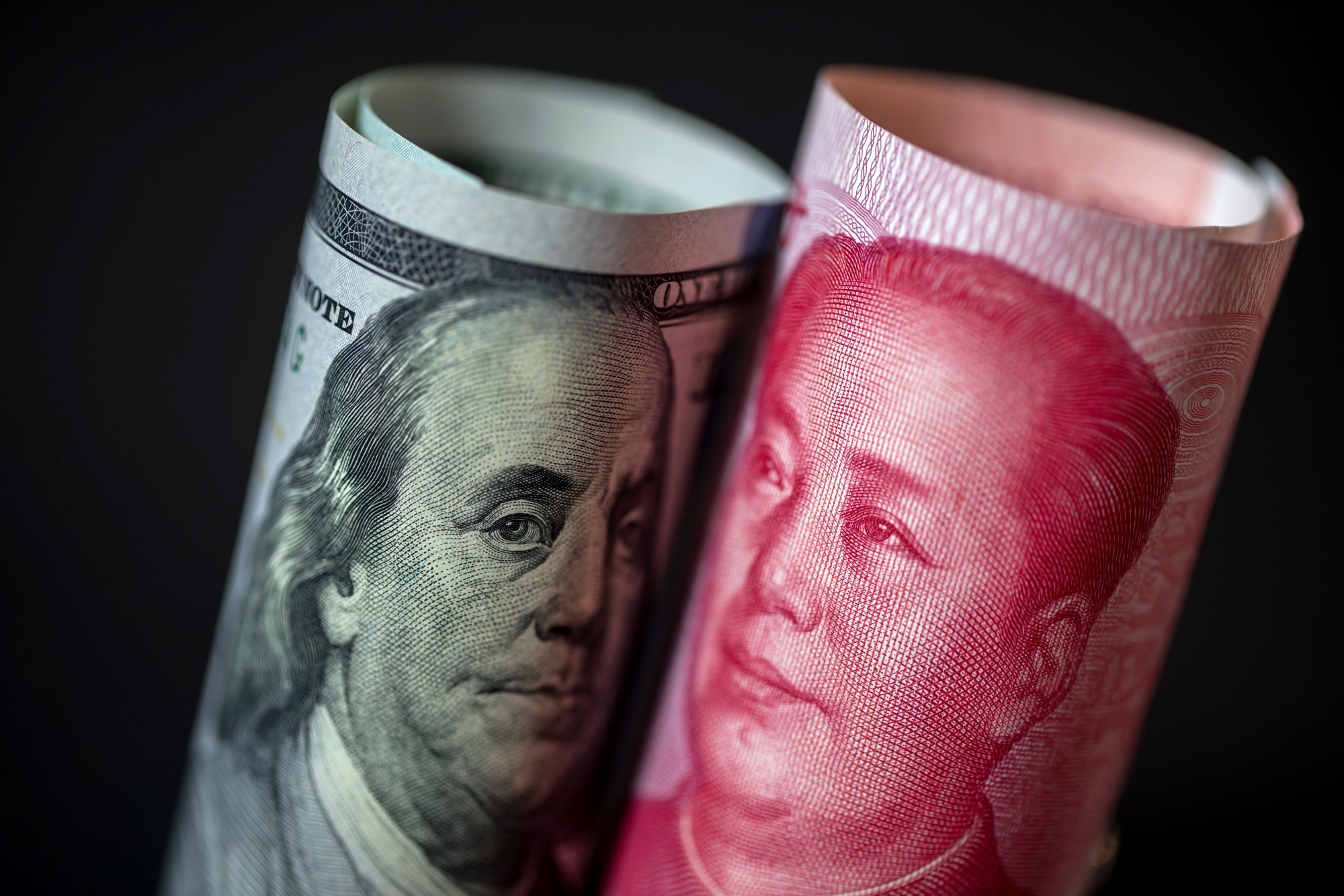


Is it a geostrategic face-off, or all much simpler than that?
Photographer: Paul Yeung/Bloomberg

Daniel Moss is a Bloomberg Opinion columnist covering Asian economies. Previously he was executive editor of Bloomberg News for global economics, and has led teams in Asia, Europe and North America.
Read more opinion Follow @Moss_Eco on Twitter

LISTEN TO ARTICLE
China may be the only major economy to notch growth at all in 2020, quite the reversal after the onset of Covid-19 triggered a historic collapse early in the year. This revival has been reflected in the yuan, Asia's best performing currency this quarter. There’s good reason to think it isn’t a fluke.

Bloomberg Economics projects China’s gross domestic product will grow 2% this year; the Organization for Economic Cooperation and Development last week raised its forecast to 1.8%. That’s miles ahead of the first quarter’s 6.8% plunge. Recent data suggest the bounce might have staying power: Exports and industrial production have chugged away over the past few months, while retail sales rose for the first time in August since the pandemic began.

In that light, it’s little surprise the yuan has gained more than 4% since the end of June, after weakening in the first three months of the year and stagnating in the second quarter. This trend also comes amid the central bank's relatively restrained approach to juicing the economy. The People's Bank of China hasn't performed the gymnastics of the Federal Reserve, or toyed with the negative interest rates that prevail in Europe and Japan, and might soon be considered in the U.K. And like many Asian currencies, the yuan has been buoyed by a weakening dollar as the Fed slashed rates and resumed quantitative easing.

The PBOC is a familiar presence in markets and limits how much the currency can fluctuate in a given day. So this isn't a pure rally the yuan is enjoying. It’s happening because the authorities are tolerating it. The central bank frets about financial instability a softening currency could bring, and has warned that ultra-loose policies pursued by developed-world central banks have had too many spillover effects. Policy makers spent the year before the pandemic worrying about the accumulation of too much debt. (For its part, China has been known to change the rules suddenly, leading to massive gyrations across global asset classes.)

Over the years, the reason cited most often for halting or damping the yuan’s periodic appreciation has been the potential threat to export competitiveness. Until 2005, the yuan had a hard peg of 8.3 per dollar that was almost entirely about preserving the advantage of a weaker currency. As China tinkered with the system, exports gradually became less important and policy makers encouraged a shift to services, which accounted for more than half of gross domestic product by 2015. Might China, in the Covid-19 world, renew its ardor for — or dependence on — shipping stuff to the world? In the midst of an epic global contraction, it’s tempting to grab every piece of growth you can hang on to.

Right now, China’s exports don’t appear to be suffering, rising 9.5% in dollar terms in August and notching the third-biggest increase ever. The current account, the broadest measure of trade, had been shrinking and was on course to disappear as a percentage of GDP. That trend looks to have been arrested, albeit temporarily. China may record a surplus of 3% in 2020, the most in a decade, according to Capital Economics. Still, it’s not inconceivable there could be too much of a good thing and the PBOC might lean against the yuan's rise. “These days the PBOC’s aim is to smooth, not prevent, exchange rate adjustments,” writes Julian Evans-Pritchard, Capital Economics’ senior China economist.

The rest of Asia has reason to root for China’s resilience. In April, when Beijing reported its disastrous first-quarter GDP decline, I wrote that the one-time economic engine might not bail Asia out this time. Historic contractions tore through the region. But as China came to life, it began steadying some parts of neighboring economies. In Singapore, for example, exports are improving, in large part reflecting mainland demand. Beijing’s economic conflict with the U.S. hasn't dissolved ties between Asian export hubs. A stronger currency tends to enhance the allure of imports.

If China is settling in for a protracted rivalry with the U.S., a strong currency may be appropriate. You want to attract direct foreign investment and continue opening your capital markets to international investors. The more economic stability China amasses, the bigger its gravitational pull in the region.

Add all these factors up and we’re likely to see a bit more vigor for the yuan. That is, as long as it’s convenient for China.

This column does not necessarily reflect the opinion of the editorial board or Bloomberg LP and its owners.

To contact the author of this story:
Daniel Moss at dmoss@bloomberg.net

To contact the editor responsible for this story:
Rachel Rosenthal at rrosenthal21@bloomberg.net

Before it's here, it's on the Bloomberg Terminal.
LEARN MORE

